I first tried Tetra Pak printing back in 2024 when I took a collagraph class at Concord Art. I had created a number of failed collagraph prints over the years, including the ones I posted HERE in 2021 and HERE in 2023. I wanted to take the class to figure out what I was doing wrong. No amount of YouTubing seemed to help. Sure enough, fifteen minutes into class, the teacher solved the problem I’d been having for literal years! (Another example of why sometimes in-person learning is the key to success!) But I didn’t turn around and leave, of course, I stayed to learn more about collagraph.
What is Collagraph?
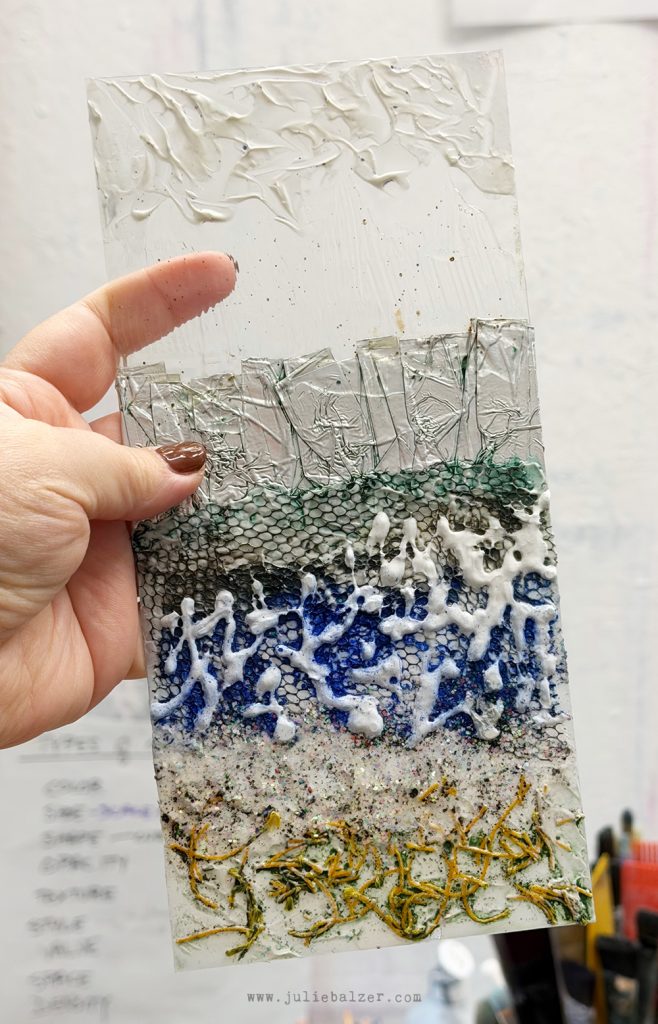
The word collagraph combines “collage” and “graph” (meaning to write or draw). A collagraph is a printmaking technique in which the printing plate is created by building up a textured surface (a collage) on a rigid support, rather than carving or etching into a plate. To make a collagraph plate, you start with a sturdy base such as mat board, cardboard, or acylic sheets. Then you glue materials onto the base to create textures and shapes. The resulting print captures the textures of whatever materials you’ve glued to the plate.
This is a collagraph plate I made (it’s designed to be an abstracted landscape):
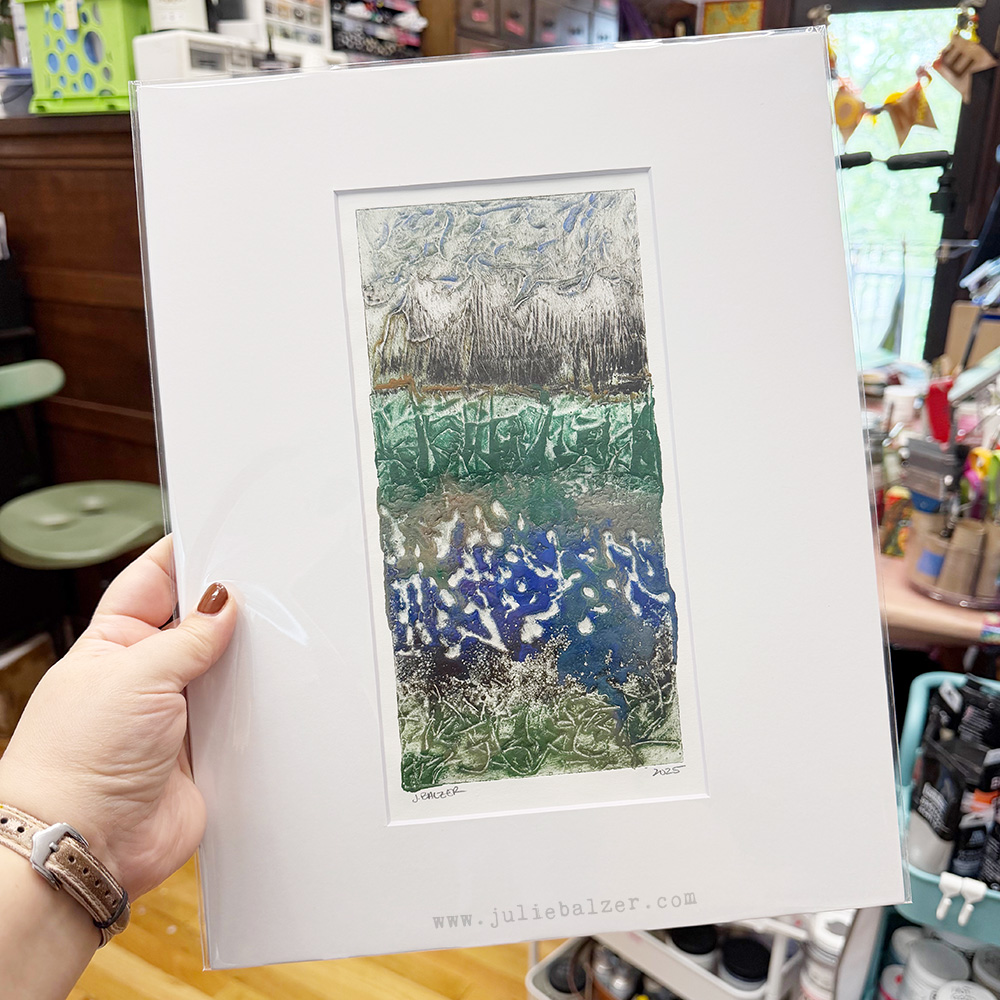
And here is a print from that plate (you can find it in my online shop if you’d like it for your wall):
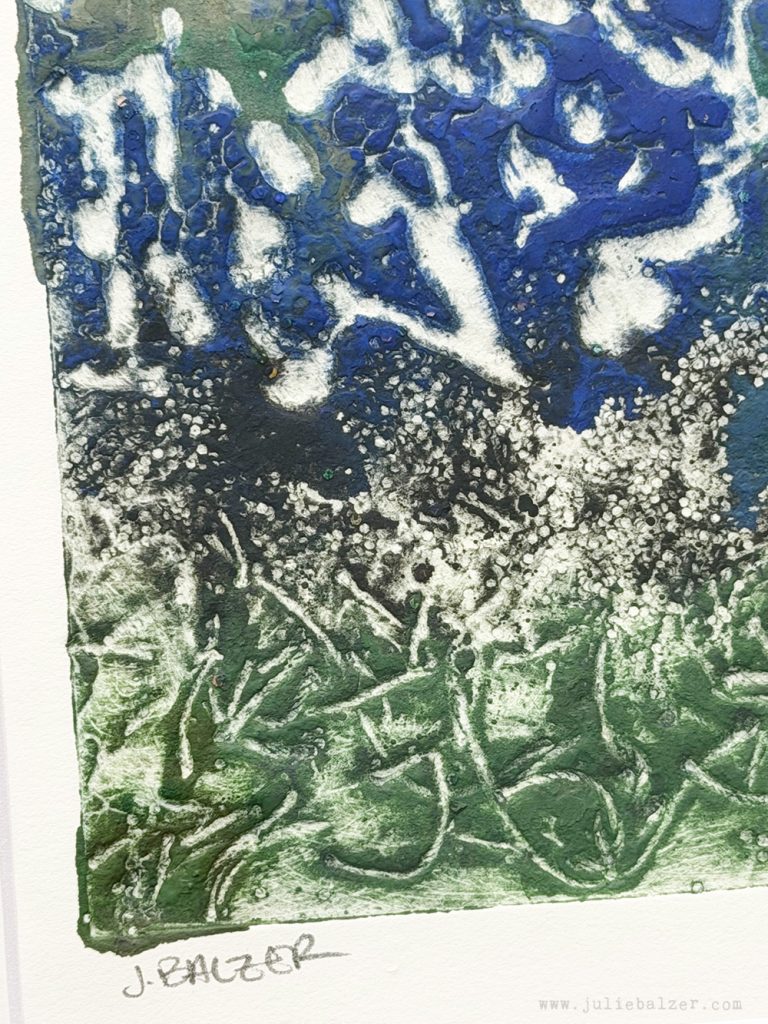
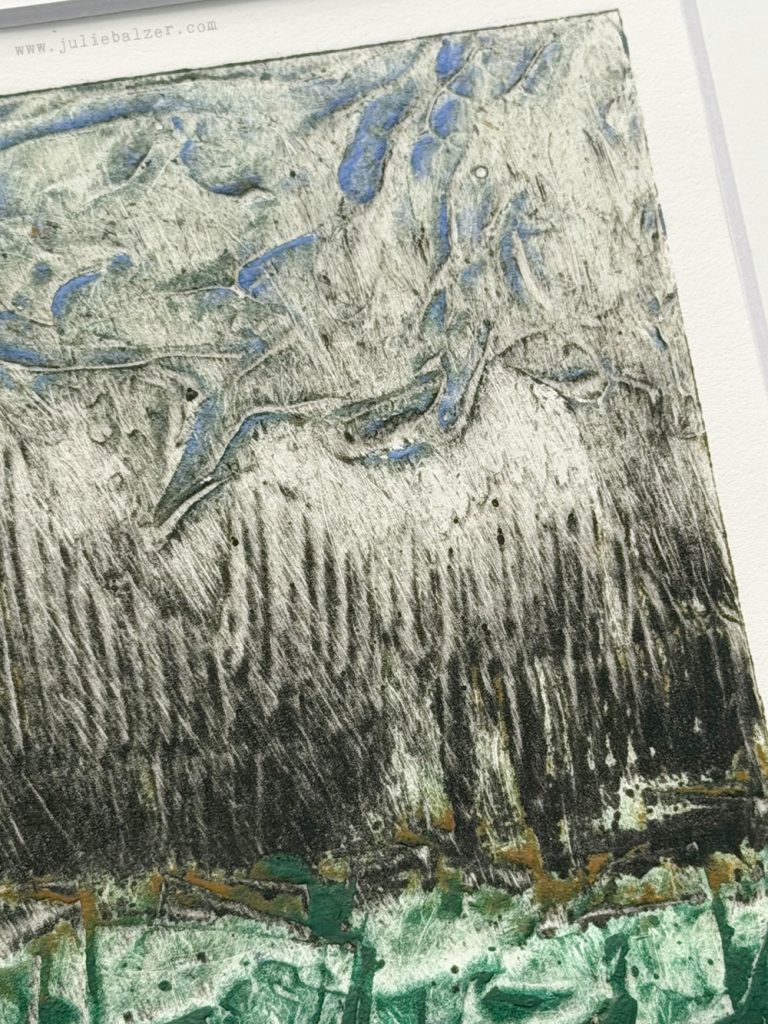
In the close up shots you can really see the amazing level of detail that’s possible with collagraphs!
This is not the same piece…
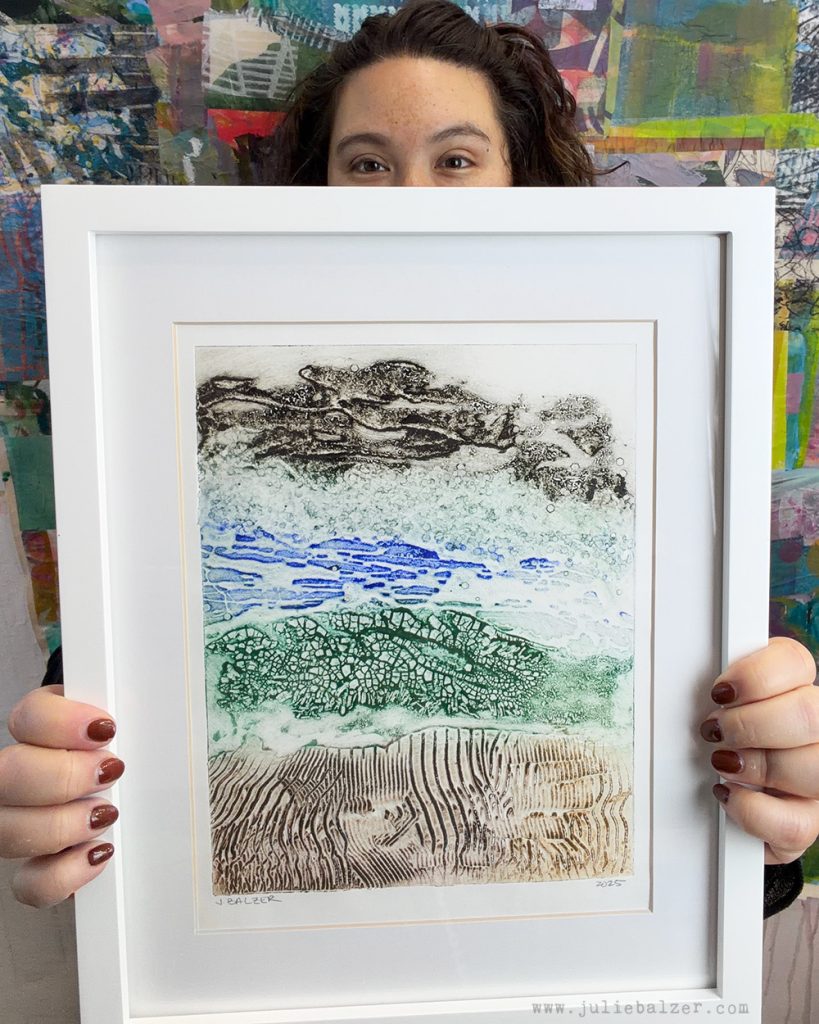
…but you can see how a simple frame really makes the collagraph “pop.”
In my opinion, collagraphs are a wonderful bridge between collage, drawing, painting, and printmaking — perfect for my mixed media loving heart.
What is Tetra Pak Printing?
Tetra Pak is a non-recyclable material often used for shelf stable liquids such as soup or juice or milk.
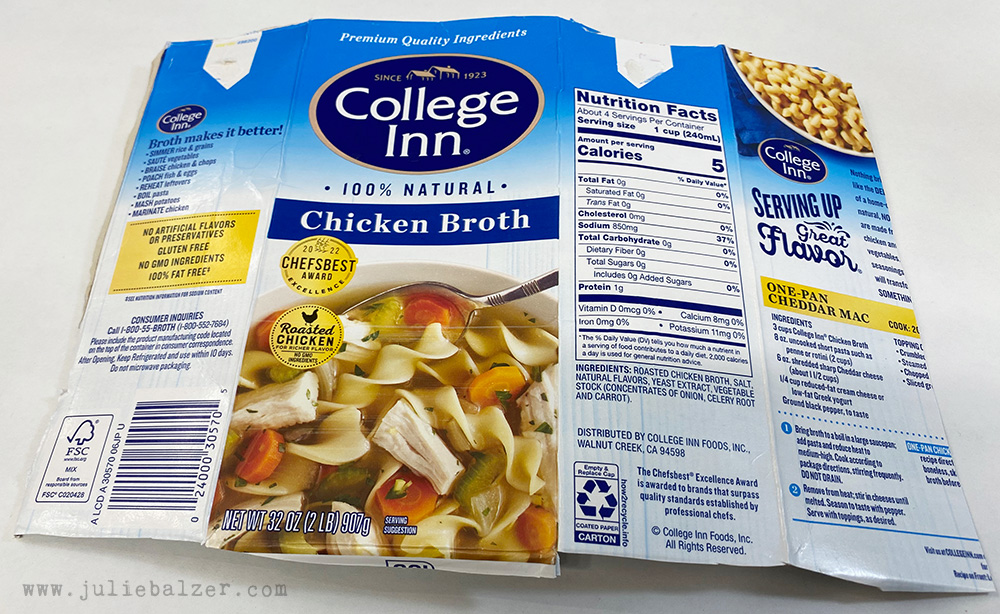
(As a side note, a year or so ago, I asked if any of my neighbors were willing to drop off their Tetra Pak cartons on my front porch and every few weeks I get a paper bag filled with empty containers that would otherwise end up in a landfill. It’s a win-win!)
A Tetra Pak carton is made of layers of paper, plastic, and aluminum. When you cut the carton open and lay it flat, the shiny interior surface can be used as a printing plate.
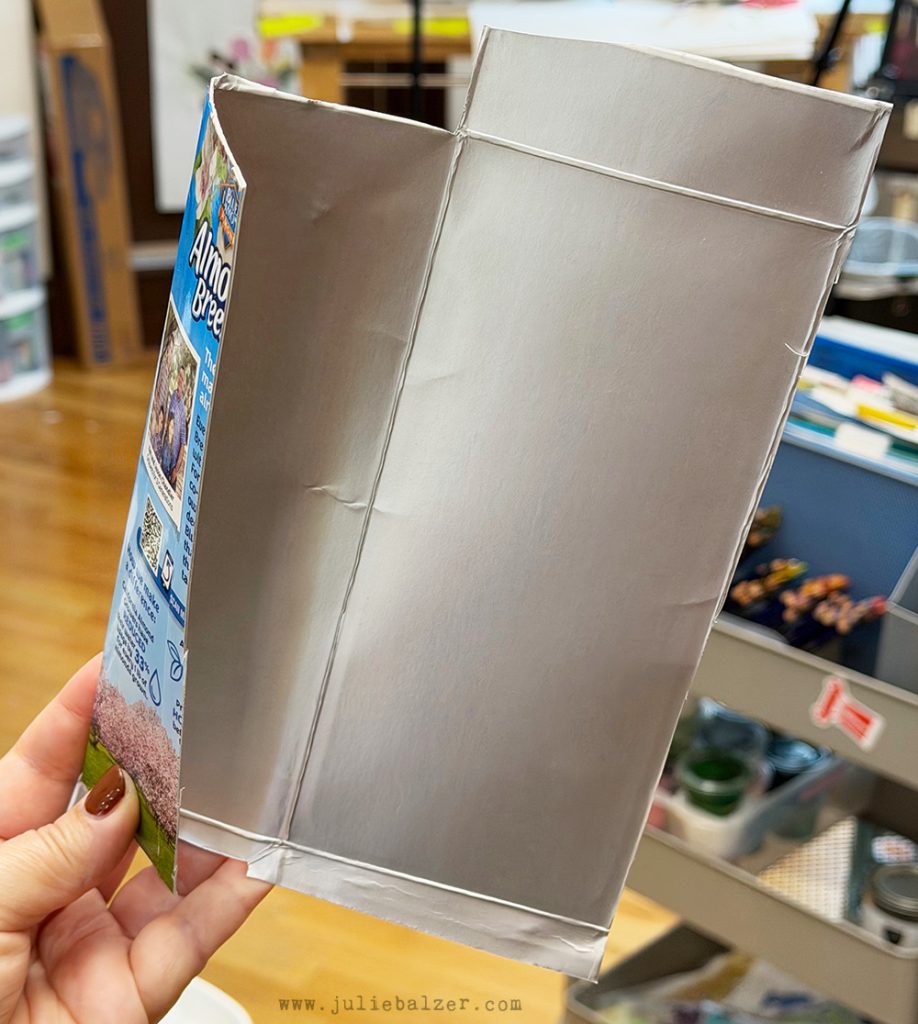
You can scratch and/or cut into the Tetra Pak to create your design, as well as cut around it to create a shaped plate.
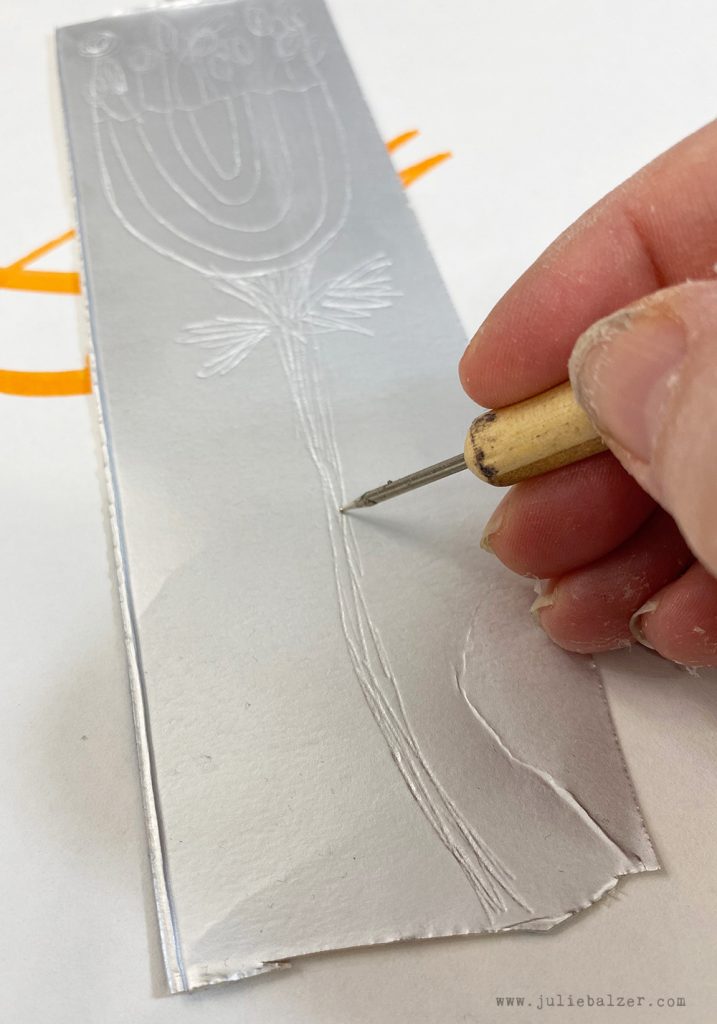
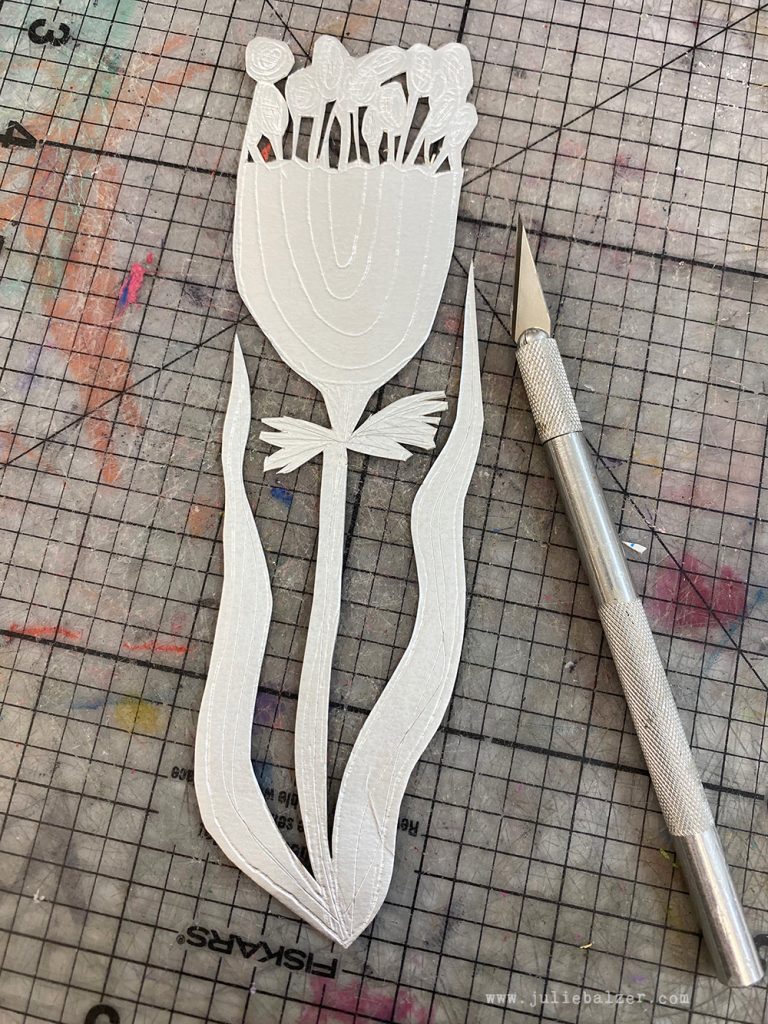
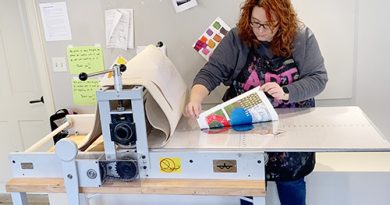
The plate is then inked, wiped, and printed onto damp paper using an press or, in some cases, hand pressure. You can watch this short video I posted to instagram to see the process:
Is Tetra Pak Printing Collagraph?
Kind of, but technically, no. Here’s the distinction (and it’s really about how the plate is made, rather than how you print it):
- Collagraph: You add materials to a plate to create texture. The plate is built up through collage. The texture comes from what’s glued onto the surface.
- Tetra Pak Printing: You draw, scratch, emboss, or incise into the surface. Ink settles into the scratched and embossed areas.
That said, there is some overlap. For an art history or printmaking purist, a Tetra Pak plate is not a collagraph. For practical purposes, however, you’ll hear it grouped with collagraphs because it’s a low-tech textured plate made from found materials.
Wrap Up
Let me know if you’d be interested in a class on either collagraph or tetra pak printing at home. Both are super fun and surprisingly doable in a home studio.
Thanks for stopping by!

A collagraph class would be very welcome. But a tetra pak printing class also sounds intriguing. Why not both? When it comes to good classes, more is more IMHO. 🙂
Ha Ha! I totally hear you! Would you prefer in person or online?
I’d love a class on making Collagraphs!
It’s on my list of things to work on this summer! Is your preference in person or online?
Pingback: How to Fix Art Mistakes: The Overlooked Skill Every Artist Needs - Balzer Designs Blog
Pingback: Intaglio Printing Explained - Balzer Designs Blog