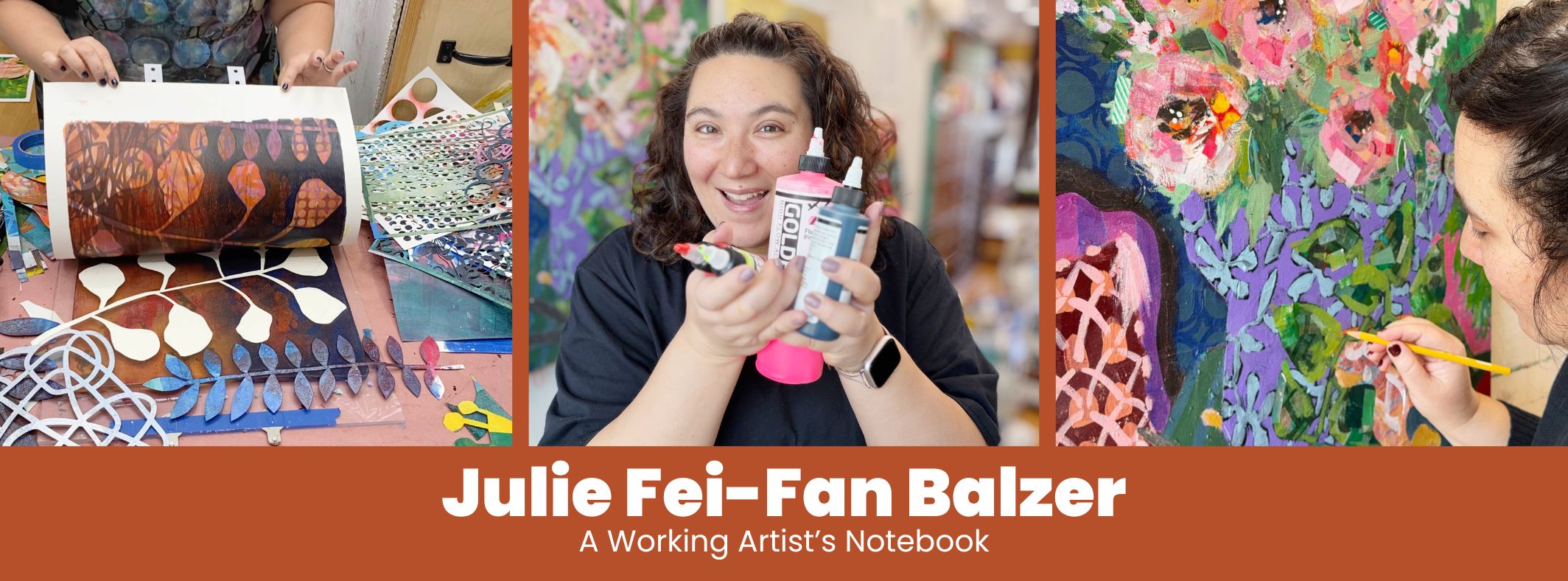
I’m currently working on an online class all about Tetra Pak printing (a form of intaglio printing) at home using a craft press (aka a repurposed die cut machine.) So I thought I’d take the opportunity to share a bit about what intaglio printing is.
What is Intaglio Printing?
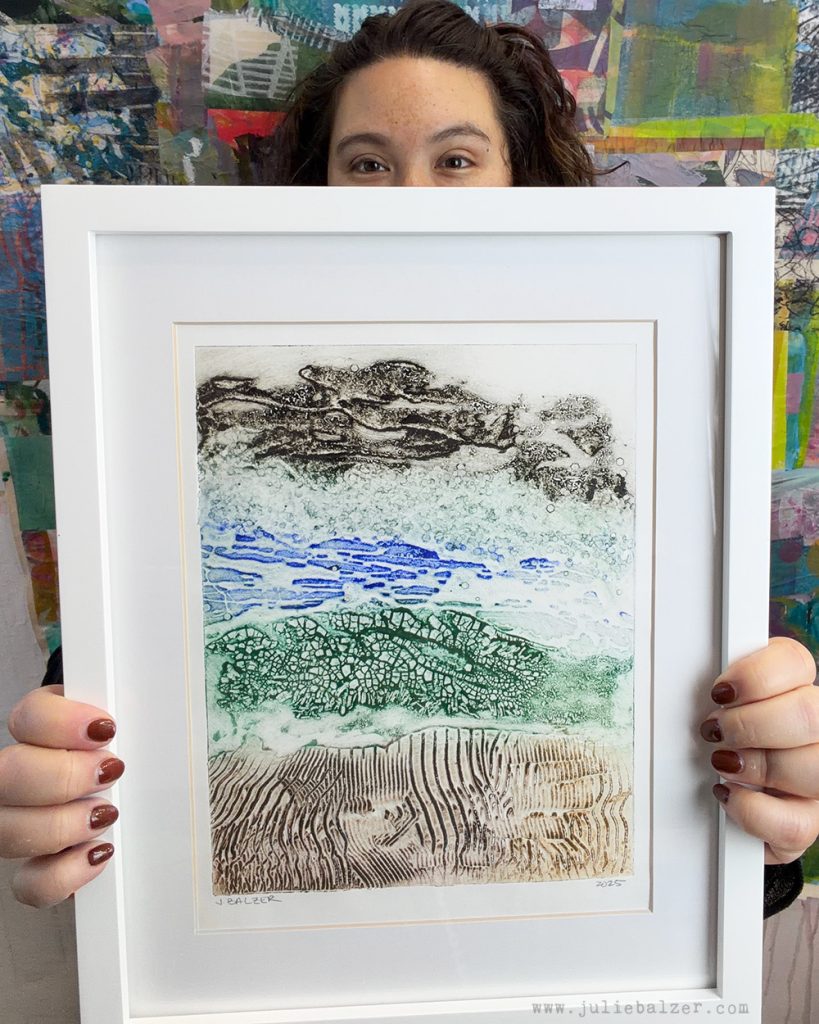
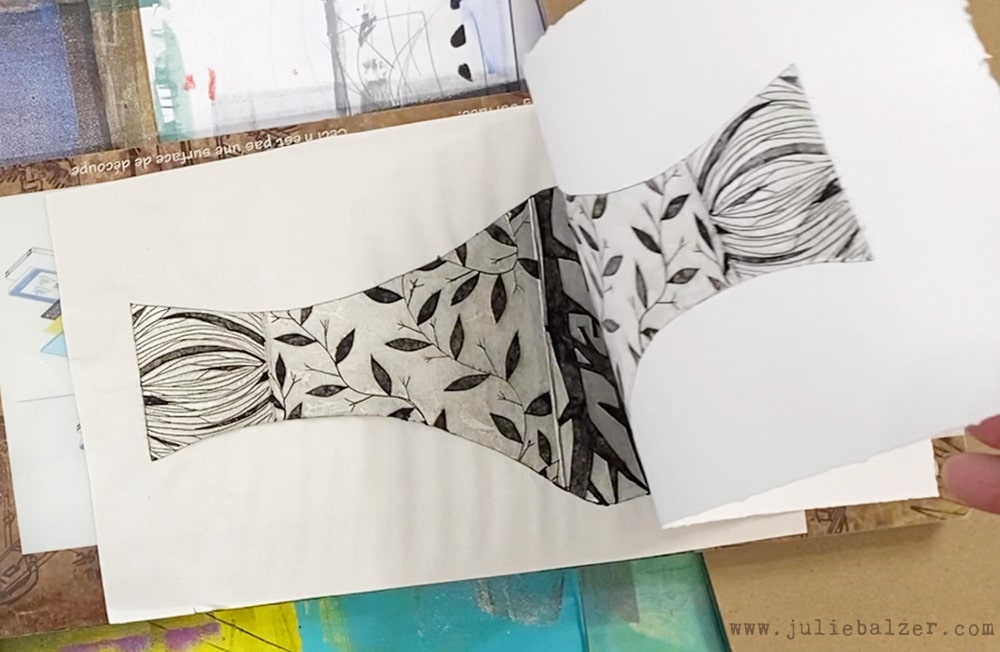
Intaglio (pronounced in-tally-o) is one of those printmaking words that can sound intimidating until you understand what it actually means. At its simplest, intaglio is a printmaking process in which the ink sits down inside lines, grooves, scratches, or textures that have been carved, etched, or otherwise incised into a plate. The paper is pushed into those recessed areas, usually with the help of a press, and pulls the ink out. This is an intaglio print I made last year:
Intaglio is the Opposite of Relief Printing
In relief printing the raised surface prints and the carved-away areas stay blank. If you have ever carved a stamp or a linoleum block, you already understand relief printing. You roll ink across the top surface, and the raised parts touch the paper.
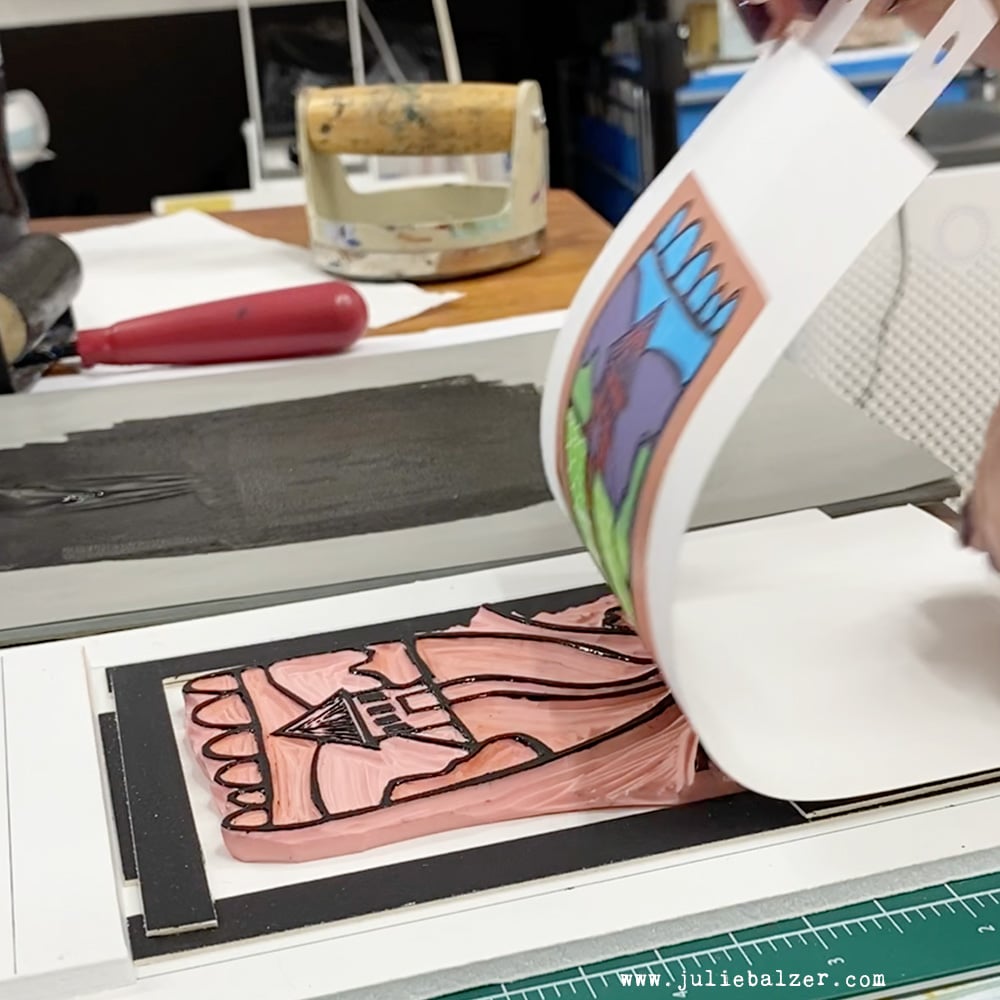
Intaglio works differently. You force ink into the grooves, wipe the surface clean, and then use pressure to transfer the ink from the grooves onto dampened paper. This is a Tetra Pak print being pulled:
Traditional Intaglio Processes
If you’ve been to a museum, you’ve seen an intaglio print. On the info card next to the art, you’ve probably seen the work defined by a slightly more exact methodology. Intaglio is a big blanket term that encompasses many kinds of printmaking. Traditional intaglio processes include engraving, etching, drypoint, aquatint, and mezzotint. Each method creates recessed marks in a different way. I’ll do a very bare bones explanation of each type:
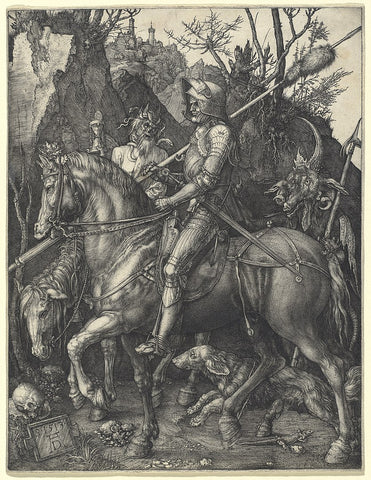
Engraving uses a sharp tool to cut clean lines into a metal plate. Here’s an example of an engraving from Albrecht Durer (source):
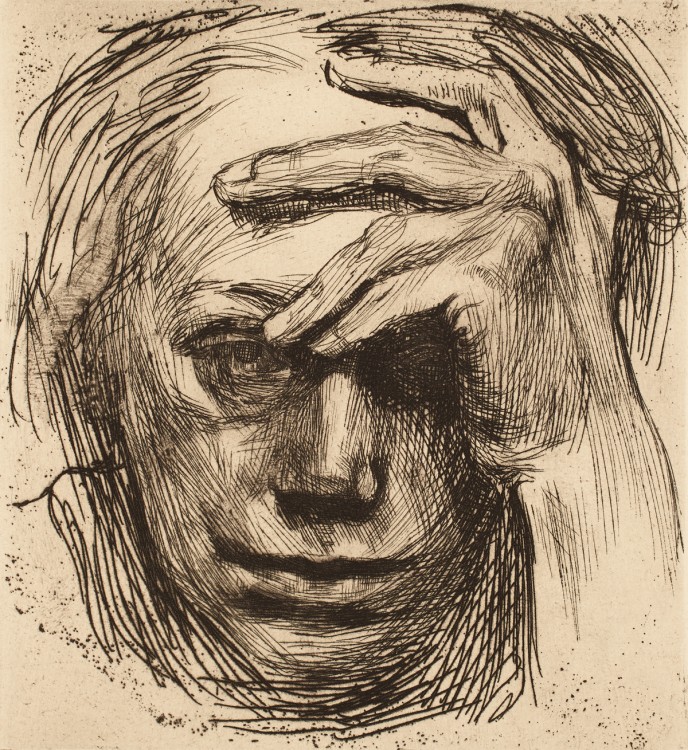
Etching uses acid to bite lines into a plate that has been protected with a resist. This etching is by Käthe Kollwitz (image source):
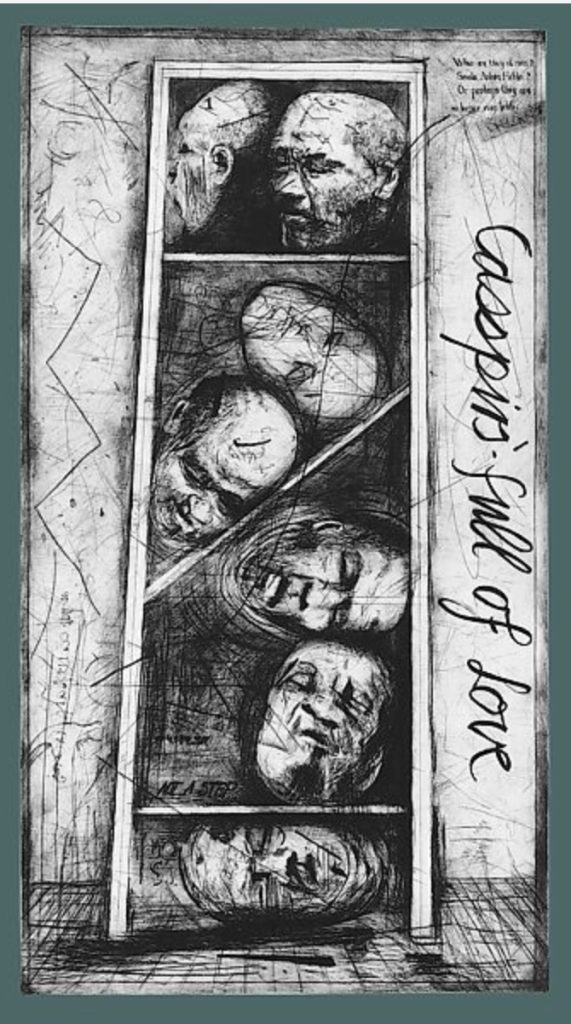
Drypoint is made by scratching directly into the plate, leaving a burr that often creates a soft, velvety line. Here is an example from William Kentridge (image source):
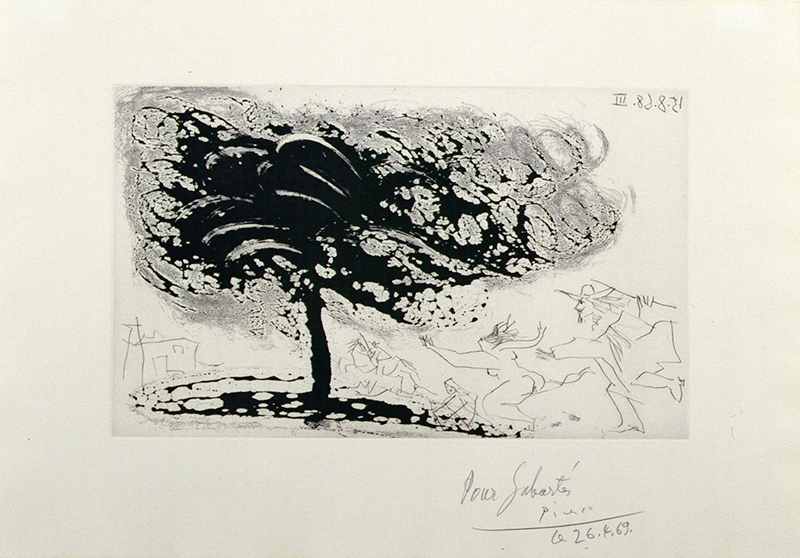
Aquatint is used to create tone rather than line, which makes it possible to build areas of light and dark. Pablo Picasso was a master of the sugar-lift aquatint (image source):
In Conclusion: An Oversimplification of Intaglio
All of this is to say that when you hear the phrase “intaglio printing,” you can think: ink in the grooves. If you’d like to be notified when my online class on Tetra Pak printing is ready (I’m aiming for September 2026 and it will be a self-paced class with lifetime access), please join my email mailing list.
Thanks for stopping by!