Every artist makes mistakes.
That sounds obvious, but I think a lot of us secretly hope that the goal is to make fewer and fewer mistakes until eventually we don’t make any at all. We imagine that experience will somehow lead us to a place where the paper never buckles, the composition never goes sideways, the color choices are always right, and every mark behaves exactly the way we imagined it would.
Unfortunately (or maybe fortunately) that is not how art works.
The real skill is not avoiding mistakes. The real skill is learning what to do next.
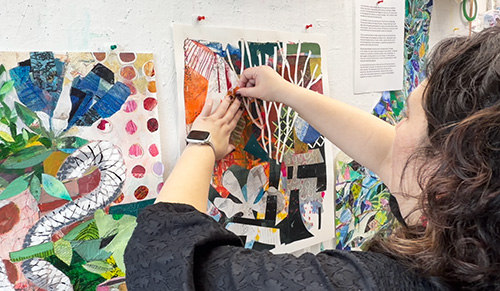
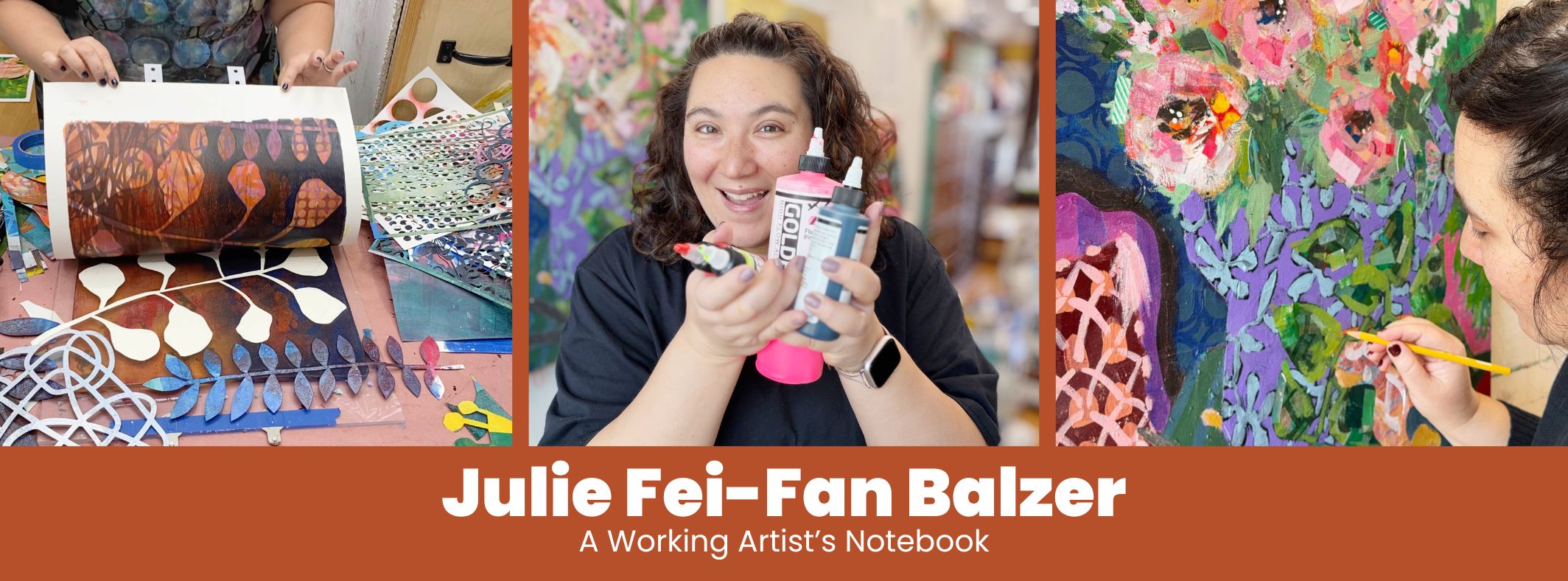
In my own art practice, this has become one of the most important things I know how to do. I am not a person who makes perfect work from beginning to end. I make work that changes. I make work that gets interrupted, revised, covered, cut apart, layered, reworked, and sometimes completely transformed. A huge part of my practice is not about executing a perfect plan. It is about staying in conversation with the work long enough to find the next right move.
That is what fixing mistakes really is.
It is not a single trick. It is not a magic supply. It is not a quick rescue technique that works every time. It is a way of thinking.
Where to Start When Something Goes Wrong
When something goes wrong in an artwork, the first step is simply noticing what the actual problem is.
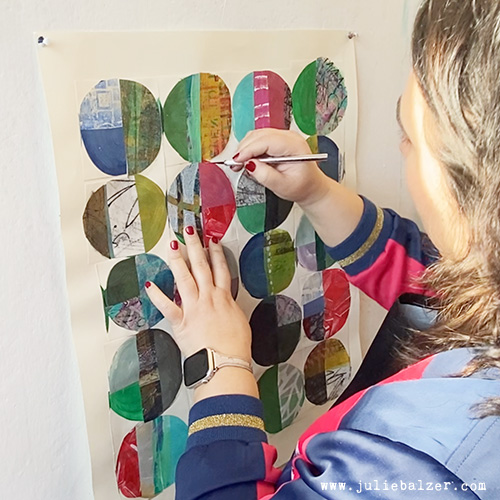
That may sound easy, but often we jump straight to “I hate this” or “I ruined it.” Those reactions are understandable, but they are not very useful. “I ruined it” doesn’t give you anywhere to go. “The contrast is too low,” “the paper buckled,” “this area feels empty,” or “this shape is distracting” gives you something to respond to.
The more specific you can be about the problem, the more options you have. This is something we do at group coaching at My Art Practice. It’s something I encourage my students to do in all of my classes. Identify the problem in order to solve it.
This is why proscriptive feedback is rarely useful, i.e. “You should put yellow there.” The real question is WHY do you feel like putting yellow there would help the composition? Find the underlying problem and then you can pick and choose the solution that works for you!
Sometimes the solution is to hide the problem. Sometimes it is to emphasize it. Sometimes it is to balance it with something elsewhere in the piece. Sometimes it is to add contrast, change the surface, introduce pattern, crop the artwork, cut it apart, or collage something over the top. And sometimes the first fix does not work, which is not a failure. It is simply more information and that is another important part of repair: the first solution is not always the final solution.
Using Mixed Media to Fix a Flawed Tetra Pak Print
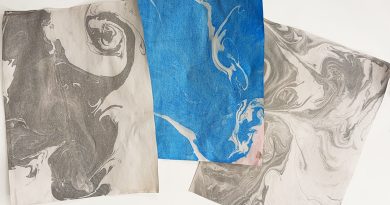
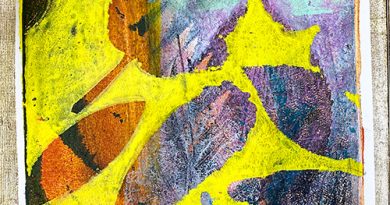
In the video I’m sharing today, I worked on a Tetra Pak print with a very obvious flaw in the paper. My first attempt at fixing it helped me understand the piece better, but it didn’t solve the problem. In fact, it made another issue more obvious: the rest of the print suddenly felt too empty. So the repair became a series of decisions. I added watercolor to shift the contrast and mood. I used collage to activate the surface. I brought in artist crayons to add vibrancy and texture. The finished piece became much richer than the original print had been.
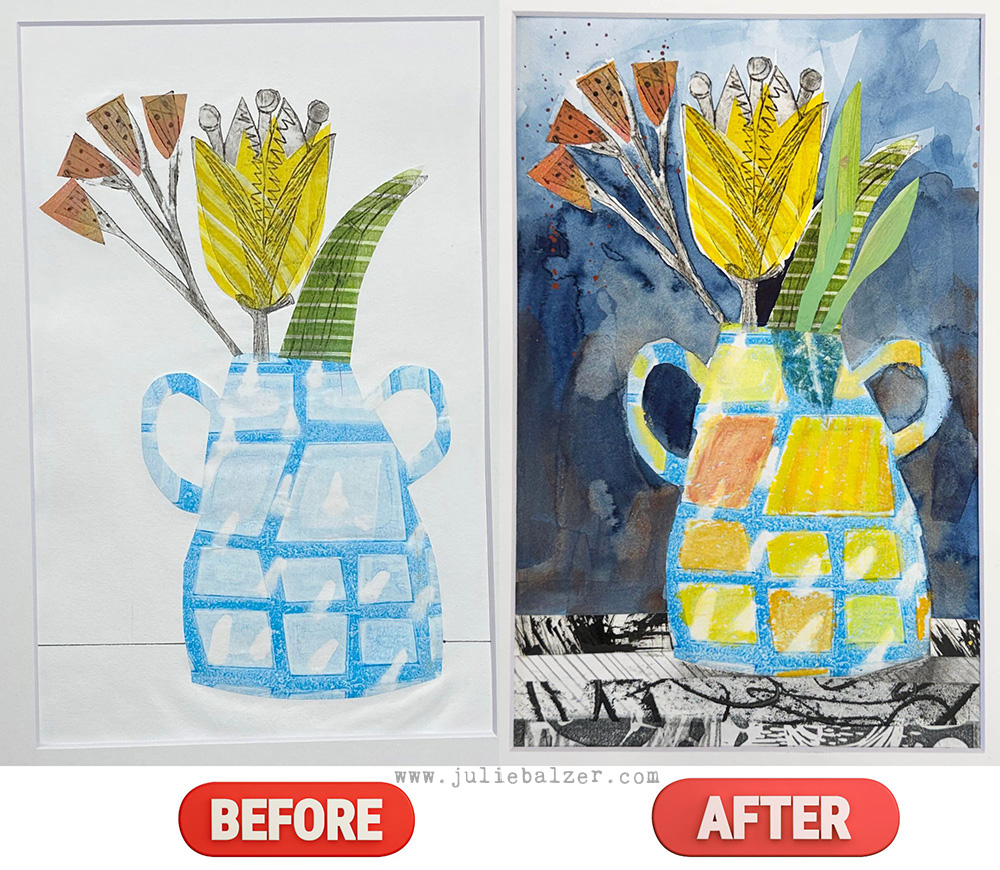
That is one of the gifts of mistakes. They force you to engage more deeply. Watch the video for more:
When everything goes smoothly, it is easy to stay on the surface of the process. But when something goes wrong, you have to ask better questions. What does this artwork need? What is already working? What can be sacrificed? What needs to be protected? What can I add that will make the problem feel intentional rather than accidental? These questions are where the real learning happens.
I also think fixing mistakes builds artistic confidence in a way that “successful” pieces sometimes do not. When you know that a mistake is not the end, you become more willing to take risks. You stop treating every mark as precious. You become braver with your materials because you trust your ability to respond. That trust is built over time, through practice, and through many imperfect pieces.
Mixed Media Gives so Many Options for Fixing Mistakes
One of the reasons I love mixed media is that it gives you options. If drawing doesn’t solve the problem, maybe paint will. If paint doesn’t solve it, maybe collage will. If collage feels too flat, maybe crayon, pencil, cutting, sanding, or sewing will help.
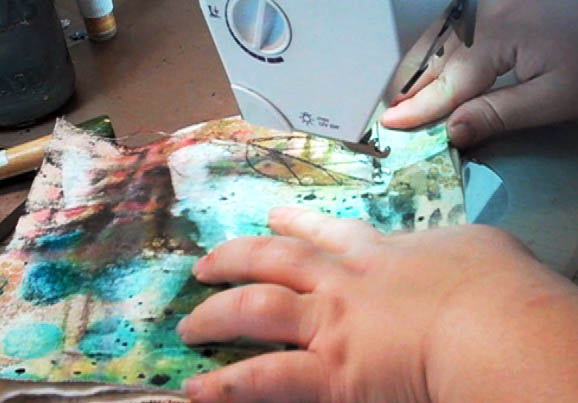
Each material gives you a different way to think, and sometimes the solution comes from switching languages. A mistake in one medium can become an invitation to another.
Final Thought
So the next time something goes wrong in your artwork, try not to rush to judgment. Before you decide that it is ruined, ask yourself what the real problem is. Then try one response. Not the perfect response. Not the final response. Just one response.
And then look again.
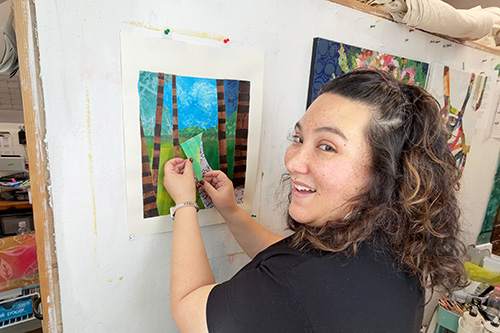
That looking again is the heart of an art practice. It is how we learn. It is how we grow. It is how a damaged print, a strange color choice, an awkward composition, or an unwanted mark can become the beginning of something better than what we originally imagined.
Mistakes are not interruptions to the art practice. They are the art practice!
Thanks for stopping by!