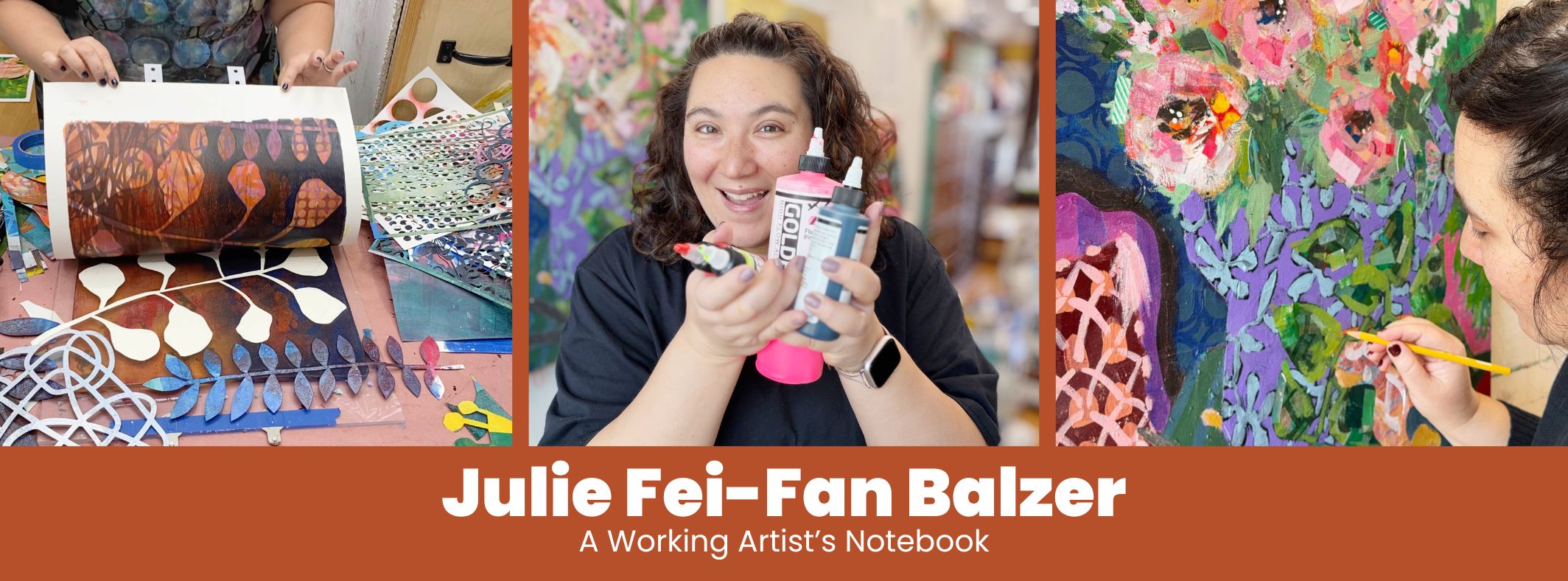
Are you an art supply junkie like me? It’s one of the reasons that I’m a mixed media artist. I want to use all the supplies all the time!
You may recall that last week I posted this video:
Here are all the art supplies that I used in the video. There were a lot and I think I caught them all? Let me know if I missed any!
Pens & Pencils
As far as art supplies go, these are your most direct way to respond to what you see. They’re great for quick sketches, exploring shapes, and building ideas without a lot of setup. Virtually all of them can also be layered or altered later.
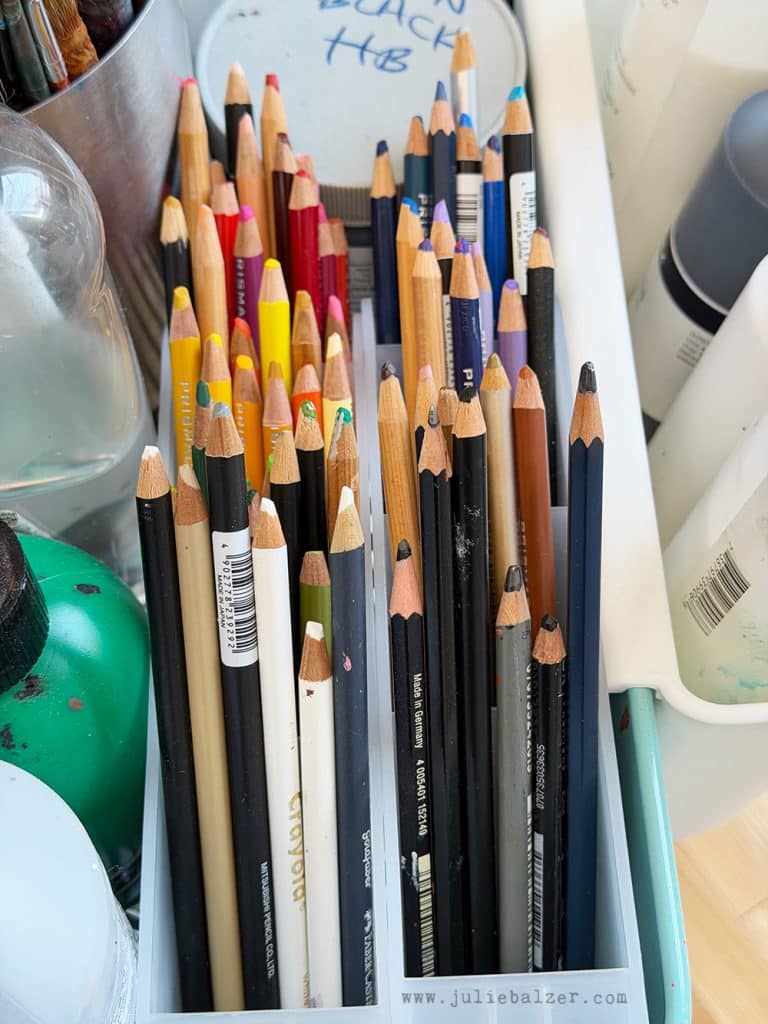
- Colored pencils
- Varsity pen (fountain pen, water-soluble ink)
- Ballpoint pen – I like Bic pens a lot. They don’t leak and they last a long time.
- Fine-Tip Sharpie
- China marker (Listo) — The Listo grease pencils/china markers are the BEST! I buy the refills and just pop in a new “lead” when I need it!
Markers & Paint Pens
Markers and paint pens create bold, immediate marks and can vary from fine lines to thick strokes. Some are water-soluble and can be manipulated, while others are permanent, making them great for layering and contrast. Every artist should have a few markers and paint pens in their art supply arsenal!
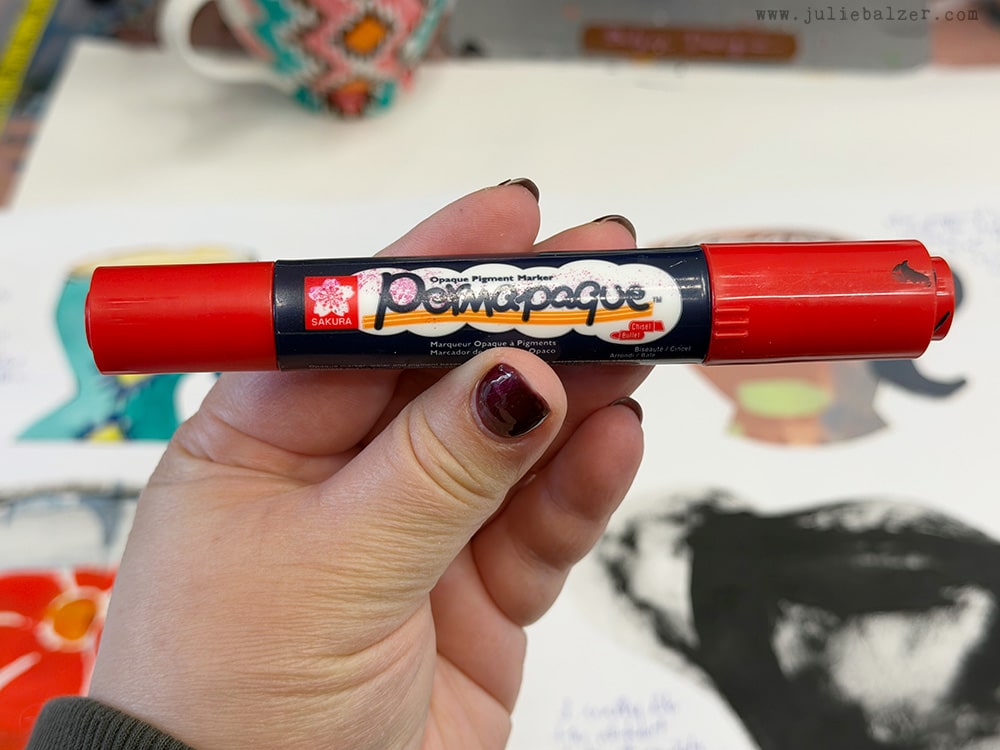
- Permapaque markers (dual tip: chisel + bullet)
- Uni Posca paint pens
- Koi coloring brush marker (water-soluble)
Crayons
Crayons are a highly underrated art supply, but they are excellent for adding color, texture, and expressive marks. The difference between water-soluble and non-water-soluble options allows you to either keep marks crisp or blend and transform them with water.

- Neocolor I crayons (non-water-soluble)
- Scribble Sticks (water-soluble crayons) – I prefer Neocolor II crayons (water-soluble crayons), but I couldn’t find them on the day I recorded the video.
- Inktense blocks (mentioned as an option, but not used in the video)
Acrylic Paint
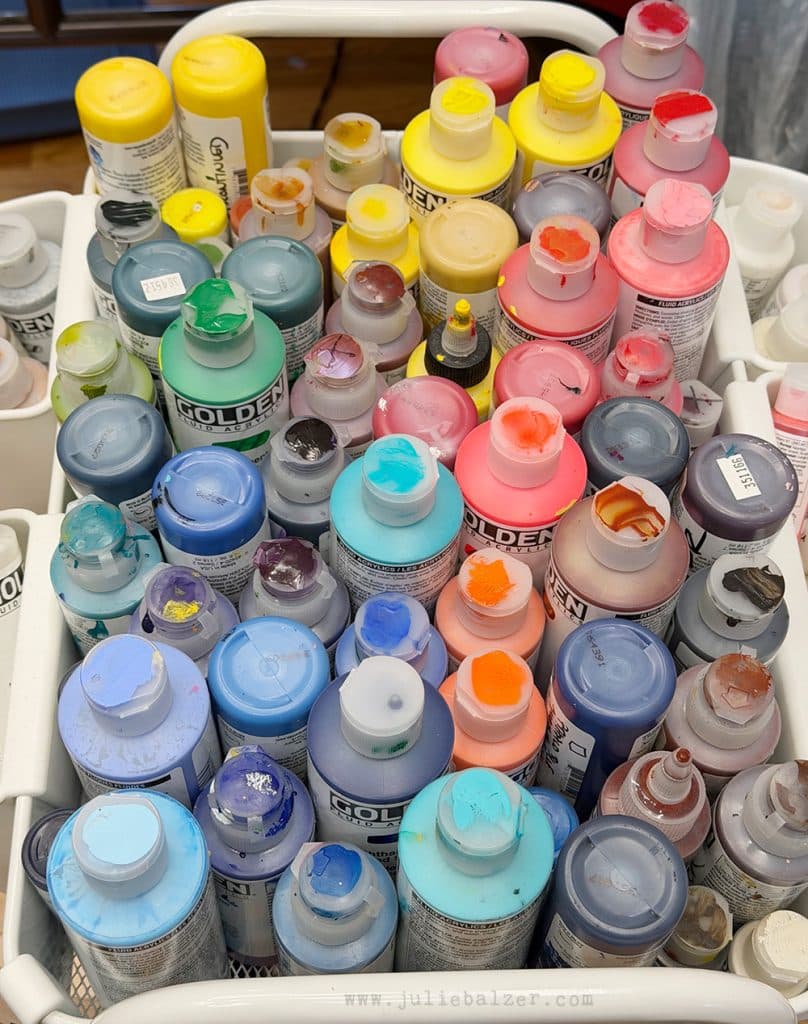
Acrylic paint is versatile, fast-drying, and easy to layer, making it ideal for experimentation. It can be used thick or thinned with water or gel medium for more transparent effects, and it mixes easily to create a wide range of colors and values. Because it dries quickly, it encourages working fast and building up layers without waiting long.
- Golden Fluid Acrylics – These are some of the specific colors I used in the video:
- Carbon Black
- Phthalo Blue (green shade)
- Cobalt Blue
- Yellow (benzimidazolone yellow medium)
- Transparent Iron Oxide
- Liquitex Basics white paint
Paint Application Tools
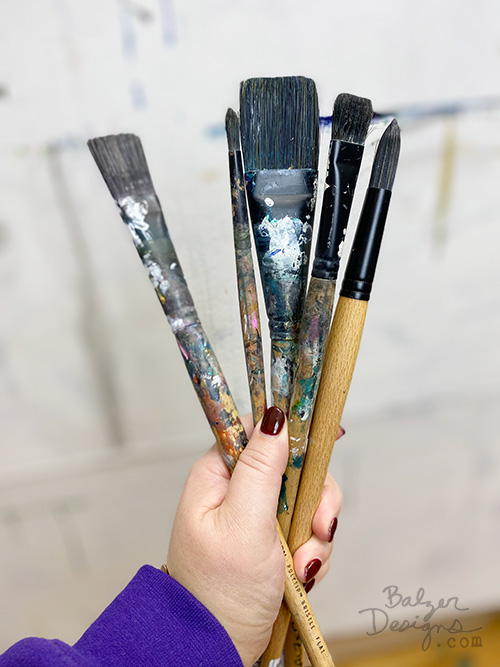
Different tools change how paint behaves and looks on the page. Brushes, palette knives, and sponges each create unique marks, encouraging experimentation with texture, edge, and application. You can splurge on expensive brushes or get away with cheaper ones. It’s simply a matter of finding the ones that work for you. (I’m a brush abuser, so I tend to buy less expensive ones. This is probably the one art supply I don’t splurge on!)
- Paintbrushes — I used these types of brushes:
- Small round brush
- Large flat brush
- Filbert brush
- Silicone paintbrush
- Palette knife
- Cosmetic wedge sponge
Paper (as Substrate & Collage Fodder)
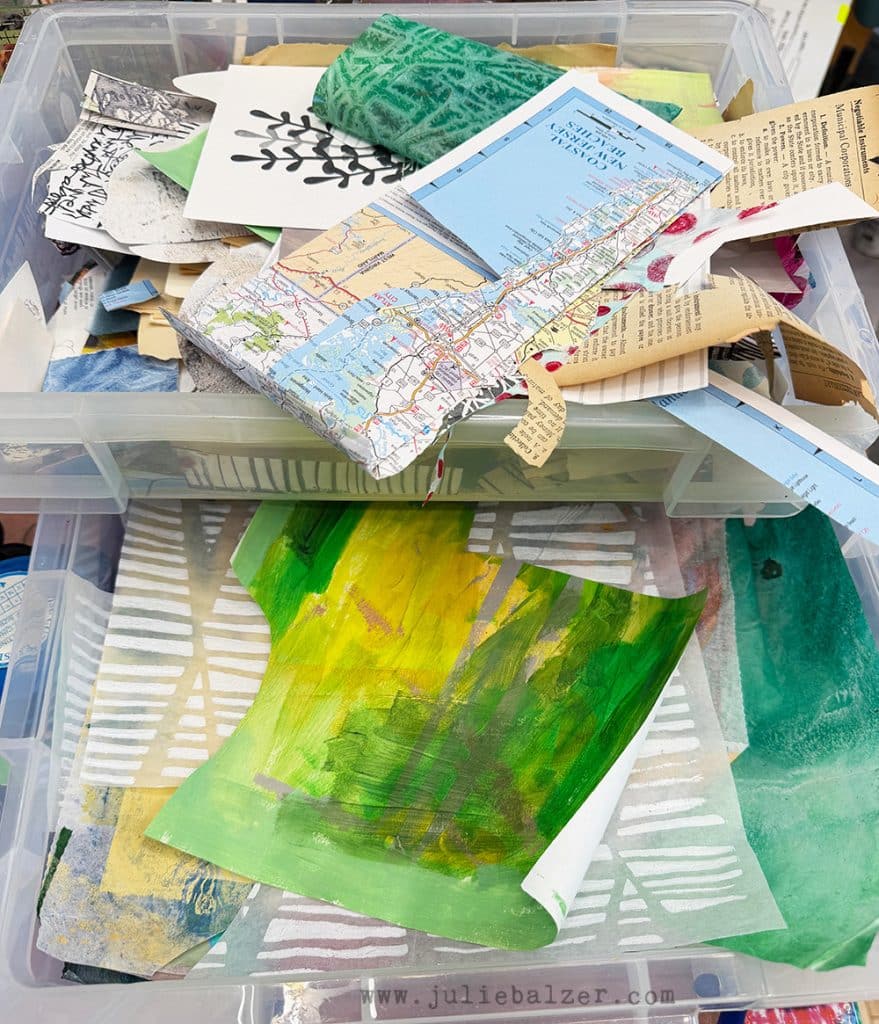
The surface you work on affects everything—from how materials behave to how free you feel to experiment. Using scrap or “underpaper” helps keep the process low-pressure and encourages risk-taking.
- Underpaper – I use Sulphite Paper as my underpaper.
- Collage paper – I paint my own, but you can use whatever you have on hand!
- Deli paper
- Copy/Printer paper
Cutting Tools
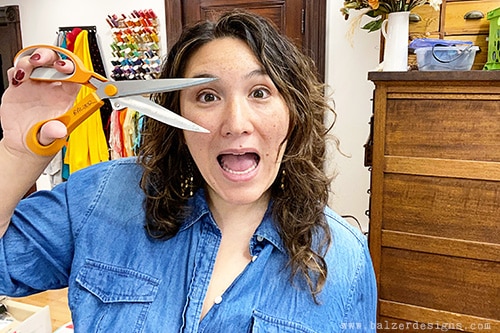
Scissors and craft knives allow you to create shapes directly from paper, shifting your thinking from drawing to construction. Scissors tend to produce softer, more organic edges, while a craft knife gives you precise, clean cuts and the ability to cut interior shapes. Using both encourages you to explore different kinds of edges, forms, and visual effects.
- Scissors – I like Fiskars.
- Craft knife (and even though I didn’t use a cutting mat in the video, you really ought to!)
Adhesives & Mediums
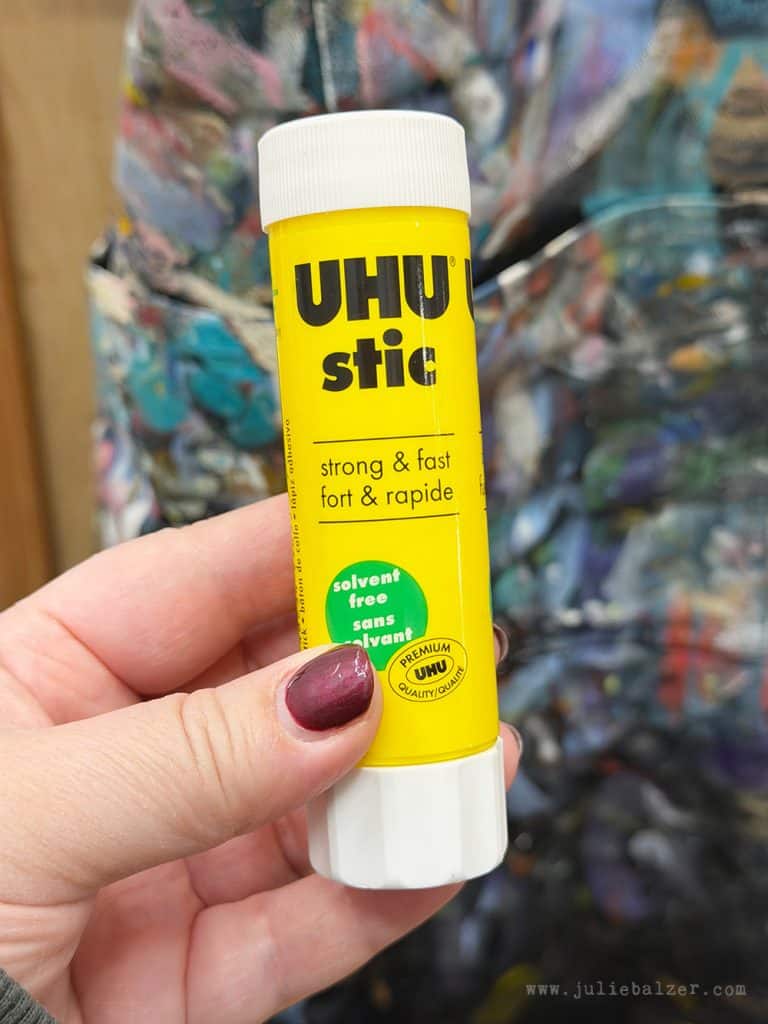
Adhesives make collage possible and can also affect the final look of your work. Different glues and mediums vary in strength, finish, and suitability depending on the weight of your materials.
- Glue stick (UHU preferred)
- Soft gel medium (mentioned as ideal for heavier paper)
- Matte medium (decanted into bottle)
Other Tools
These supporting tools help with setup, application, and process. They may seem secondary, but they make experimentation easier, cleaner, and more flexible.
- Palette (or palette paper)
- Water container (to clean brushes) – I like to use old jars
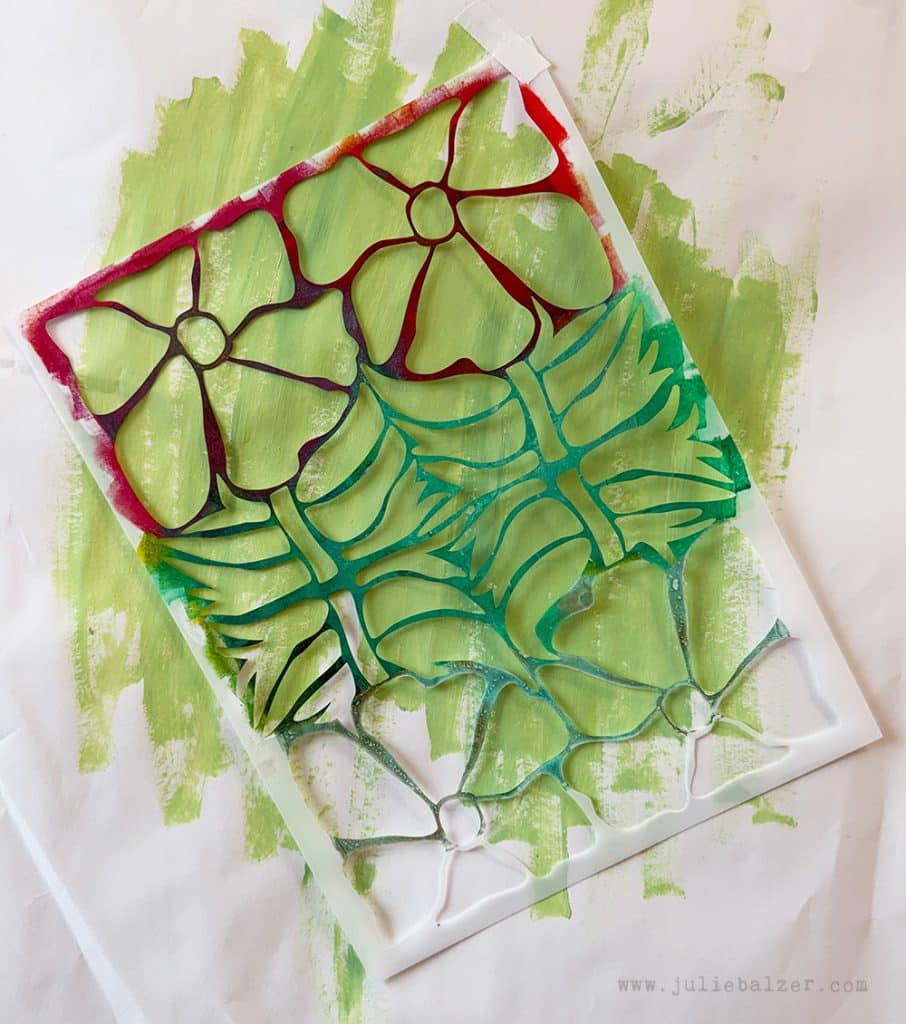
- Stencils — the one I used in the video is called Big Flower. It’s from the line of stencils I designed for Joggles.
Final Thought
These are all supplies that I love and use and highly recommend. You don’t need all of these art supplies to do the exercise. The goal is to use whatever you have and explore how it works, letting curiosity—not materials—drive your process.
Let me know if you have any questions and thanks for stopping by!



Great breakdown of Mixed Media Tool Box: Art Supplies Mentioned – Balzer Designs Blog. I found the practical insights particularly helpful for my own projects.