Hey, mixed media artists! What if I told you that one simple object—something as ordinary as a cup—could generate dozens of ideas?!
That’s exactly what this art exercise is about.
On World Art Day, I hosted a live online Zoom class where we explored how to take one object and draw it in as many different ways as possible. It’s fast, messy, low-pressure, and incredibly revealing.
The Premise: One Object, Many Ways
All you need for this art exercise is:
- One object (a cup, plant, shoe—anything!)
- Some paper (even “bad” paper is great)
- A variety of art materials you already own and love to use
From there, the goal is simple: Draw the object over and over again—without worrying about making a “good” drawing.
Instead, you’re asking:
- What shapes do I see?
- How else can I look at this?
- What happens if I change materials?
- What if I simplify it? Exaggerate it? Ignore accuracy entirely?
Start With Shapes, Not Perfection
The first step is to break your object down into basic shapes. Forget details. Forget realism. You’re simply noticing:
- Circles
- Ovals
- Lines
- Curves
And then you draw that.
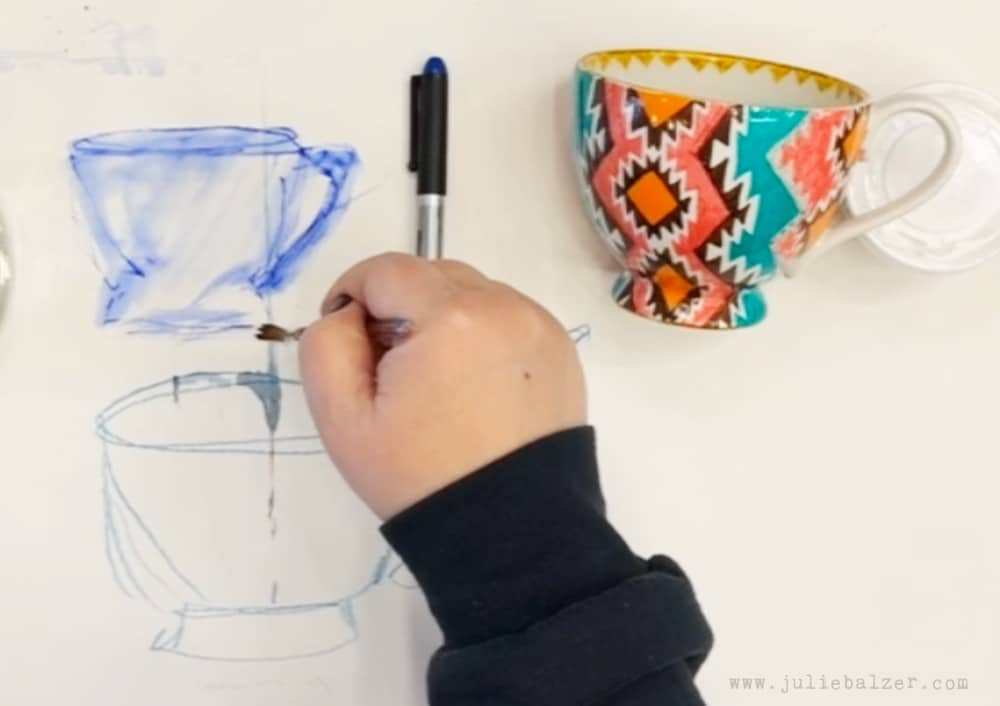
Not the cup. Just a version of a cup. That distinction matters. Because the moment you stop trying to “get it right,” you open the door to exploration.
Speed Is Your Friend
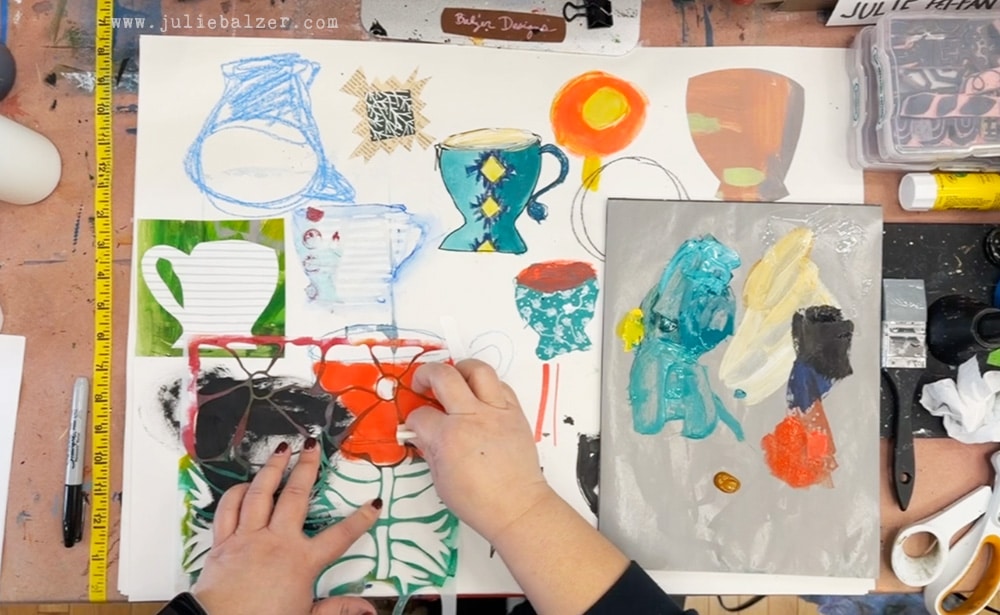
In the video you can see that in just about 10 minutes, I created 10 different drawings using 9 different materials.
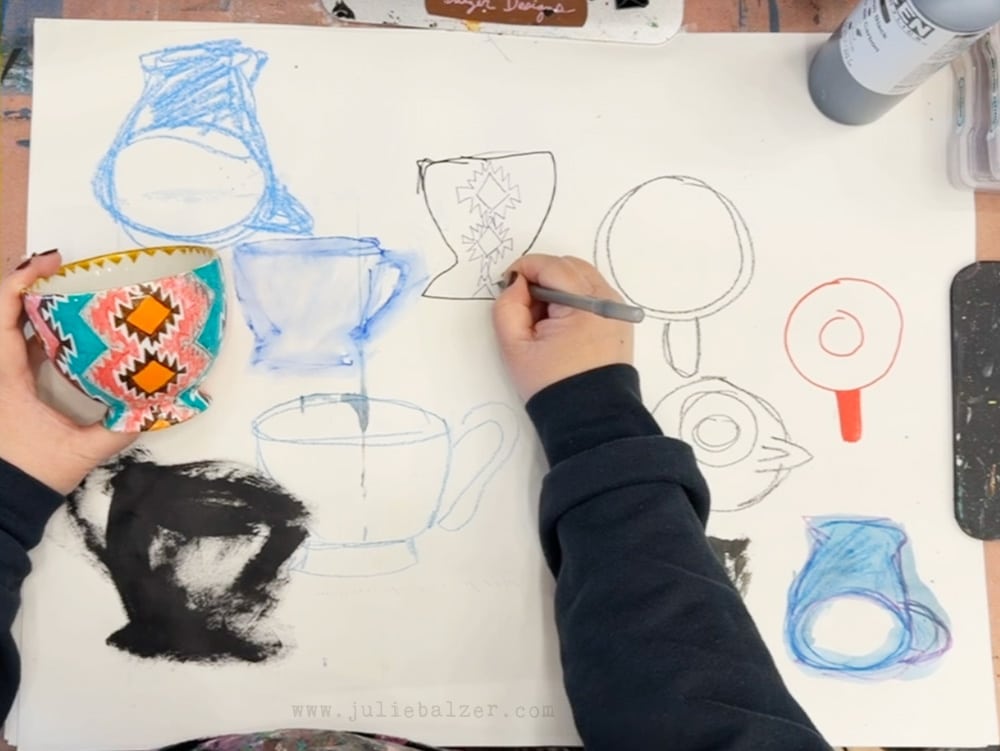
That’s the energy you want.
Quick.
Loose.
Unattached.
The faster you move, the less time you have to judge what you’re making and the more interesting your ideas become. Remember, it’s just an art exercise. It’s not a masterpiece. Have fun and just play!
Let Your Materials Lead You
One of the most important parts of this exercise is switching materials often.
Try:
- Pen + water (to see what bleeds)
- Markers (thick vs. thin lines)
- Paint (big brush vs. small brush)
- Crayons (water-soluble vs. not)
- Collage
Each material changes:
- How you see the object
- How you interpret the shapes
- What feels possible
This is how you start to understand your supplies—not by reading about them or watching videos where other people use them, but by using them in play.
Change the Way You Look
Don’t just draw the object one way.
For this art exercise, try:
- Looking from above
- Turning it sideways
- Letting parts disappear
- Focusing only on the silhouette
- Ignoring the “correct” perspective
You can even draw it in ways that make no logical sense. Have fun and don’t get caught up in the drawing part. Keep it playful.
Explore More Than Just the Outline
Once you’ve drawn the basic shape, you can also explore:
- Patterns on the object
- Shadows and silhouettes
- Color mixing (can you match what you see?)
- Texture
- Collage shapes inspired by it
At this point in the art exercise, the object becomes a starting point, not a destination.
This Is Not About Results
Let me say this clearly: These are not supposed to be good drawings.
They might not look like your object at all—and that’s okay. The goal is to:
- Generate ideas
- Learn your materials
- Build confidence
- Stay curious
Because when you focus too much on results, it’s easy to feel like you’ve already failed before you’ve even begun. But when you focus on process, everything becomes useful.
Art Is an Iterative Process
One of the biggest takeaways from this art exercise is that art doesn’t happen in a straight line. It’s iterative. One idea leads to another. One experiment leads to the next.
You keep going.
You keep playing.
You keep responding.
And eventually, something clicks.
Final Thoughts
This kind of art exercise is deceptively simple, but it’s packed with information.
You’ll learn:
- What you like
- What frustrates you
- What materials excite you
- Where you want to explore more
And best of all? You’ll have a page full of ideas you can come back to later!
If you try this exercise, I’d love to hear how it goes for you.
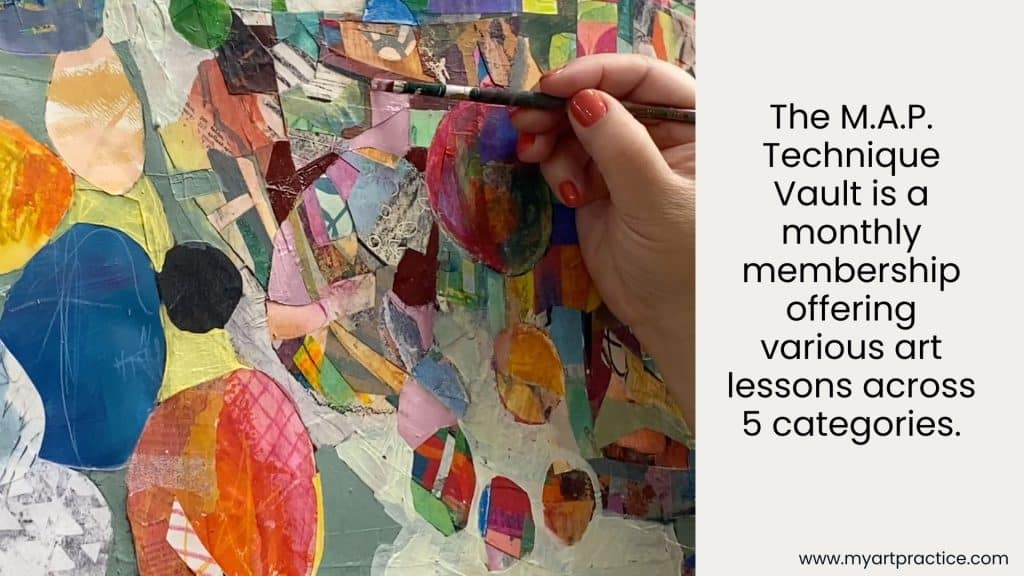
And if you’re looking for more technique-based explorations like this, you might enjoy the My Art Practice Technique Vault, where I dive deeper into materials, processes, and creative experimentation.
Thanks for stopping by!

Pingback: Mixed Media Tool Box: Art Supplies Mentioned - Balzer Designs Blog