Today I want to share a super simple technique that I use to unify little scraps of collage paper in my mixed media artwork.
Collage Papers Don’t Always Go Together
One of the things I love about collage is also one of the things that can make it so tricky: every piece of paper has its own personality and sometimes the personalities clash.
As you can see from the bins full of collage paper below, some papers are quiet. Some are loud. Some have a strong pattern. Some have a subtle texture. Some are handmade and irregular. Some are commercial and crisp. They’re all different!
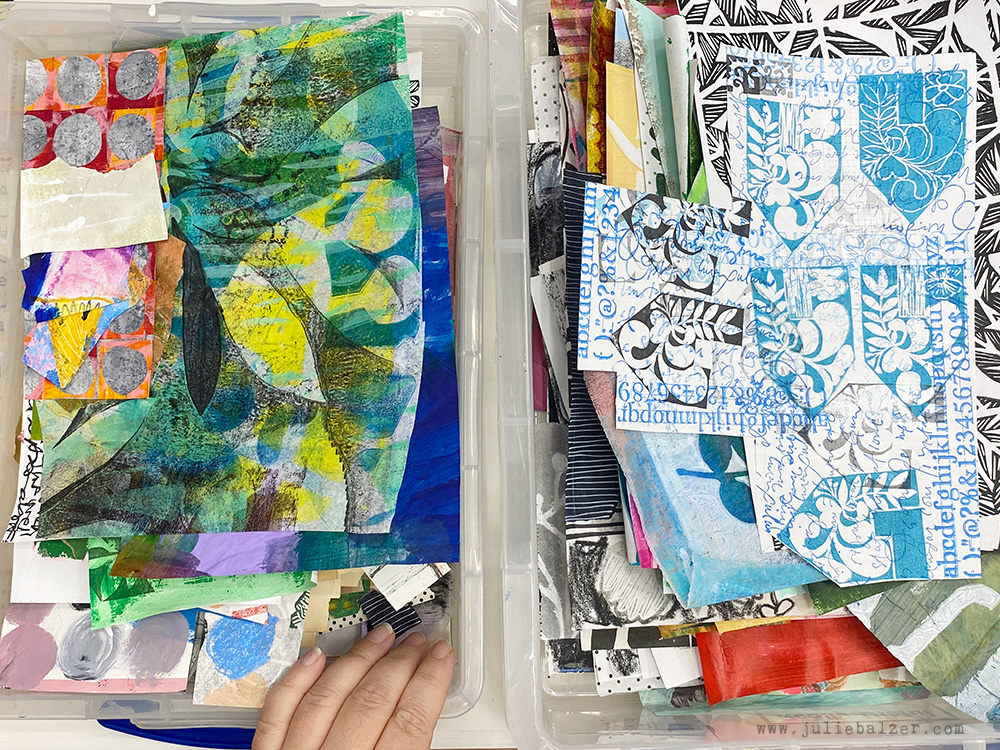
When you start putting a collage together, sometimes the papers don’t quite get along.
A Solution: Pattern Connection
When patterns don’t get along or an area of the artwork is reading in a highly fragmented way, I have several tricks that I use to force the collage papers to cohere and one of them is explained in this short video:
As you saw in the video, I am working on a landscape collage. The sky was bothering me. I had used several different collage papers, and one of them had these black linear marks running across it. That one piece of paper was calling too much attention to itself. The fix was wonderfully simple. I picked up a pencil and extended the lines from that paper onto the surrounding papers.
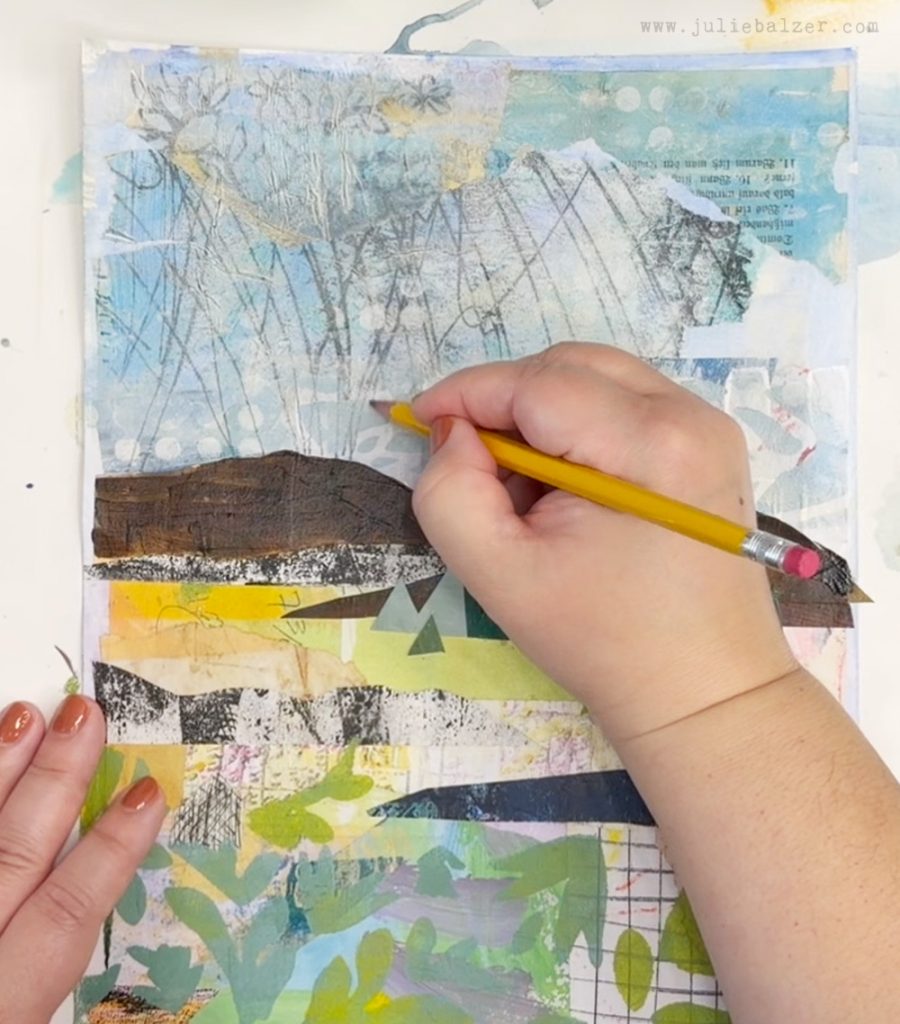
I did not cover anything up. I did not repaint the whole sky. I did not rip it apart and start over. I simply continued what was already there.
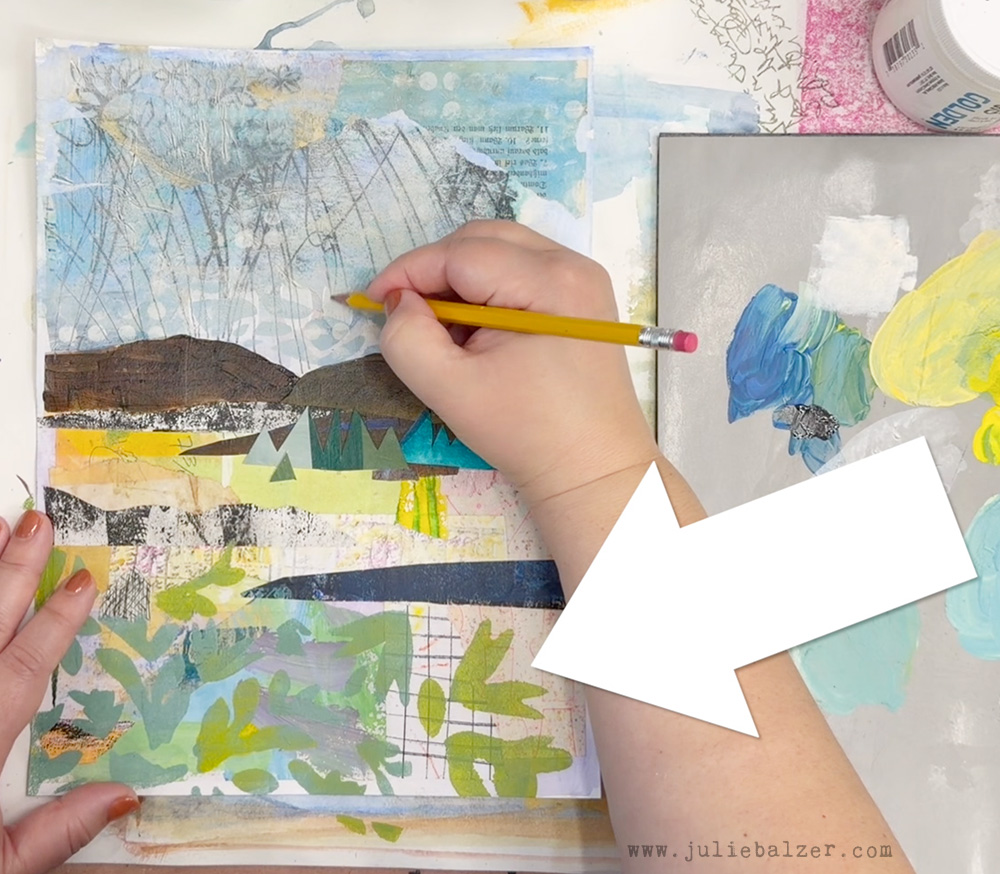
But, you can also place a new pattern over an area to unify it. And you saw evidence of that in the leafy stenciling at the bottom of the artwork:
I worked a bit more on this piece after I finished the video and here is the final version:
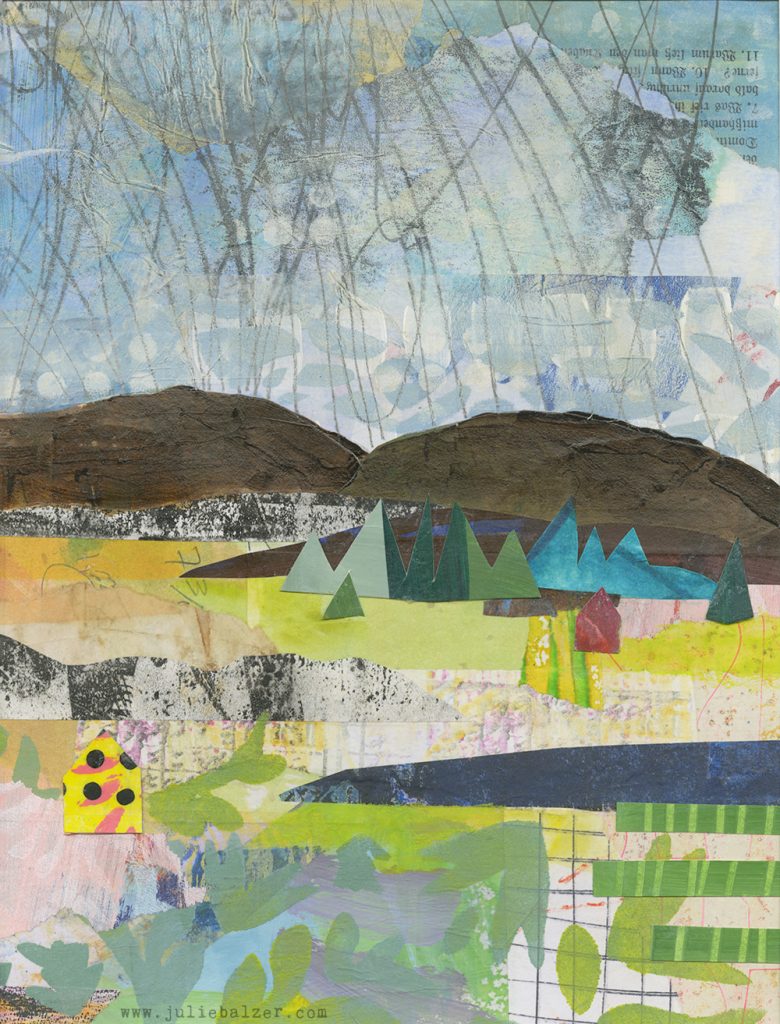
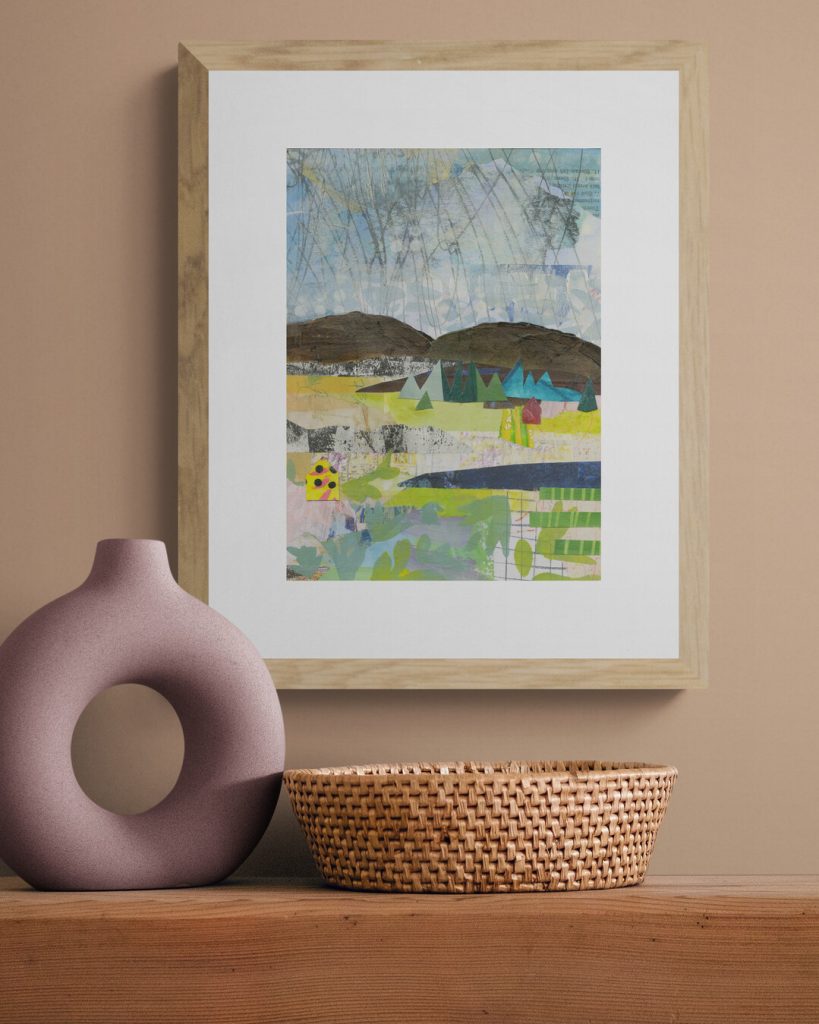
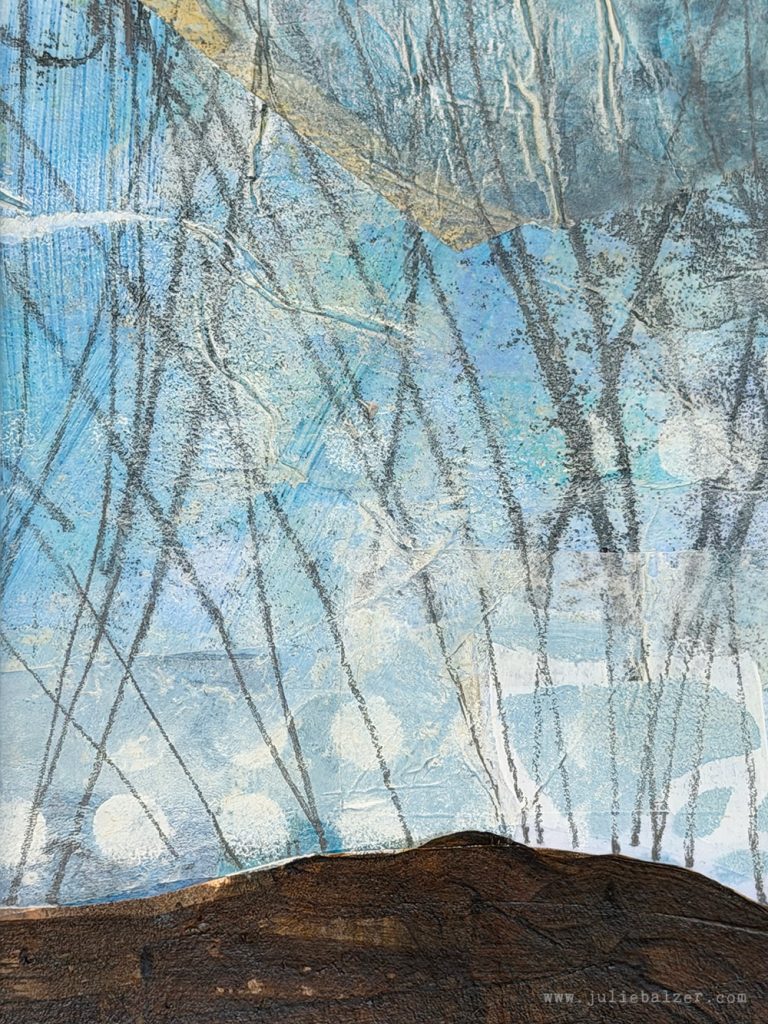
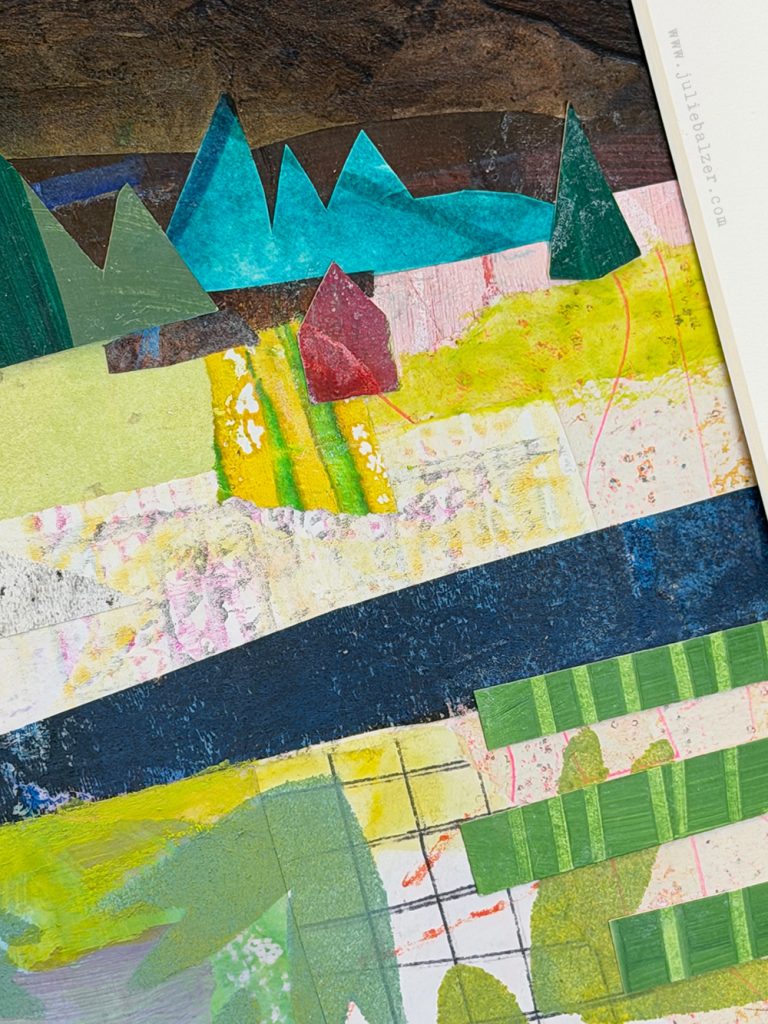
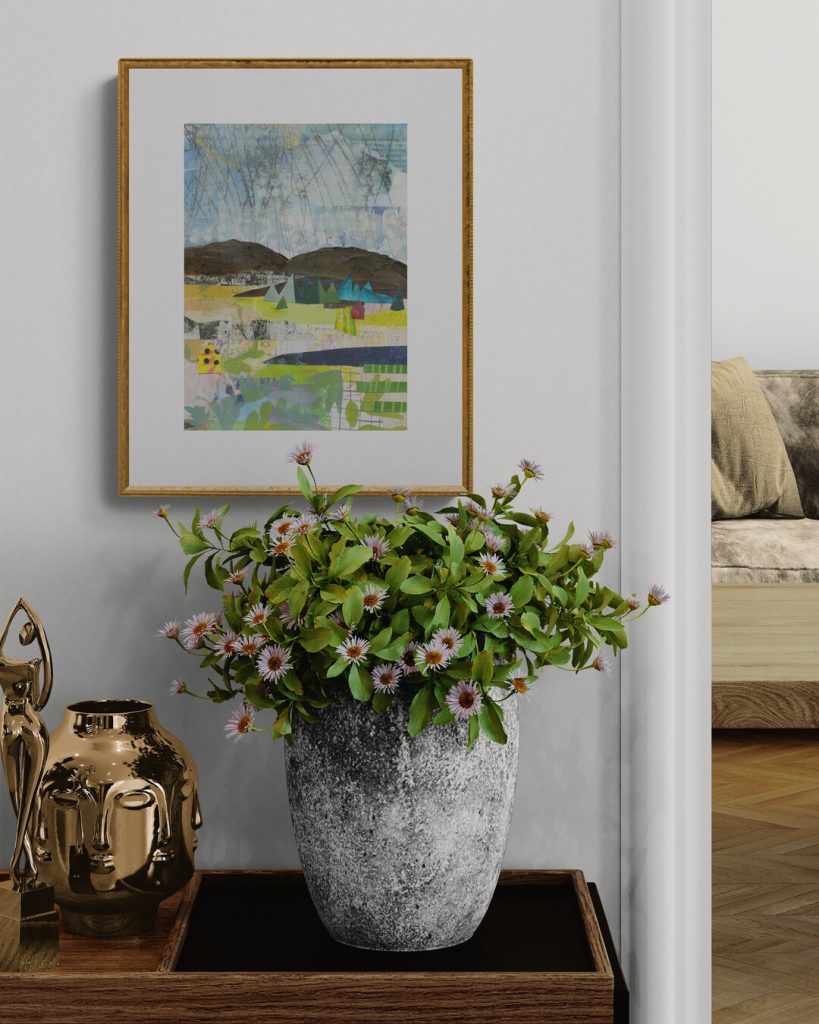
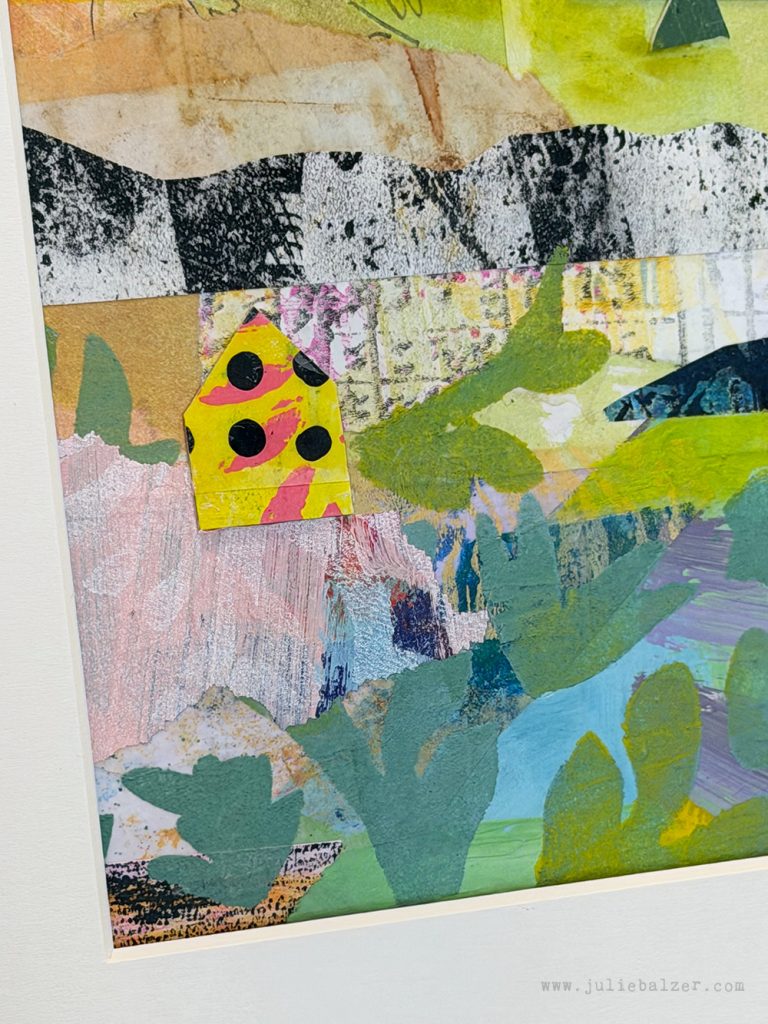
You can find it for sale in my online shop.
Why Pattern Helps Connect
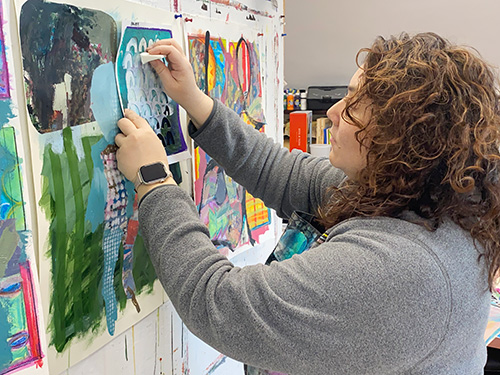
Pattern is powerful because it can visually stitch separate pieces together. A repeated line, dot, shape, stenciled image, brushstroke, or printed motif can help a group of papers read as one larger unit. It works because the eye starts following the repeated mark instead of getting stuck on the edges of each paper. The pattern becomes a bridge. I use this idea constantly — like on almost every single piece I make. (Click on any image to make it larger.)
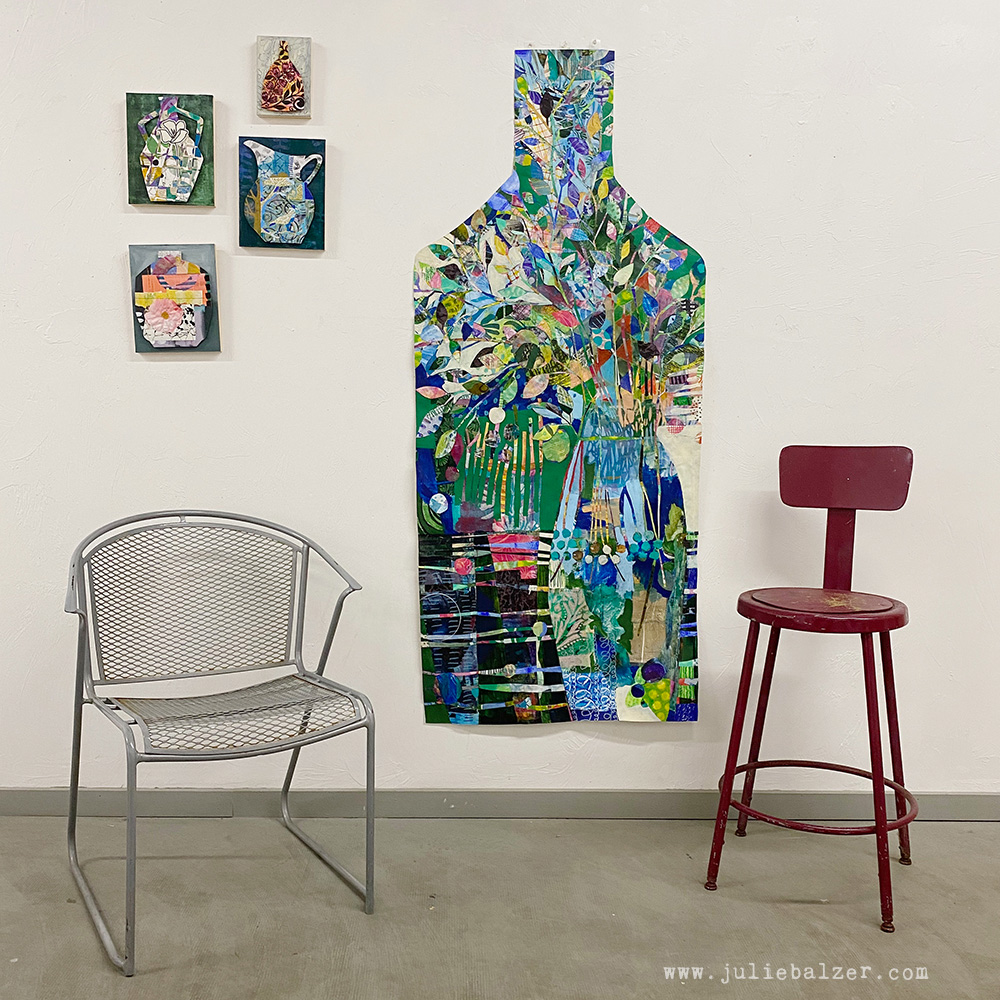
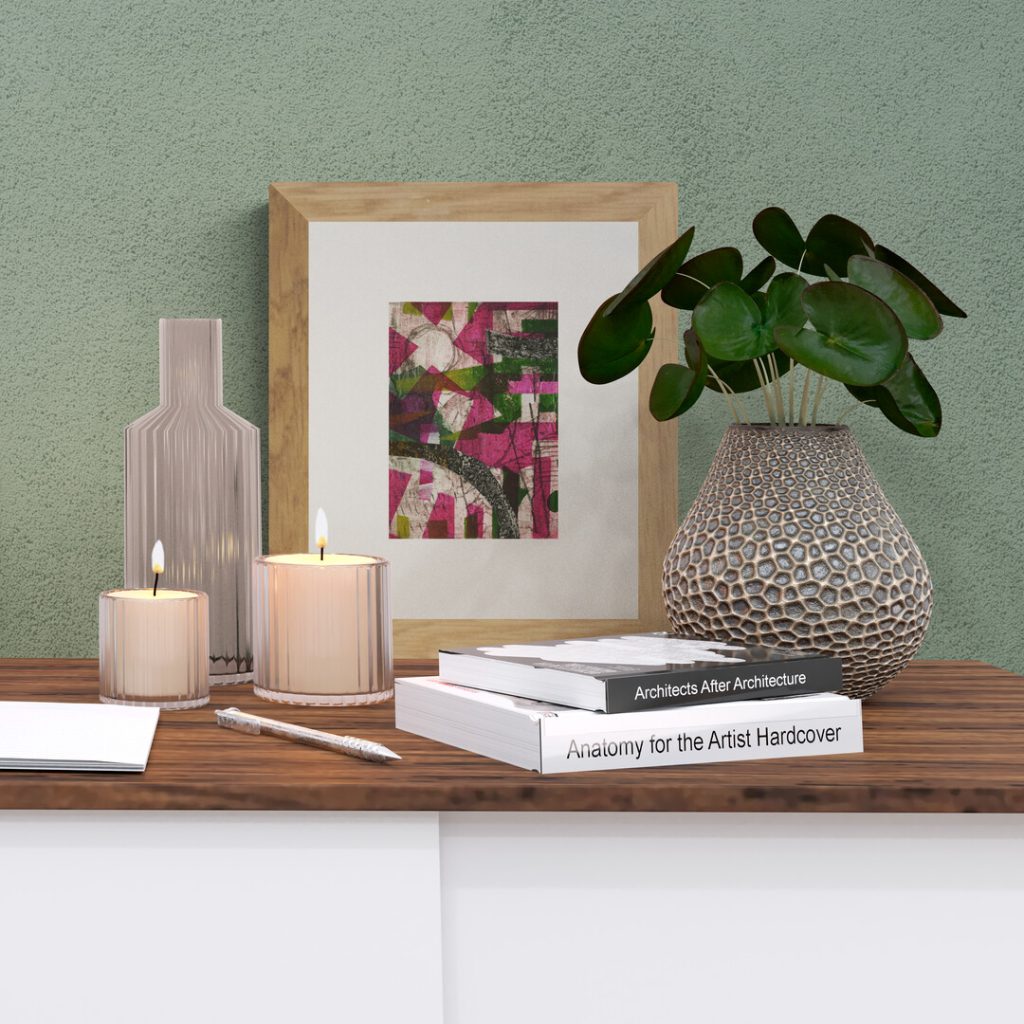
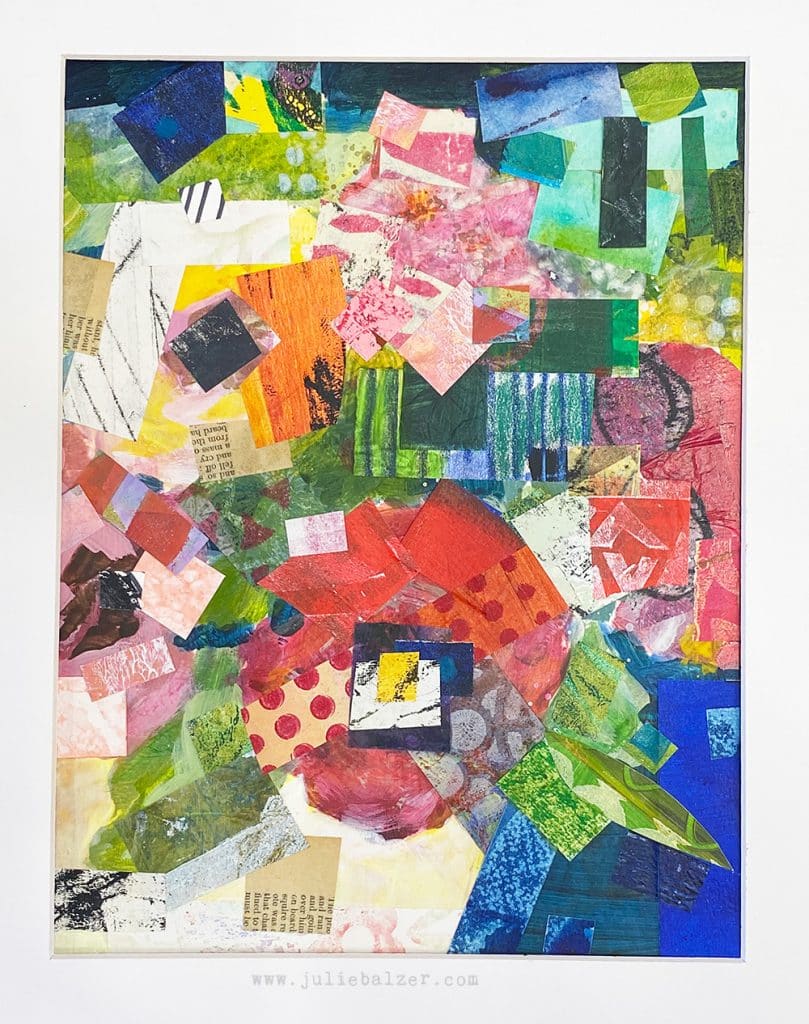
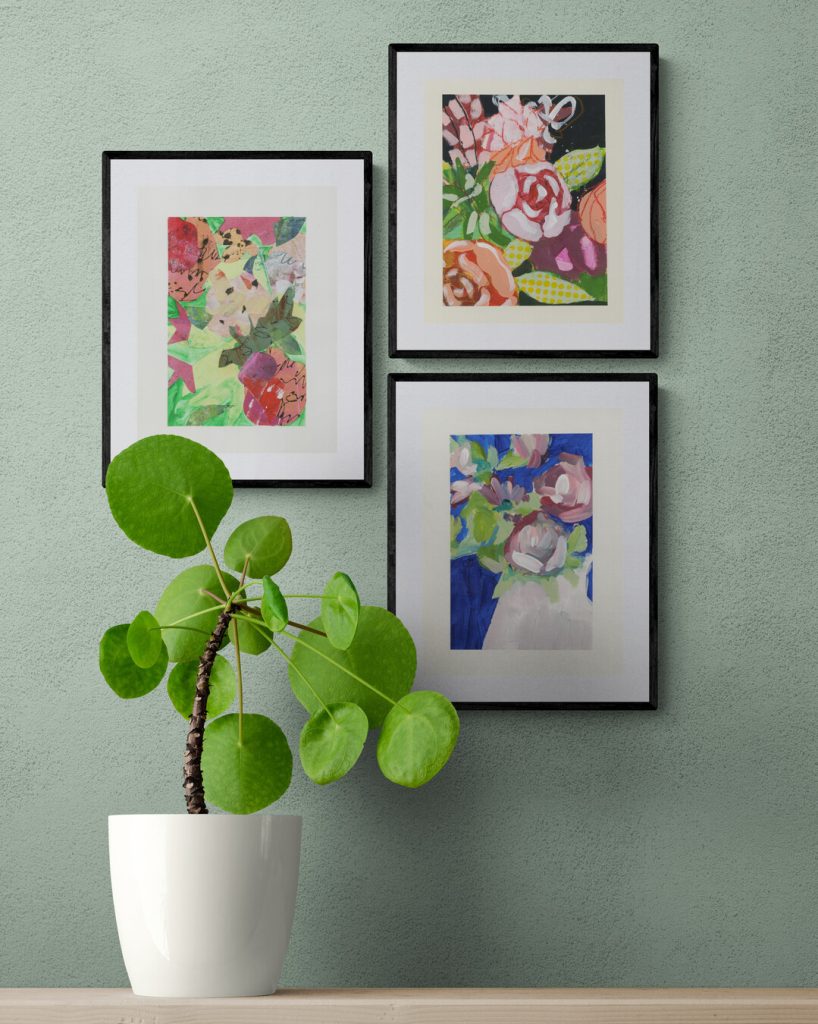
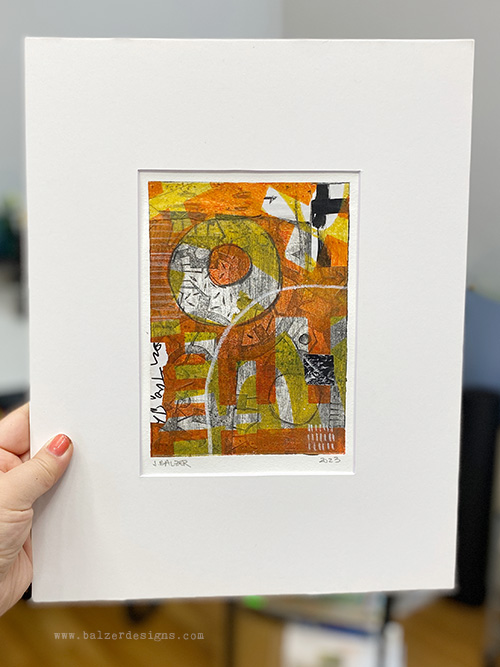
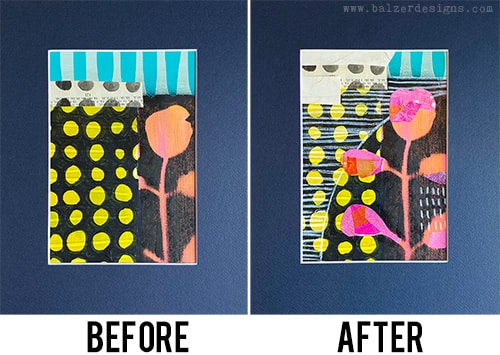
Just keep in mind that the goal is not to make your papers match each other. Matching can be boring. The goal is to create enough relationship between them that they feel intentional. That is such a big part of the fun of collage for me: making the pieces feel chosen rather than random.
Final Thought
So the next time a section of your collage feels unresolved, try this. Before you cover it up or tear it off, ask yourself: Is there a pattern here that I can repeat? Is there a line I can continue? Is there a shape I can echo? Is there a mark that could travel from one paper to the next?
You might be surprised by how little it takes. A few pencil lines can change the way an entire area reads. A small repeated mark can pull a messy section together. A pattern that starts in one place can become the thing that unifies the whole composition!
I’ve got lots of great tips and tricks for mixed media collage in my upcoming class, Mixed Media Collage Composition Intensive, at my home studio here in Watertown, MA in October 2026.
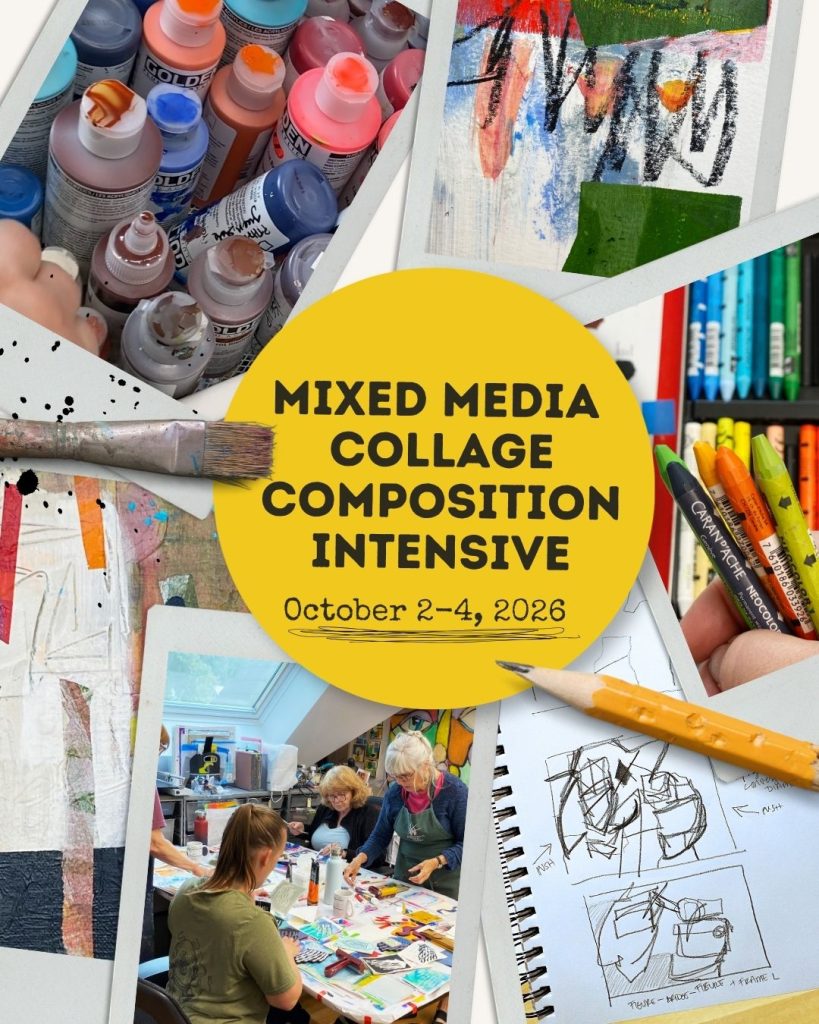
This class is appropriate for ALL LEVELS — beginner to advanced. There are just 4 seats left!
Thanks for stopping by!

I loved this post and your creative examples, Julie. I really enjoyed checking out the pics of your finished collage, especially the close-ups.
My favorite part was the “before” and “after” pics of the flower collage, where you extended the leaves — love that so much, and it was the perfect image to illustrate the points you made. Thanks for the insights and the ideas.
Yay! I’m so glad you enjoyed the post! Thanks for taking the time to leave a comment!