Yesterday was Book Club! We discussed Lynn Whipple’s book, Expressive Flower Painting.
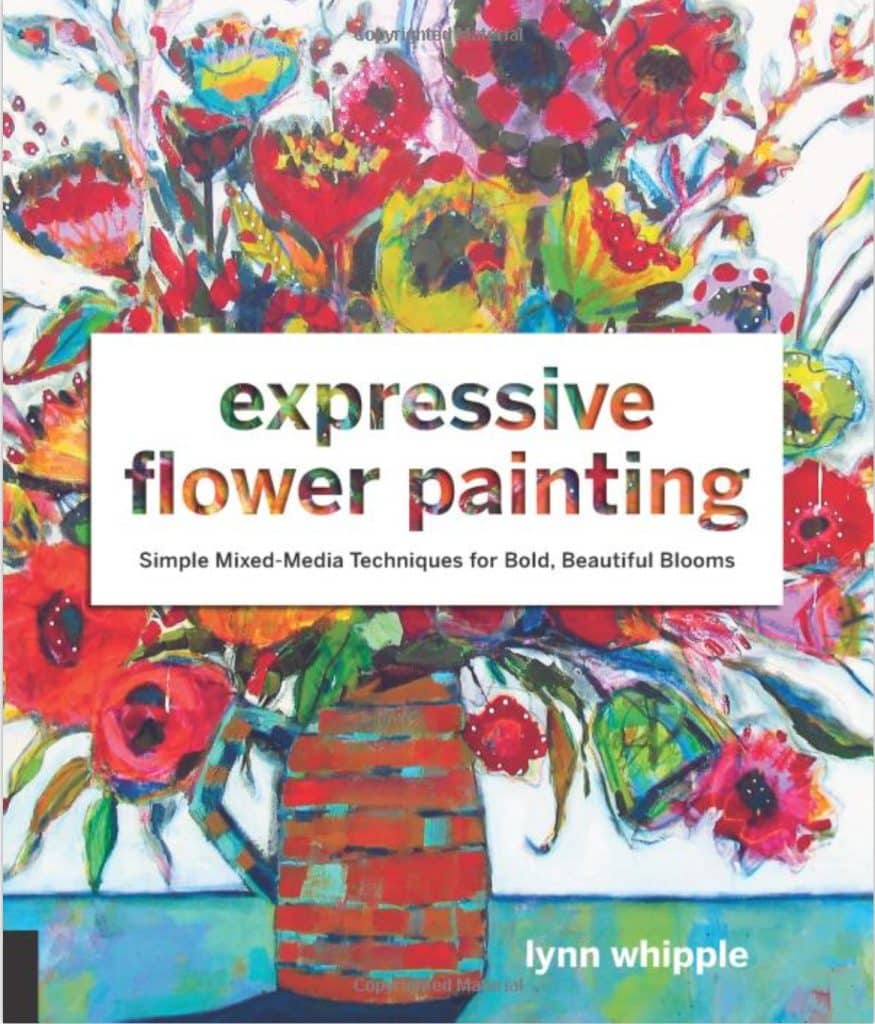
Expressive flower painting is less about creating a perfectly accurate bouquet and more about using flowers as a starting point for experimentation. Through loose drawing, collage, layered paint, unexpected marks, and playful composition, you can move beyond simply reproducing what you see and begin translating observation into something personal. Yay!
Watch the Expressive Flower Painting Discussion
You can watch the replay of the live online Book Club meeting below:
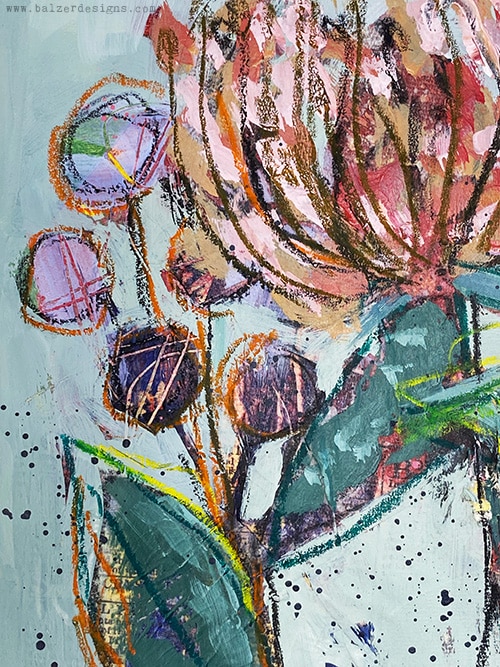
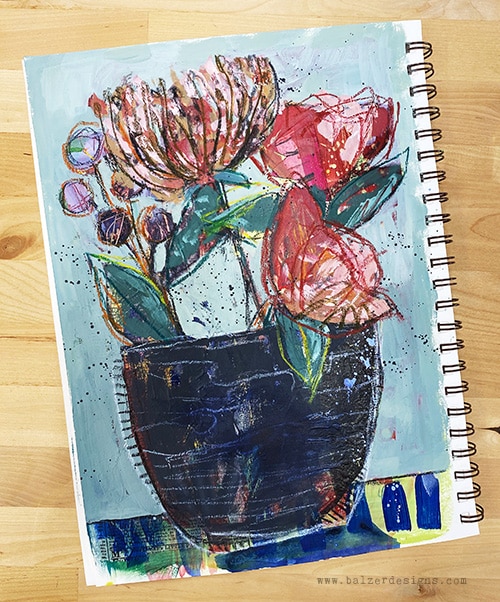
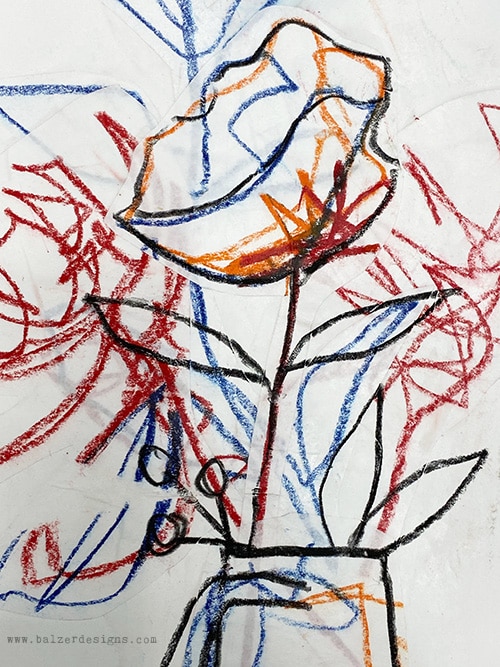
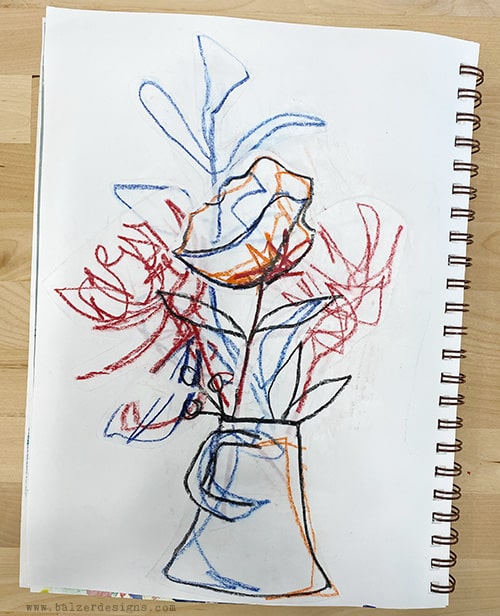
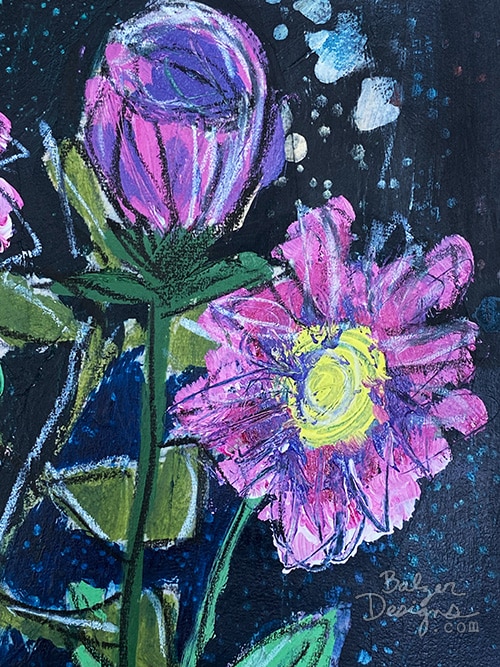
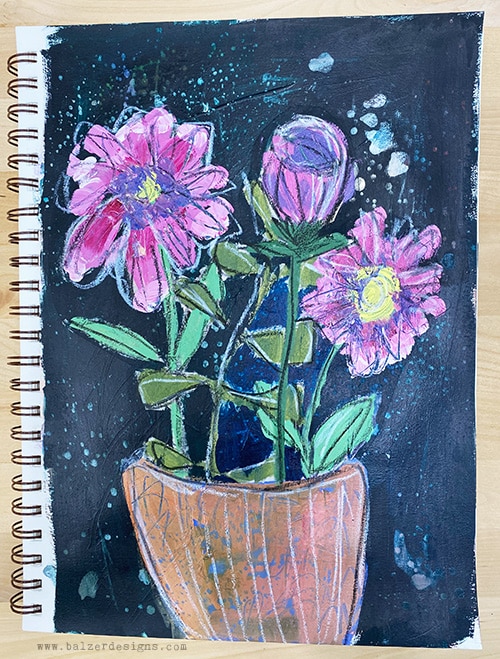
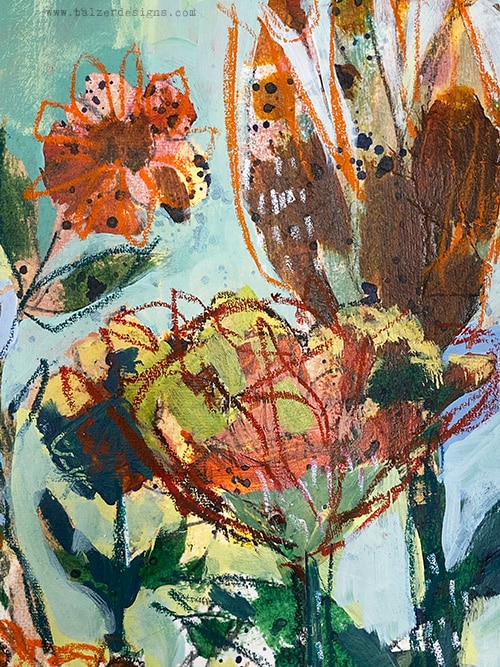
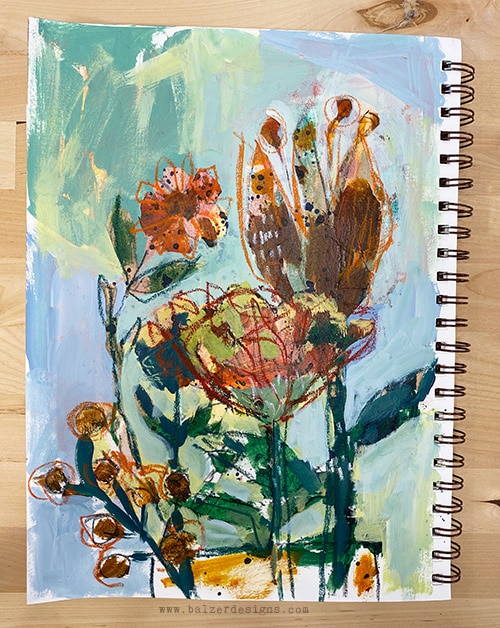
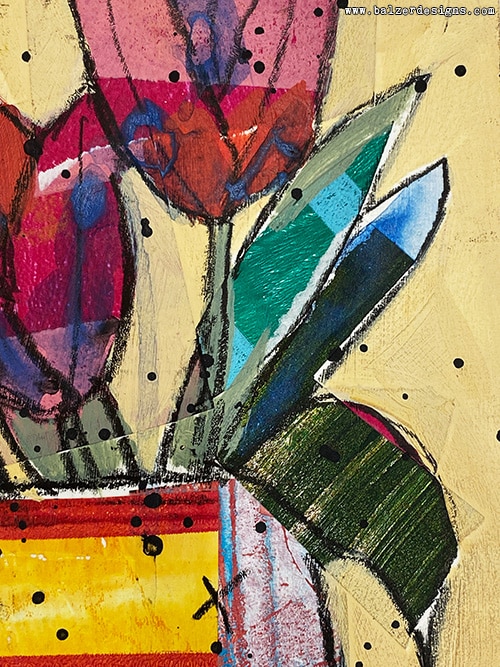
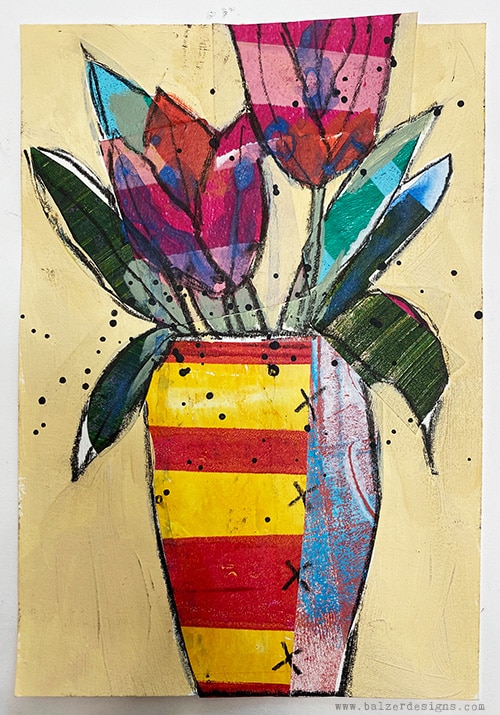
For the paint along portion of the video I used Golden Fluid Acrylics. And here are some of the pieces I made inspired by the techniques and ideas in the book:
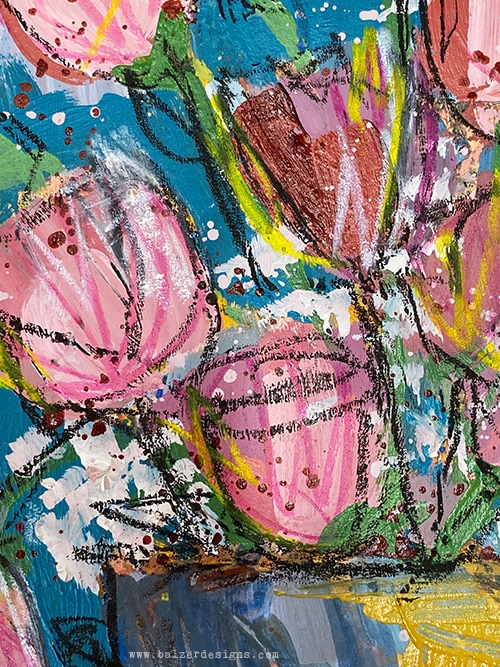
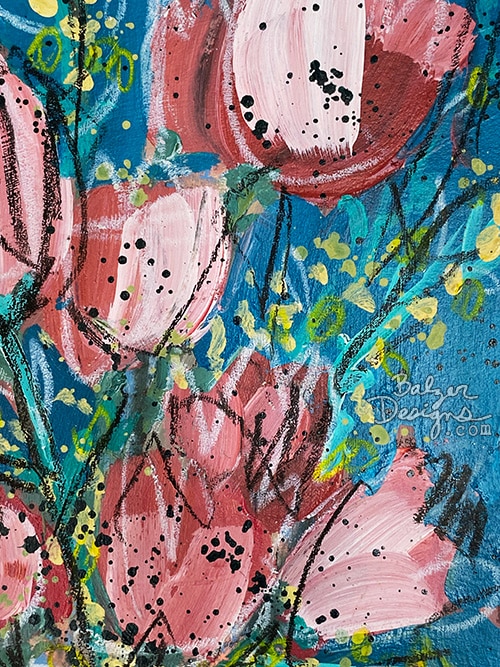
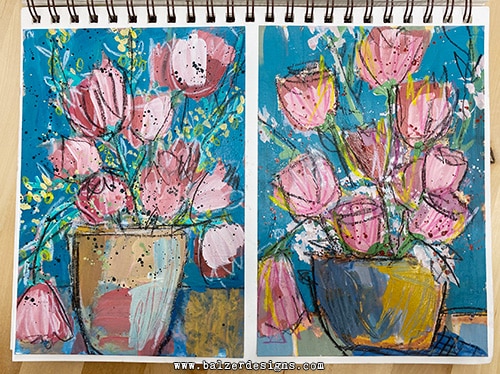
Take Aways for Artists
In case you don’t have time to watch the whole video, here are some of the ideas and insights I hope you take away from Book Club today:
- Use other artists’ methods as starting points, not formulas. Identify the central idea behind an exercise, then adapt the materials, process, and imagery to suit your own practice.
- Do not aim to make work that looks like your teacher’s work. A class is most useful when you learn how and why someone makes decisions, then translate those ideas into your own visual language.
- Choose materials based on how you actually work. A supply that another artist loves may not suit your process. Experiment with alternatives rather than forcing yourself to use a material you dislike.
- Create a low-pressure place for experiments. Tags, index cards, sketchbooks, junk journals, and Rolodex cards are useful for testing colors, marks, materials, and compositions without worrying about producing finished art.
- Work from observation when possible. Looking at real flowers or objects gives you more information about volume, overlap, light, and shape than working only from imagination.
- Use drawing as a step toward abstraction. Observing an object, drawing selected parts, cutting them apart, rearranging them, and redrawing them gradually moves the subject away from realism.
- Drawings do not have to be accurate to be useful. Fast drawings, blind drawings, two-handed drawings, and repeated drawings can help you notice large shapes and unexpected marks.
- Make several versions of an idea. Changing the starting colors, arrangement, scale, or materials can help you understand which decisions actually affect the finished piece.
- Treat each layer as temporary. A layer does not have to be perfect because it can be altered, covered, revealed, or incorporated into what comes next.
- Let earlier layers remain visible. Small gaps, marks, textures, and fragments of color create depth and preserve the history of the painting.
- Use random structures as something to react against. Grids, repeated drawings, collage fragments, and accidental divisions can generate unexpected shapes and compositional possibilities.
- A grid can organize a composition without becoming visible. It can help you consider balance, focal points, divisions, and the placement of important shapes.
- Collaged drawings make composition more flexible. Drawing on thin paper allows you to move, reverse, overlap, and audition images before committing to their placement.
- Mix colors rather than relying only on paint straight from the bottle. Shared colors within mixtures help different areas of a painting feel related and cohesive.
- Pay close attention to value. Strong differences between light and dark can clarify shapes, create emphasis, and keep a composition from feeling flat.
- Decide what should be the star. The background can be active and interesting, but it should not compete equally with the main subject unless that competition is intentional.
- Avoid over-defining everything. Too much correcting and controlling can remove the energy that made the early stages interesting.
- Allow lines to remain slightly imperfect. Marks that do not precisely follow painted shapes can create movement and preserve an expressive quality.
- Use texture in multiple ways. Splattered paint, visible brushwork, scratches, patterns, collage edges, and drawn marks can all contribute visual texture.
- Remember that paint is forgiving. Shapes can be painted out, restored, moved, simplified, or reinvented. A wrong decision is rarely permanent.
- Keep asking, “How can I make this more mine?” Your preferred colors, patterns, materials, symbols, marks, and working habits are what turn an exercise into personal artwork.
The larger message is to stay loose, remain curious, and treat the process as an opportunity to discover rather than to reproduce a predetermined result!
Final Thoughts
The most useful art books do more than teach a set of steps. They give you ideas to test, question, alter, and make your own. Whether you are experimenting with expressive flower painting, collage, drawing, color, or composition, the goal is not to imitate another artist’s results but to discover what their process can unlock in yours. If you loved this video and enjoy my teaching, members of My Art Practice can find more Book Club videos like this one, along with an extensive library of lessons, conversations, creative exercises, and practical support designed to help you build a thoughtful and sustainable art practice.
Thanks for stopping by!


Oops– another book I need!! I love how your style translates into the floral realm.I tend not to do much representational work but I do flowers and I think this book’s lessons might translate well for my art. Thanks for the post!
Oops– another book I need!! I love how your style translates into the floral realm.I tend not to do much representational work but I do flowers and I think this book’s lessons might translate well for my art. Thanks for the post!
Oops– another book I need!! I love how your style translates into the floral realm.I tend not to do much representational work but I do flowers and I think this book’s lessons might translate well for my art. Thanks for the post!
Oops– another book I need!! I love how your style translates into the floral realm.I tend not to do much representational work but I do flowers and I think this book’s lessons might translate well for my art. Thanks for the post!
Oops– another book I need!! I love how your style translates into the floral realm.I tend not to do much representational work but I do flowers and I think this book’s lessons might translate well for my art. Thanks for the post!
Oops– another book I need!! I love how your style translates into the floral realm.I tend not to do much representational work but I do flowers and I think this book’s lessons might translate well for my art. Thanks for the post!
Oops– another book I need!! I love how your style translates into the floral realm.I tend not to do much representational work but I do flowers and I think this book’s lessons might translate well for my art. Thanks for the post!