I have a little bit of a hoarding problem when it comes to paper scraps. I seem to believe that every scrap of interesting paper has some kind of potential future life and therefore throwing it away would be a terrible mistake.
- Painted paper? Save it.
- Gelatin print? Obviously save it.
- Tiny piece of expensive watercolor paper? SAVE IT.
- Interesting wrapping paper from a birthday present? You know I’m saving that!
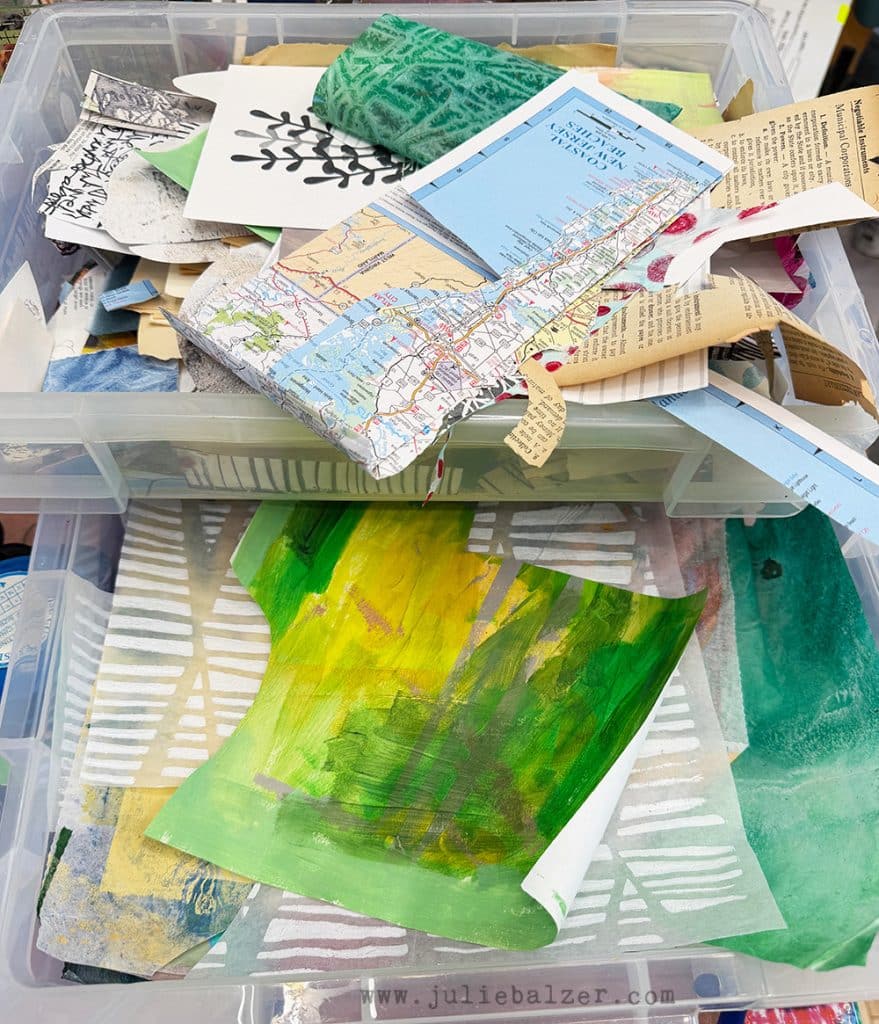
The problem is that there is a very fine line between saving useful art materials and moving piles of paper around your studio for the next ten years. I feel like I can lecture on this topic because I have experience with both.
Use Scraps Right Away!
In this video, I’m sharing a very simple project that started with the wrapping paper from my son’s birthday presents. I loved all of the different patterns and colors and, predictably, I couldn’t bring myself to throw the paper away. But instead of carefully folding it up and putting it somewhere “for later,” I cut it into strips and immediately turned it into thank you cards.
I love how they turned out and so did the recipients!
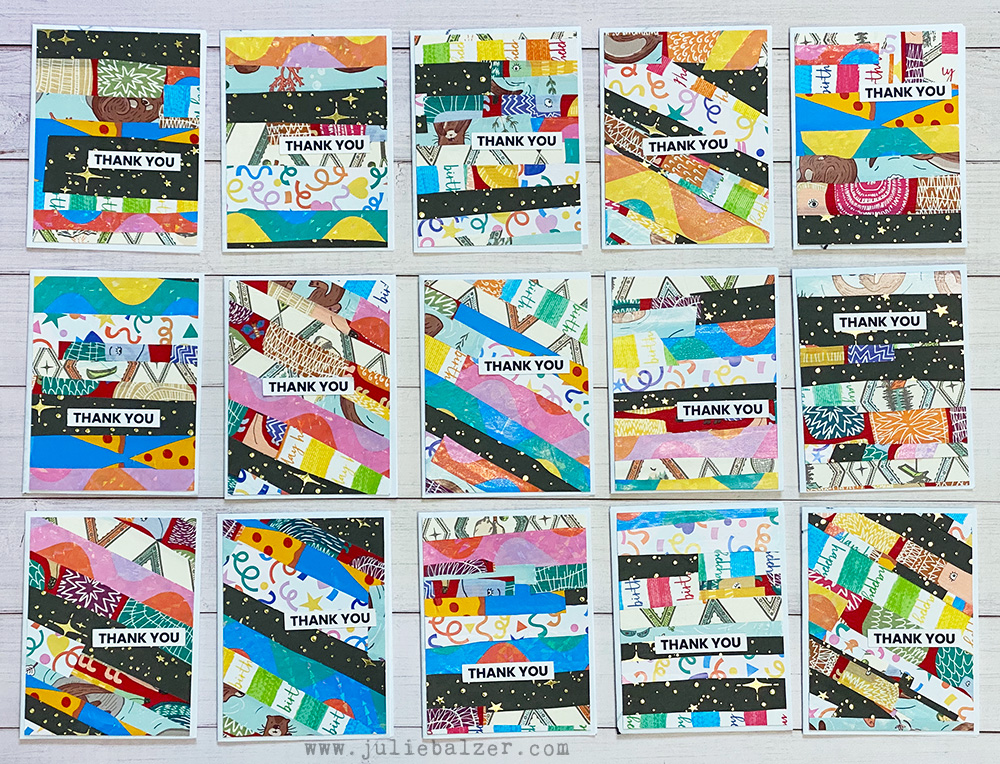
It’s a project that didn’t take me long and forced me to use all that pretty paper instead of hoarding it.
Similar advice is to take the scraps you have leftover after making something (you’ve already spent time coordinating papers that work) and immediately glue them into your art journal or onto a piece of paper. Do something to take all those bits and make them usable!
Make Your Paper Stash More Usable
But what if you want to hoard your paper scraps instead of using them right away? Listen, scraps are genuinely useful in my art practice. I collage constantly. I make Art Parts. I use little pieces of paper all the time. But there is a point at which abundance becomes an obstacle. Earlier this year I spent some time making my messy collage paper more usable, and one of the things I was reminded of during that process was how often a small amount of processing can completely change my relationship with a material. (I talk a lot about this in my Art Parts class.)
Here are three quick ways to make your paper stash more immediately usable:
- Sort it. A chaotic pile of unrelated papers can feel overwhelming. Make a scrap pack and suddenly it becomes an invitation to make something. Put like papers together so you can find what you’re looking for.
- Unify it. Use a glaze or a veil or doodling to transform a scattered piece of collage paper into something you can use without thinking about it. I recently shared a simple way to unify patterned papers in collage, and the goal wasn’t to make all of the papers the same. It was simply to create enough visual connection that they felt like they belonged together.
- Process it. Take an action that makes the scrap immediately usable as it is. This could be embossing it, cutting it into a shape you use a lot – like the paper strips I cut to make the cards in the video, etc.
Just say to yourself: If I want to use my scraps, I need to make them easy to use. Also, I think it’s important to note that I don’t need to know what something is going to become in order to prepare it for use. You don’t have to save a scrap because you have a brilliant plan for it. You can simply say, “This has potential,” and then do something small that makes the potential easier to access:
- Cut it into strips.
- Punch circles out of it.
- Tear it into manageable pieces.
- Add a glaze.
- Print over it.
- Group it with other papers.
- Whatever makes sense for the way you work.
Final Thought
So perhaps the question isn’t simply: Should I save this scrap? Instead it’s: What can I do to make this scrap easy to use again? Because saving it is only the beginning!
Thanks for stopping by!