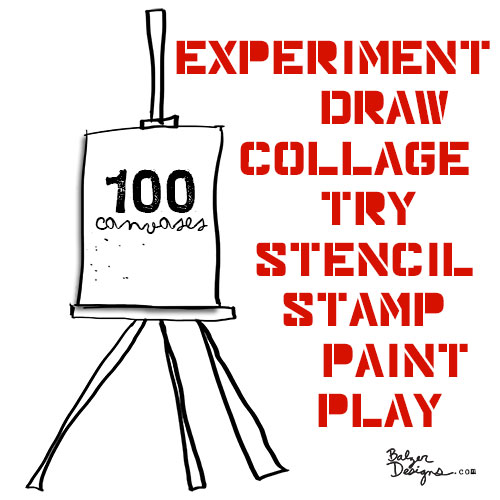
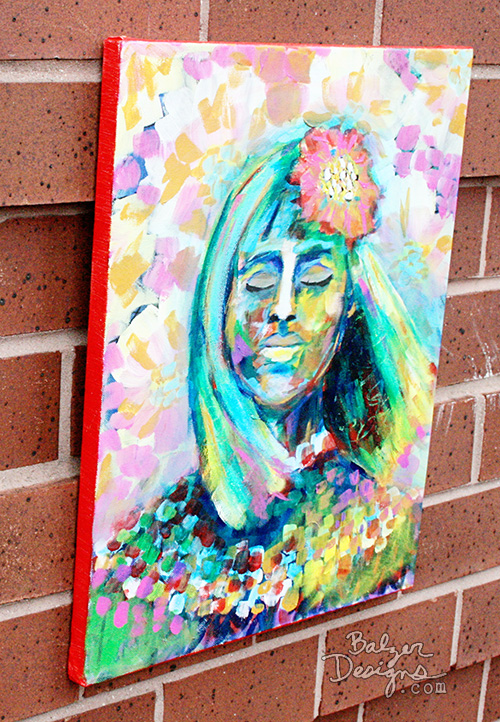
This painting was Canvas #17 in my 100 Canvases project, an ongoing experiment in making, revising, and learning through repetition.
This Painting Was a Journey
This painting did not follow a straight path from beginning to end. It began one way, changed into something else, and then sat in my studio for several weeks while I tried to decide whether it was actually finished. That space between maybe finished and really finished can be difficult to navigate. Sometimes a piece needs another layer. Sometimes it needs one small change. And sometimes the best thing you can do is walk away long enough to see it clearly again.
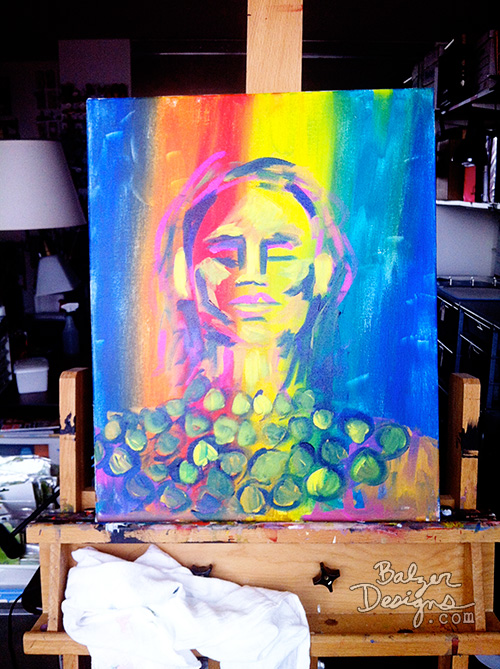
At this stage, I seriously considered leaving the painting alone. There were things I liked about it, and I did not want to ruin what was already working. So instead of immediately adding more, I stepped away.
Time Is Part of the Work
Not working on a painting can feel unproductive, but distance is often useful. When you have been looking at the same image for too long, you stop seeing the whole composition. You begin focusing on tiny problems, or you become so accustomed to the painting that nothing looks surprising anymore. Walking away interrupts that familiarity. When you return, you may notice that an area feels too quiet, a shape feels disconnected, or the composition has an energy that you had not consciously recognized while you were making it.
After a few weeks, I returned to this painting and changed it.
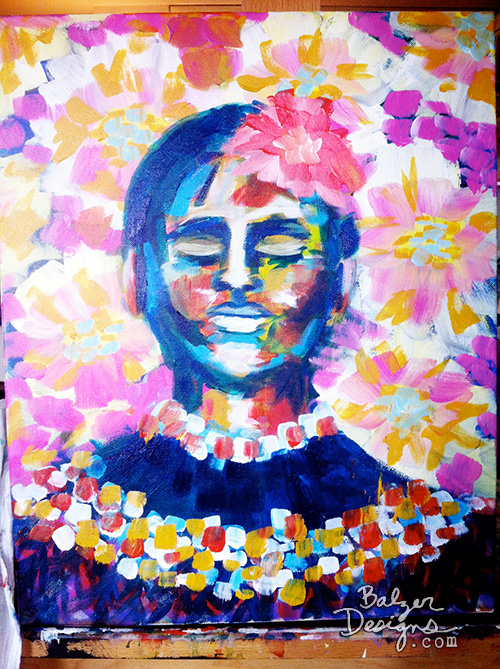
I liked it better. So I walked away again to give it some time to marinate.
Look for What the Painting Is Already Suggesting
As I continued to think about the piece, I kept returning to the same impression: it felt as though there were a breeze moving through the painting.
That observation gave me the next decision. If there were a breeze, the figure’s hair should respond to it.

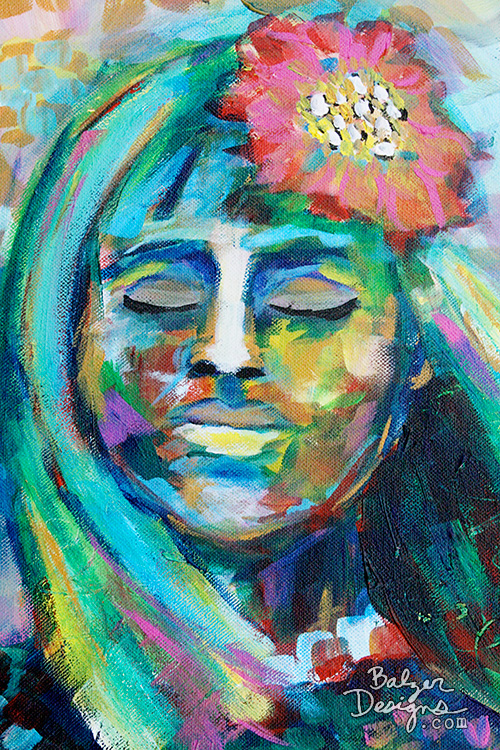
Adding the windblown hair created more movement and helped the figure feel connected to the atmosphere around her.
Here is the point I want to make about how I came to this end: The answer did not come from asking, “What else can I add?” It came from asking, “What is already happening here?” That is an important distinction. When a painting feels unfinished, it can be tempting to reach for more pattern, more contrast, more marks, or more detail. But adding more is not always the solution. Sometimes the painting already contains the clue you need.
You might notice:
- A repeated direction that suggests movement.
- A shape that wants to continue into another part of the composition.
- A color that appears once but needs to be echoed.
- A figure whose gesture does not quite match the surrounding atmosphere.
- An area that feels disconnected from the rest of the piece.
Rather than inventing something completely new, try strengthening an idea that is already present.
Look for the Outlier
One way to evaluate an unfinished painting is to look for elements that are not participating in the same visual world. In this painting, the composition suggested air and movement, but the hair remained relatively still. The figure and the atmosphere were not quite speaking the same language. Once the hair began to move, the painting felt more internally consistent.
This does not mean that everything in a composition must match. Contrast and interruption can be exciting. But when one part of a painting feels unintentionally separate, it may be a sign that it has not yet responded to what is happening around it.
Ask yourself:
- What kind of world have I created in this painting?
- Is it still or active?
- Dense or spacious?
- Quiet or noisy?
- Controlled or chaotic?
Then look at each major element and ask whether it belongs in that world or whether its difference feels purposeful.
You Do Not Have to Finish in One Sitting
This painting also reminds me that finishing can be a slow process. There is often pressure to carry a piece from beginning to end while the momentum is strong. But time can be an artistic tool. A painting may need to live in your studio for a while before you understand it.
Here are some things to try:
- You can turn it toward the wall.
- Photograph it.
- Move it to another room.
- Look at it in a mirror.
- Place it somewhere you will see it indirectly as you pass.
The goal is not to wait for a magical answer. The goal is to create enough distance that you can see what the painting is communicating instead of only remembering what you intended to make.
Final Thought: Every Painting Is a Conversation
When I began this canvas, I did not know that the final change would be windblown hair. I discovered it by making something, looking, responding, leaving, returning, and responding again. That back-and-forth is one of the things I love about painting. You bring your ideas to the canvas, but the canvas also gives you information. Each decision changes the conditions for the next one.
The finished painting is not simply the execution of the original plan. It is the record of that conversation.
Thanks for stopping by!

An adventure for sure. I think that her hair really shows the movement from that breeze.
so pretty. I love the colors and brush strokes you use and show. think you will ever do an online class for this type of painting?
Hmmm. I’m not loving these paintings like I do your other stuff…sorry.
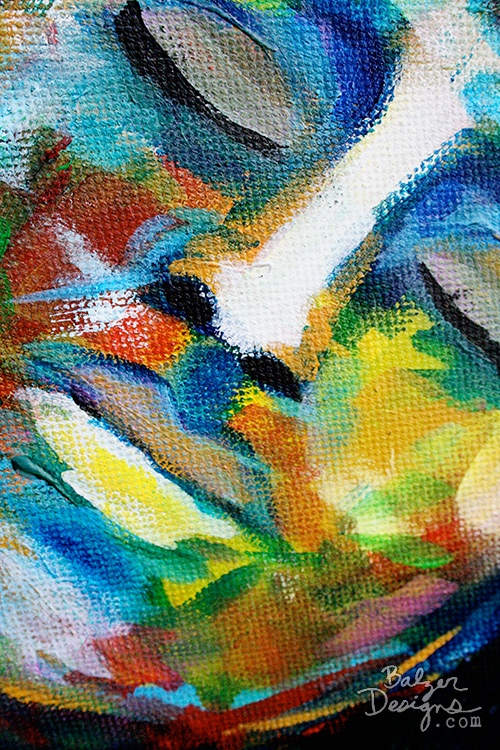
The evolution, your free will to paint over and layer up–you always say “keep going” and I’m glad you listen to yourself! 🙂 The complexity of colors in this girl’s face is awesome.
Hi, I like her much better now but I think that background is not breezy enough!
I especially love the colors you chose for this one. the swaying hair makes me think she’s taking a deep breath of a breeze too.
I forgot to add – it is so helpful to me seeing you and others like yourself work through pieces of art that you don’t like or feel could be better. I was able this weekend to work through the uglies on a couple of journal pages and I came out with one awesome piece just by doing that. Last night I worked on another piece still not right but I really learned a lot…
I like that you put some movement in it, with the hair. Now you only have 83 to go.
Beautiful!! I love following this project, thanks for sharing it! :-))
This project is amazing! I would really love to learn how you make all of those colors into portraits! I don’t paint on canvas but I sure would like to this kind of work on journal pages (like the ones you have shown in pages in the past). Any tips and/or classes would be wonderful!
I really like the capture of her slight smile with eyes closed as she enjoys a fragrant breeze!