What’s a monotype and what’s a monoprint? And why does it matter?
Monoprint Defined
Monoprints start with a matrix—a surface from which the image is transferred to paper. However, monoprints do allow for variation between individual prints. Artists can introduce variations in color, texture, and composition for each impression, creating a series of related but distinct prints. Monoprints offer artists the opportunity to create a series of related, yet unique, works.
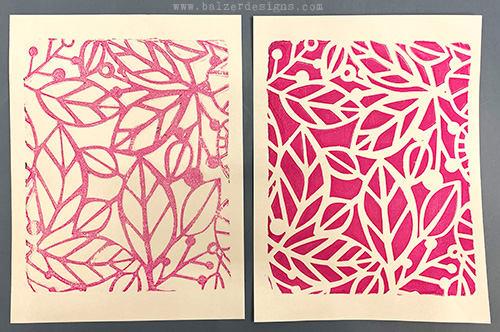
In essentials, a monoprint is repeatable — for example, a stenciled design, as in these examples:
Or a block printed design…
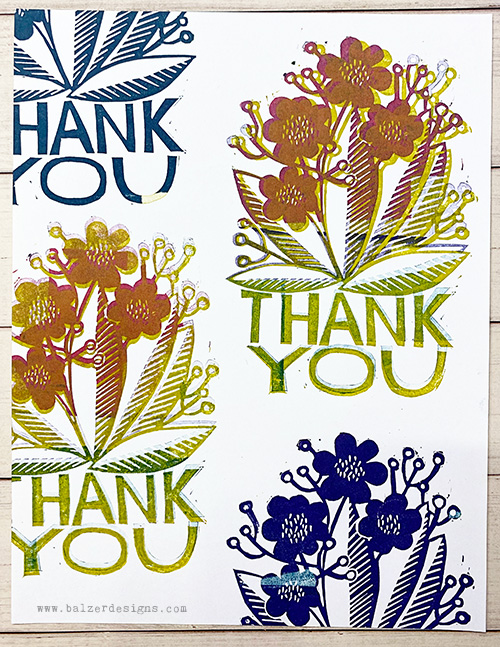
…even in multiple colors with multiple blocks:
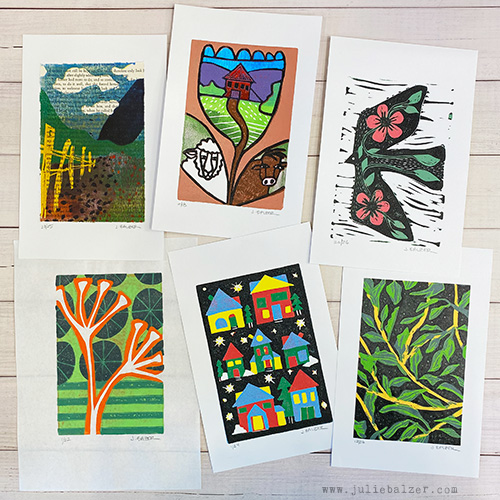
There’s a matrix that you can use to repeat the design, even with small variations, like color.
You will often find monoprints as part of a numbered series, as in these watercolor monoprints I made a few years ago:
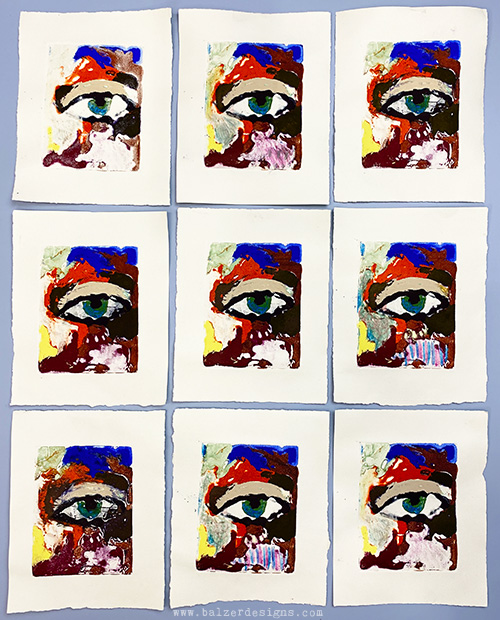
They were a limited series, because only a certain number of prints could be pulled from the plate before it disappeared, but still a repeatable image.
Monotype Defined
Monotypes involve painting or drawing an image onto a smooth surface, such as a plate or glass, and then transferring it onto paper. Crucially, there’s no reusable matrix involved, making each monotype a one-of-a-kind piece. Collectors often prize monotypes for their absolute uniqueness. Each print is an original work of art, created with a sense of painterly freedom that can be difficult to replicate in other printmaking techniques.
In the simplest language possible, a monotype is a unique print — for example, this gelatin print made by using a palette knife:
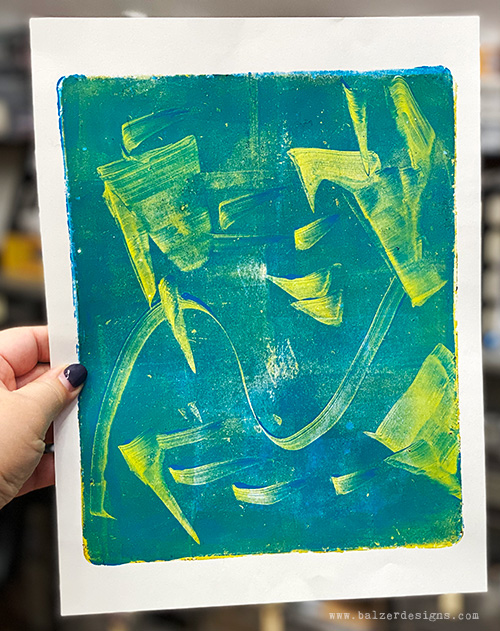
There is no repeatable matrix.
This layered monotype contain some stenciling…
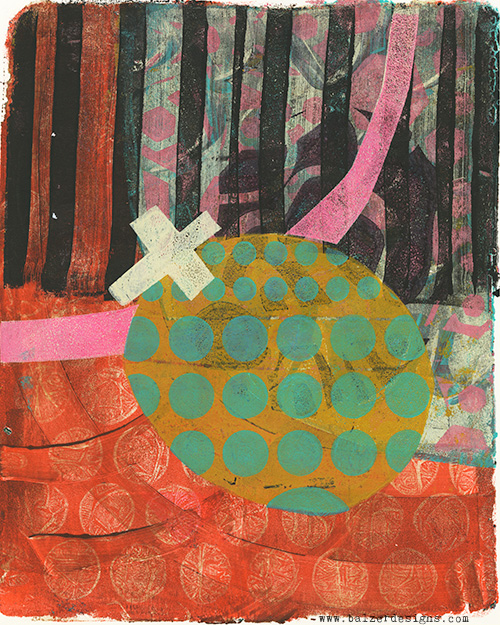
…but it is still one-of-a-kind and cannot be easily replicated because it was made in many layers and passes. The same is true of these nature prints:
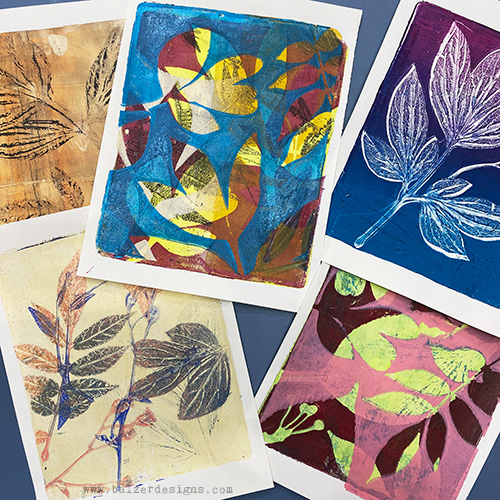
I consider them monotypes. The leaves are a sort of matrix, but the prints are not repeats of each other.
Something I do a lot is monotype collage, as in these pieces:

There are some shapes made with stencils and stamps. But it’s unlikely that you could easily make two identical versions of either of these pieces, which mix printmaking and collage together.
Monoprint vs. Monotype: It’s Not Always Clear
Now, there are things that get fiddly. Does chine-collé count as monoprint or monotype? These two pieces I would consider monoprints. They’re basically the same, with some color variation:
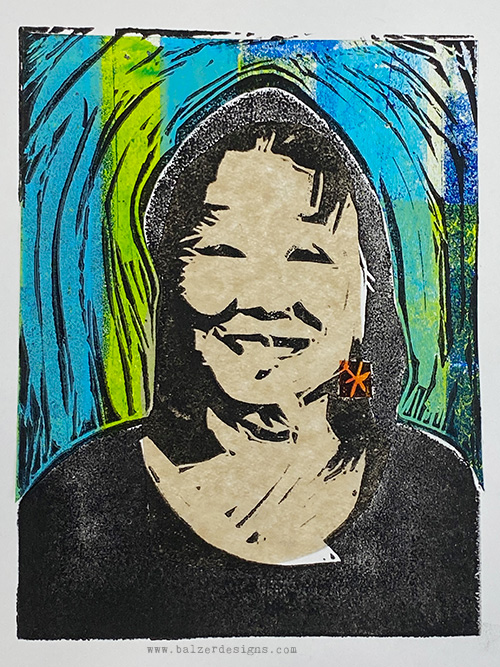
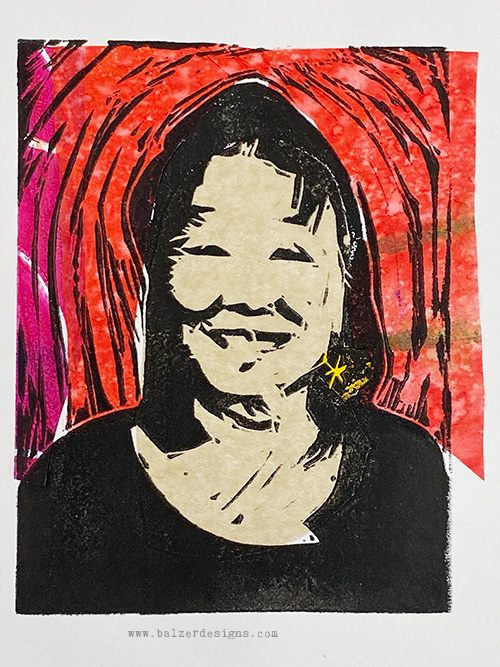
Now these ones have more differences than the prints above.
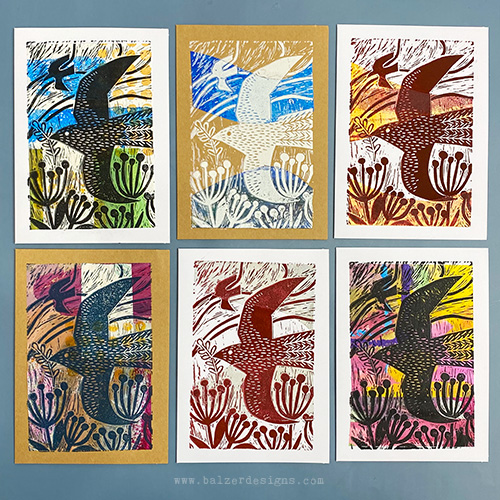
But is variation in the collage paper, collage paper placement, printing ink, and background paper enough to make them monotypes? I don’t think so. They’re still variations on a very distinct image. So I would still classify them as monoprints.
Why Does the Distinction Matter?
So why does it matter? Why should we care if it’s a monoprint or a monotype?
For me, the biggest reason it matters is clarity is my own process. Setting up for making monoprints is quite different from setting up for making monotypes.
Monotypes can be spontaneous whereas monoprints require some kind of registration and often involve making a stencil, a stamp, or some other matrix. This means that I tend to do a lot of planning before creating monoprints.
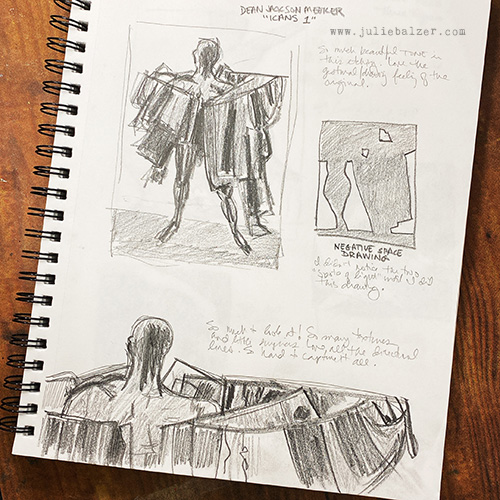
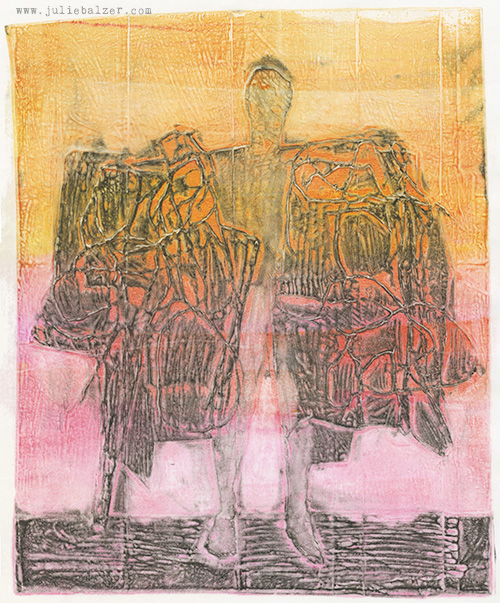
Whereas I do almost zero prep work when it comes to monotypes.
Therefore, when I walk into my studio, I need to be clear on whether I’ll be making monoprints or monotypes today because they require two different mindsets and paths of activity.
Final Thought
Poe-tay-toe, poe-tah-toe, whatever you call them, I love making them!
How about you?
Thanks for stopping by!

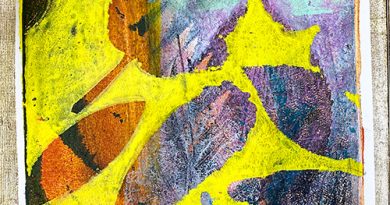
whatever you call them they are all magic
Thank you for the clarification. I make monoprints from reductive woodcuts. Each is unique but related, which I love. It does make choosing a favorite quite difficult. I am a painter as well. So different as it would be difficult to repeat an oil painting. Again I love painting as well. Thanks again.
Im glad you enjoyed the post!