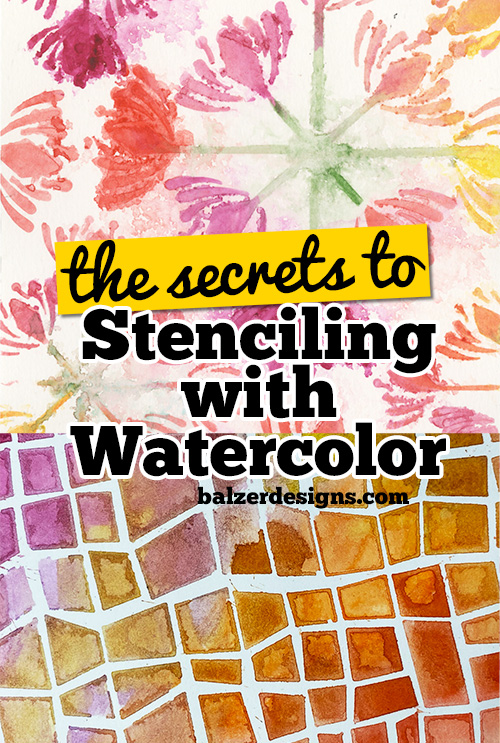
Yes, you can stencil with watercolor paint! There are several methods you can use and in this blog post I’m sharing how to get a soft look as well as a crisp one! Yay!
How to Stencil with Watercolor Paint: The Soft Look
Back in 2021, I made this video that shares several different methods for stenciling with watercolor for a soft look:
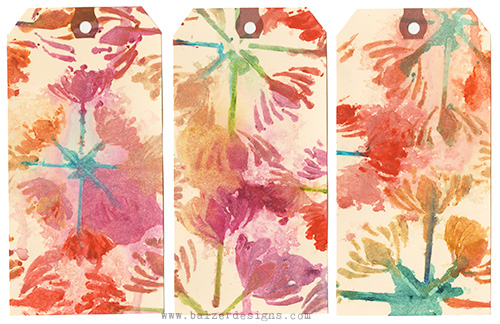
Here are the tags from the video:
Soft Look: Written Step-by-Step Directions
And in case you don’t have time for the video, here are the step-by-step directions:
Gather Your Materials
- Stencils — I used the Balzer Designs Garden Tile stencil.
- Watercolor paper.
- Damp brush (not soaking wet).
- Watercolors.
- Paper towels or baby wipes.
- Spray bottle with water.
Basic Technique
- Lay your stencil on a piece of watercolor paper.
- Apply watercolors through the stencil:
- Using your damp brush and watercolors, apply the color through the stencil openings onto the paper.
- You can mix different colors to create the desired effect.
- Remember that the drier the brush, the less “roll-under” effect you’ll get.
Optional: Create a Soft, Dreamy Look!
- If you want a softer look, spray water over the watercolor to spread and blend the colors.
Experiment with Baby Wipes
- Place the stencil, still covered in watercolor from the previous application, on a new piece of watercolor paper.
- Use a baby wipe to wipe the stencil, which transfers color and creates a blended effect on the paper.
“Cleaning the Stencil” Print
- Spray your stencil with water.
- Place it sprayed side down onto a new piece of paper.
- Use a paper towel or baby wipe to protect your hands while you press and transfer any remaining color onto the new surface.
Items of Note:
- Note that the choice of paper affects the final result.
- Watercolor paper tends to give cleaner details, while other surfaces may produce a more smudged appearance.
- You can layer colors and effects by repeating the above steps, creating unique and intricate designs.
- It’s not necessary to clean stencils after each use. Simply store them as they are, and they’ll develop character over time.
- Experiment with different stencil designs, colors, and papers to create your unique artwork.
Practice and experimentation will help you develop your style and discover what works for you!
How to Stencil with Watercolor Paint: Crispy Edges
Here’s a brand new video with a method for crisp clean results, featuring Pixie Spray!
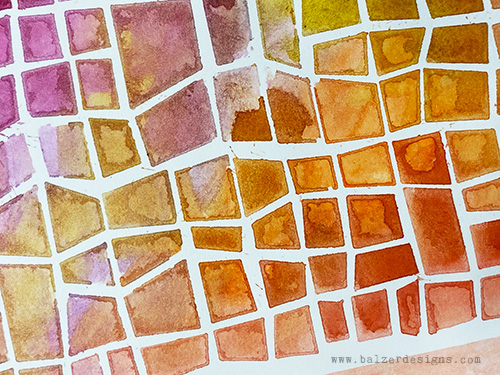
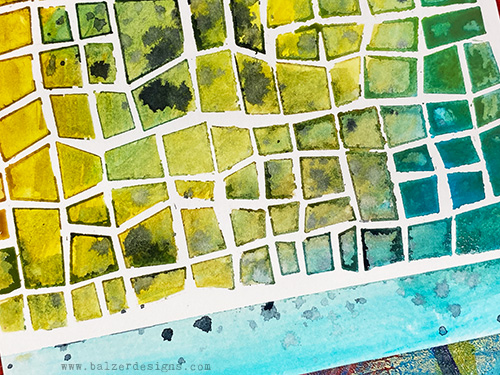
In this video I used the Balzer Designs Handcut Net stencil and QoR Watercolors.
Here is a close up the samples from the video:
Crisp Look: Tips and Take Aways
Here are some take away tips from the video:
About Pixie Spray:
- Pixie Spray is a repositionable spray adhesive designed for stencils.
- It helps secure stencils in place while you work, preventing paint from seeping underneath.
- You can use any repositionable spray adhesive.
Precautions:
- Be cautious when using Pixie Spray or any spray adhesive.
- It emits adhesive droplets, so avoid inhaling it.
- Spray it in a well-ventilated area and/or wear a mask.
- Don’t spray it where it might create a mess, as it’s adhesive.
Application:
- Shake the Pixie Spray can well.
- Hold the can upright about 12 inches away from the stencil.
- Press the nozzle and apply the adhesive with a sweeping motion.
- Let it dry for one minute.
Stencil Placement and Painting:
- Once the stencil is sprayed and dried, press it onto your project.
- You can reposition it as needed.
- The adhesive keeps the stencil in place, allowing you to paint without worrying about bleed-under.
Peeling Off the Stencil:
- After painting, carefully peel off the stencil.
- You’ll reveal clean, detailed stenciling without any paint seepage.
Reuse or Continue:
- You can reuse the stencil as long as the adhesive remains sticky.
- Over time, as the adhesive wears away, you may experience some roll-under, but you can reapply Pixie Spray for a fresh hold.
Using Pixie Spray can help you achieve clean and controlled stencil designs in your projects.
Wrap Up
I hope you enjoyed all of these tips on how to stencil with watercolor paint and that you’ll think about the ways you might mix watercolor and stenciling together!
Thanks for stopping by!
