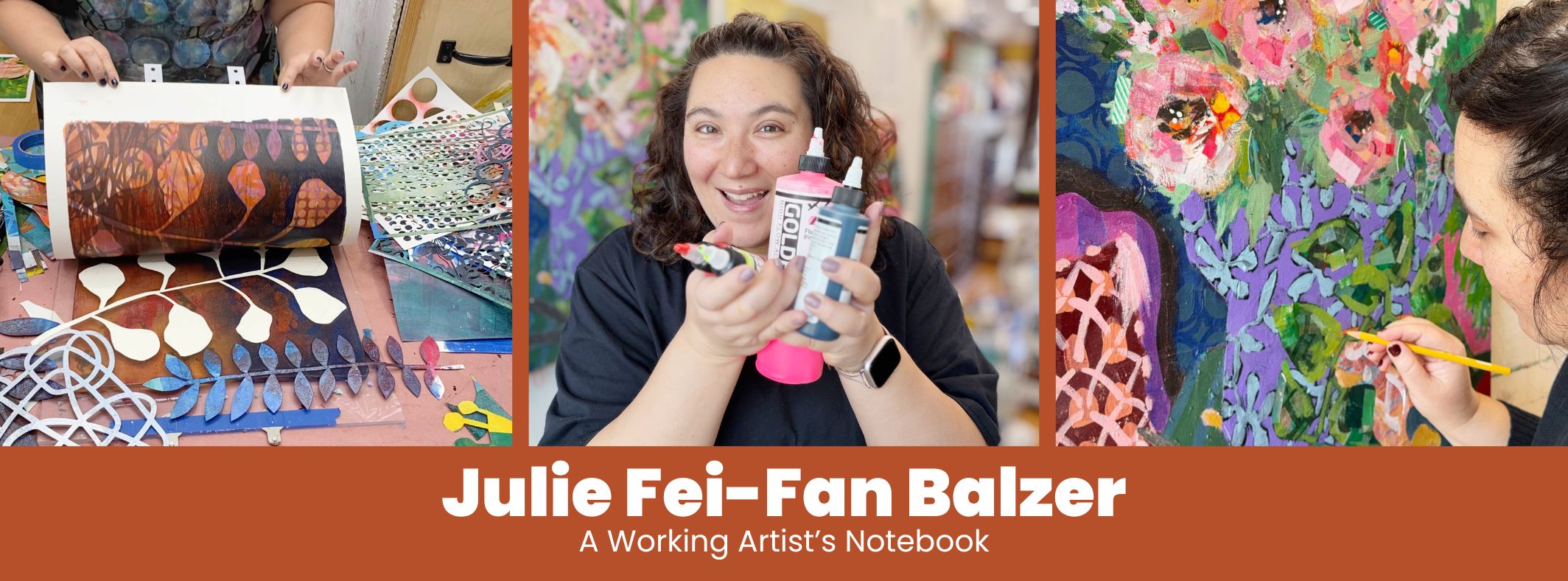
A little bit more than half way through this 100 day challenge! I have to confess that I looooove being home. I hate the isolation, the fear, the inability to go places and visit people, but I love waking up in my own bed every day. It has certainly made this the easiest 100 day challenge I've ever tried. Traveling is not good for regular art making.
In any case, here is the week in layered monoprints (These images are embedded from instagram. If you can't see them, click HERE.):
I'm definitely entering some kind of grungy phase. I find myself fascinated by darks and colors that look dirty. Isn't it interesting how our art cycles?
Thanks for stopping by!

Love your prints!! They inspire me to get my plate out! Thanks!
Love your prints!! They inspire me to get my plate out! Thanks!
Love your prints!! They inspire me to get my plate out! Thanks!
Love your prints!! They inspire me to get my plate out! Thanks!
Love your prints!! They inspire me to get my plate out! Thanks!
Love your prints!! They inspire me to get my plate out! Thanks!
Love your prints!! They inspire me to get my plate out! Thanks!
As I was thinking about your design choice decisions, my current design problem came to mind…..I had to pick out tile for my bathroom redo. As the tiler started adding the tile onto the wall in a mosaic type pattern along with the glass tile accents, he then tried to troubleshoot around odd wall angles due to location of shower to bathroom door. I began to realize “too much” design detail can be a bad thing. Striking a balance on color and design placement is really hard, esp for the beginner like me. Well, the tiler is still trouble shooting, having decided to add a different composite tile (in a close color match) that is easier to work with around odd angles and borders. I had no idea that a shower could end up so complicated. But life lessons provide insight into design balance and practicality. Who knew? And yes, I would have simplified the entire project originally if I had known the structural complications. So then, perhaps wall art too needs a similar thought process. Perhaps if a room has a great deal going on, such as well defined architectural details, lots of color, etc. perhaps the ROLE of the art in that space should be considered. This is just a thought going around in my head. How does a teacher explain this design issue to their student? What are the questions one must ask about the room? And is all art ok in all rooms equally? I have a friend who loves browns and neutrals throughout her house. And yet placed wildly colorful whimsical art structures (fun birdhouses, small furniture pieces etc) everywhere, seemingly at random. Visually I struggle when I visit her house. I love her taste in art, the wall paintings, the 3D pieces, but the placements are odd to me, and the browns everywhere seem in opposition. What would be an appropriate method of design thought, to address the madness? Or does one just get use to the madness…
As I was thinking about your design choice decisions, my current design problem came to mind…..I had to pick out tile for my bathroom redo. As the tiler started adding the tile onto the wall in a mosaic type pattern along with the glass tile accents, he then tried to troubleshoot around odd wall angles due to location of shower to bathroom door. I began to realize “too much” design detail can be a bad thing. Striking a balance on color and design placement is really hard, esp for the beginner like me. Well, the tiler is still trouble shooting, having decided to add a different composite tile (in a close color match) that is easier to work with around odd angles and borders. I had no idea that a shower could end up so complicated. But life lessons provide insight into design balance and practicality. Who knew? And yes, I would have simplified the entire project originally if I had known the structural complications. So then, perhaps wall art too needs a similar thought process. Perhaps if a room has a great deal going on, such as well defined architectural details, lots of color, etc. perhaps the ROLE of the art in that space should be considered. This is just a thought going around in my head. How does a teacher explain this design issue to their student? What are the questions one must ask about the room? And is all art ok in all rooms equally? I have a friend who loves browns and neutrals throughout her house. And yet placed wildly colorful whimsical art structures (fun birdhouses, small furniture pieces etc) everywhere, seemingly at random. Visually I struggle when I visit her house. I love her taste in art, the wall paintings, the 3D pieces, but the placements are odd to me, and the browns everywhere seem in opposition. What would be an appropriate method of design thought, to address the madness? Or does one just get use to the madness…
As I was thinking about your design choice decisions, my current design problem came to mind…..I had to pick out tile for my bathroom redo. As the tiler started adding the tile onto the wall in a mosaic type pattern along with the glass tile accents, he then tried to troubleshoot around odd wall angles due to location of shower to bathroom door. I began to realize “too much” design detail can be a bad thing. Striking a balance on color and design placement is really hard, esp for the beginner like me. Well, the tiler is still trouble shooting, having decided to add a different composite tile (in a close color match) that is easier to work with around odd angles and borders. I had no idea that a shower could end up so complicated. But life lessons provide insight into design balance and practicality. Who knew? And yes, I would have simplified the entire project originally if I had known the structural complications. So then, perhaps wall art too needs a similar thought process. Perhaps if a room has a great deal going on, such as well defined architectural details, lots of color, etc. perhaps the ROLE of the art in that space should be considered. This is just a thought going around in my head. How does a teacher explain this design issue to their student? What are the questions one must ask about the room? And is all art ok in all rooms equally? I have a friend who loves browns and neutrals throughout her house. And yet placed wildly colorful whimsical art structures (fun birdhouses, small furniture pieces etc) everywhere, seemingly at random. Visually I struggle when I visit her house. I love her taste in art, the wall paintings, the 3D pieces, but the placements are odd to me, and the browns everywhere seem in opposition. What would be an appropriate method of design thought, to address the madness? Or does one just get use to the madness…
As I was thinking about your design choice decisions, my current design problem came to mind…..I had to pick out tile for my bathroom redo. As the tiler started adding the tile onto the wall in a mosaic type pattern along with the glass tile accents, he then tried to troubleshoot around odd wall angles due to location of shower to bathroom door. I began to realize “too much” design detail can be a bad thing. Striking a balance on color and design placement is really hard, esp for the beginner like me. Well, the tiler is still trouble shooting, having decided to add a different composite tile (in a close color match) that is easier to work with around odd angles and borders. I had no idea that a shower could end up so complicated. But life lessons provide insight into design balance and practicality. Who knew? And yes, I would have simplified the entire project originally if I had known the structural complications. So then, perhaps wall art too needs a similar thought process. Perhaps if a room has a great deal going on, such as well defined architectural details, lots of color, etc. perhaps the ROLE of the art in that space should be considered. This is just a thought going around in my head. How does a teacher explain this design issue to their student? What are the questions one must ask about the room? And is all art ok in all rooms equally? I have a friend who loves browns and neutrals throughout her house. And yet placed wildly colorful whimsical art structures (fun birdhouses, small furniture pieces etc) everywhere, seemingly at random. Visually I struggle when I visit her house. I love her taste in art, the wall paintings, the 3D pieces, but the placements are odd to me, and the browns everywhere seem in opposition. What would be an appropriate method of design thought, to address the madness? Or does one just get use to the madness…
As I was thinking about your design choice decisions, my current design problem came to mind…..I had to pick out tile for my bathroom redo. As the tiler started adding the tile onto the wall in a mosaic type pattern along with the glass tile accents, he then tried to troubleshoot around odd wall angles due to location of shower to bathroom door. I began to realize “too much” design detail can be a bad thing. Striking a balance on color and design placement is really hard, esp for the beginner like me. Well, the tiler is still trouble shooting, having decided to add a different composite tile (in a close color match) that is easier to work with around odd angles and borders. I had no idea that a shower could end up so complicated. But life lessons provide insight into design balance and practicality. Who knew? And yes, I would have simplified the entire project originally if I had known the structural complications. So then, perhaps wall art too needs a similar thought process. Perhaps if a room has a great deal going on, such as well defined architectural details, lots of color, etc. perhaps the ROLE of the art in that space should be considered. This is just a thought going around in my head. How does a teacher explain this design issue to their student? What are the questions one must ask about the room? And is all art ok in all rooms equally? I have a friend who loves browns and neutrals throughout her house. And yet placed wildly colorful whimsical art structures (fun birdhouses, small furniture pieces etc) everywhere, seemingly at random. Visually I struggle when I visit her house. I love her taste in art, the wall paintings, the 3D pieces, but the placements are odd to me, and the browns everywhere seem in opposition. What would be an appropriate method of design thought, to address the madness? Or does one just get use to the madness…
As I was thinking about your design choice decisions, my current design problem came to mind…..I had to pick out tile for my bathroom redo. As the tiler started adding the tile onto the wall in a mosaic type pattern along with the glass tile accents, he then tried to troubleshoot around odd wall angles due to location of shower to bathroom door. I began to realize “too much” design detail can be a bad thing. Striking a balance on color and design placement is really hard, esp for the beginner like me. Well, the tiler is still trouble shooting, having decided to add a different composite tile (in a close color match) that is easier to work with around odd angles and borders. I had no idea that a shower could end up so complicated. But life lessons provide insight into design balance and practicality. Who knew? And yes, I would have simplified the entire project originally if I had known the structural complications. So then, perhaps wall art too needs a similar thought process. Perhaps if a room has a great deal going on, such as well defined architectural details, lots of color, etc. perhaps the ROLE of the art in that space should be considered. This is just a thought going around in my head. How does a teacher explain this design issue to their student? What are the questions one must ask about the room? And is all art ok in all rooms equally? I have a friend who loves browns and neutrals throughout her house. And yet placed wildly colorful whimsical art structures (fun birdhouses, small furniture pieces etc) everywhere, seemingly at random. Visually I struggle when I visit her house. I love her taste in art, the wall paintings, the 3D pieces, but the placements are odd to me, and the browns everywhere seem in opposition. What would be an appropriate method of design thought, to address the madness? Or does one just get use to the madness…
As I was thinking about your design choice decisions, my current design problem came to mind…..I had to pick out tile for my bathroom redo. As the tiler started adding the tile onto the wall in a mosaic type pattern along with the glass tile accents, he then tried to troubleshoot around odd wall angles due to location of shower to bathroom door. I began to realize “too much” design detail can be a bad thing. Striking a balance on color and design placement is really hard, esp for the beginner like me. Well, the tiler is still trouble shooting, having decided to add a different composite tile (in a close color match) that is easier to work with around odd angles and borders. I had no idea that a shower could end up so complicated. But life lessons provide insight into design balance and practicality. Who knew? And yes, I would have simplified the entire project originally if I had known the structural complications. So then, perhaps wall art too needs a similar thought process. Perhaps if a room has a great deal going on, such as well defined architectural details, lots of color, etc. perhaps the ROLE of the art in that space should be considered. This is just a thought going around in my head. How does a teacher explain this design issue to their student? What are the questions one must ask about the room? And is all art ok in all rooms equally? I have a friend who loves browns and neutrals throughout her house. And yet placed wildly colorful whimsical art structures (fun birdhouses, small furniture pieces etc) everywhere, seemingly at random. Visually I struggle when I visit her house. I love her taste in art, the wall paintings, the 3D pieces, but the placements are odd to me, and the browns everywhere seem in opposition. What would be an appropriate method of design thought, to address the madness? Or does one just get use to the madness…
I think design is subjective. Like taste. There are certain rules, but in the end, its your gut that tells you whether a composition (or a bathroom) sings.
I think design is subjective. Like taste. There are certain rules, but in the end, its your gut that tells you whether a composition (or a bathroom) sings.
I think design is subjective. Like taste. There are certain rules, but in the end, its your gut that tells you whether a composition (or a bathroom) sings.
I think design is subjective. Like taste. There are certain rules, but in the end, its your gut that tells you whether a composition (or a bathroom) sings.
I think design is subjective. Like taste. There are certain rules, but in the end, its your gut that tells you whether a composition (or a bathroom) sings.
I think design is subjective. Like taste. There are certain rules, but in the end, its your gut that tells you whether a composition (or a bathroom) sings.
I think design is subjective. Like taste. There are certain rules, but in the end, its your gut that tells you whether a composition (or a bathroom) sings.
My gut is learning a lot on this website. Thanks for being there.
My gut is learning a lot on this website. Thanks for being there.
My gut is learning a lot on this website. Thanks for being there.
My gut is learning a lot on this website. Thanks for being there.
My gut is learning a lot on this website. Thanks for being there.
My gut is learning a lot on this website. Thanks for being there.
My gut is learning a lot on this website. Thanks for being there.