This week, as part of my art practice, I took myself on an artist field trip to the Isabella Stewart Gardner Museum, which is one of my favorite places in Boston. I’ve been going there for years on school trips, with my parents, on my own and somehow I had never actually taken a tour before. You can read my 2016 and 2022 blog posts about visits there and you can watch this video for a peek inside the museum:
How is Visiting a Museum Part of an Art Practice?
There’s a difference between going somewhere and going somewhere with intention. I think that’s what an artist field trip really is, and I think it’s a part of an art practice that gets overlooked. It’s not just leaving your house. It’s not just consuming something creative. It’s deciding, even quietly, that you are going to pay attention.
And I think that’s part of what we’re actually looking for when we say we need creative inspiration. Not ideas, exactly, more like space to let your brain wander. Because the truth is, your art practice can’t run only on output. It just can’t. If all you’re doing is making and making and making, eventually you start to feel like you’re scraping the bottom of something. That feeling of being stuck, bored, and disconnected from your work is awful. But, I think it’s actually evidence of a lack of input.
Input doesn’t just magically happen. You have to go looking for it a little bit. That’s what an artist field trip is doing. It’s choosing to step outside your usual routine and deliberately seek out something that might spark creative inspiration. It could be a museum. It could be a walk where you decide ahead of time that you’re going to notice color, or texture, or light. It could be sitting in a café and actually looking at people instead of your phone. But the important part is that shift from passive to intentional. It’s the difference between wandering around and actually seeing.
The Isabella Stewart Gardener Museum
The Gardner is a great place for that kind of intention looking because it’s so immersive. The courtyard alone is worth the visit!
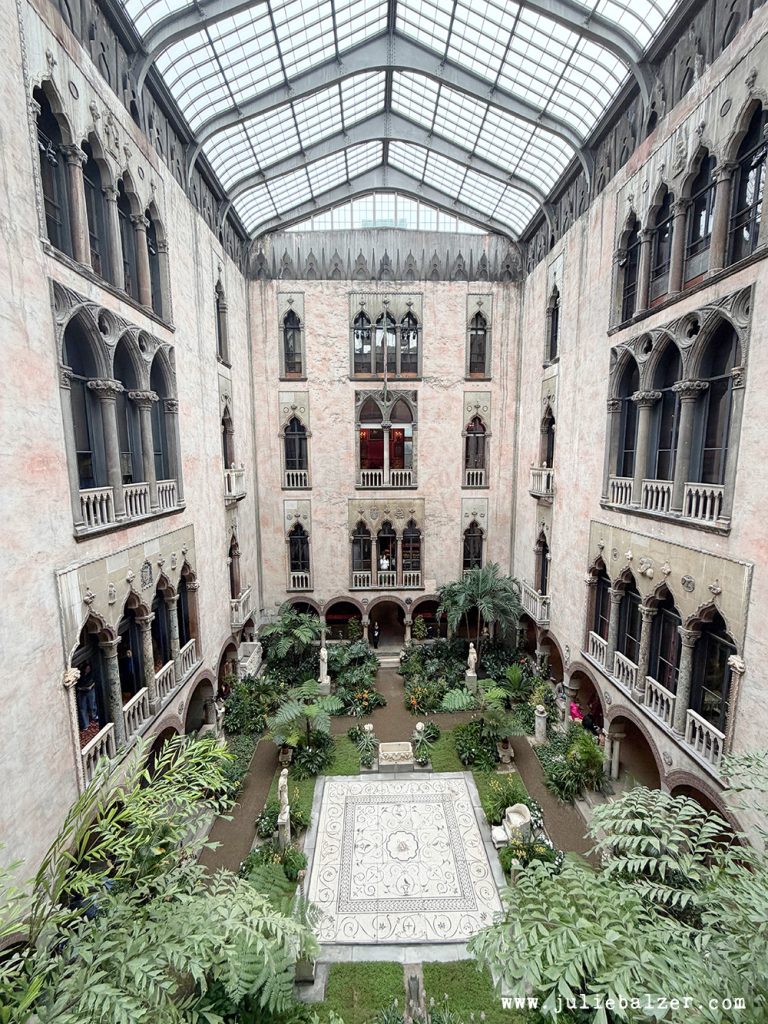
Light streaming through the glass ceiling, plants, water, and a generally sense of tranquility and aliveness. It doesn’t feel like a museum so much as a place where your brain can stretch out and relax a little.
Fun Fact: On the tour I took I learned that almost everything in the courtyard is potted so that it can be easily changed out!
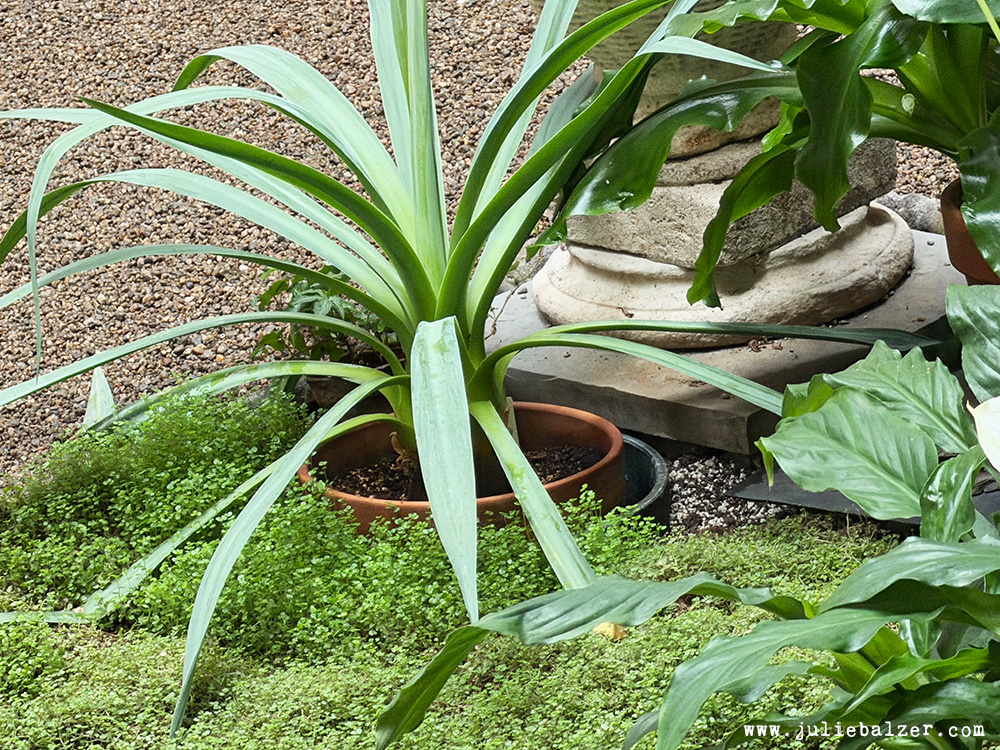
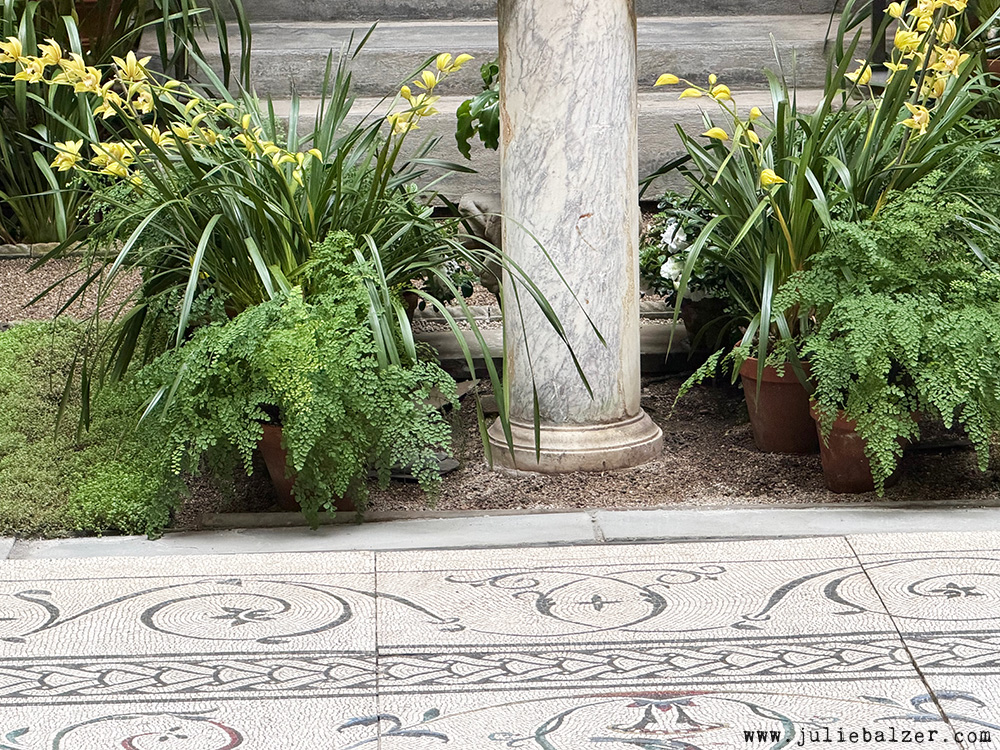
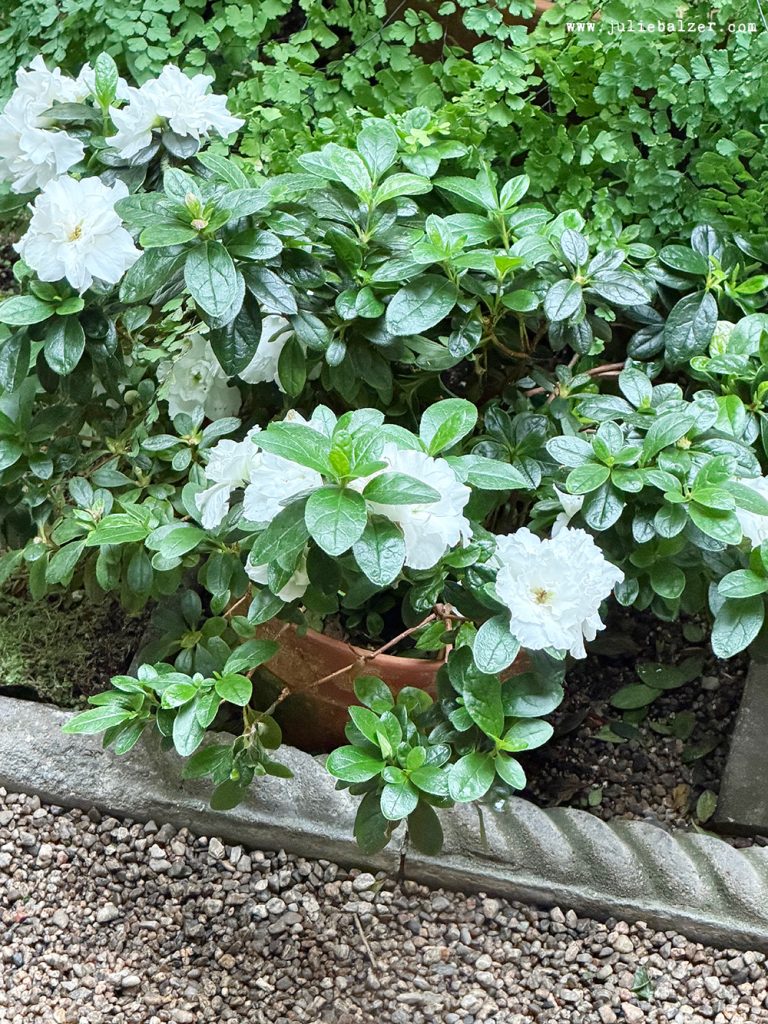
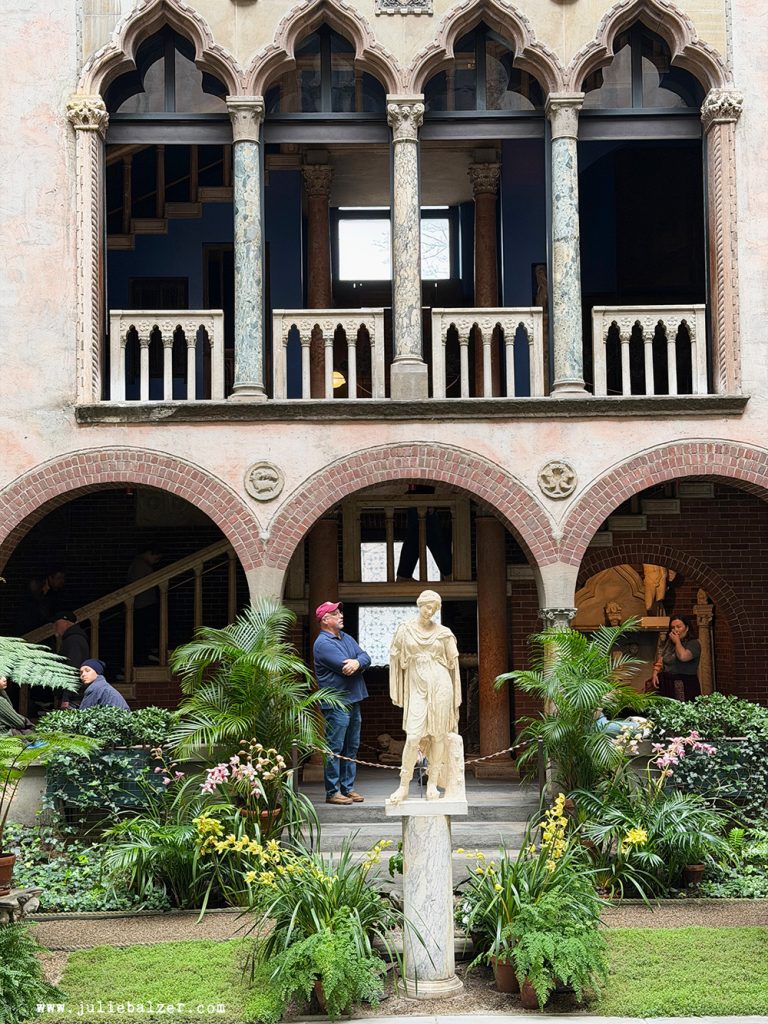
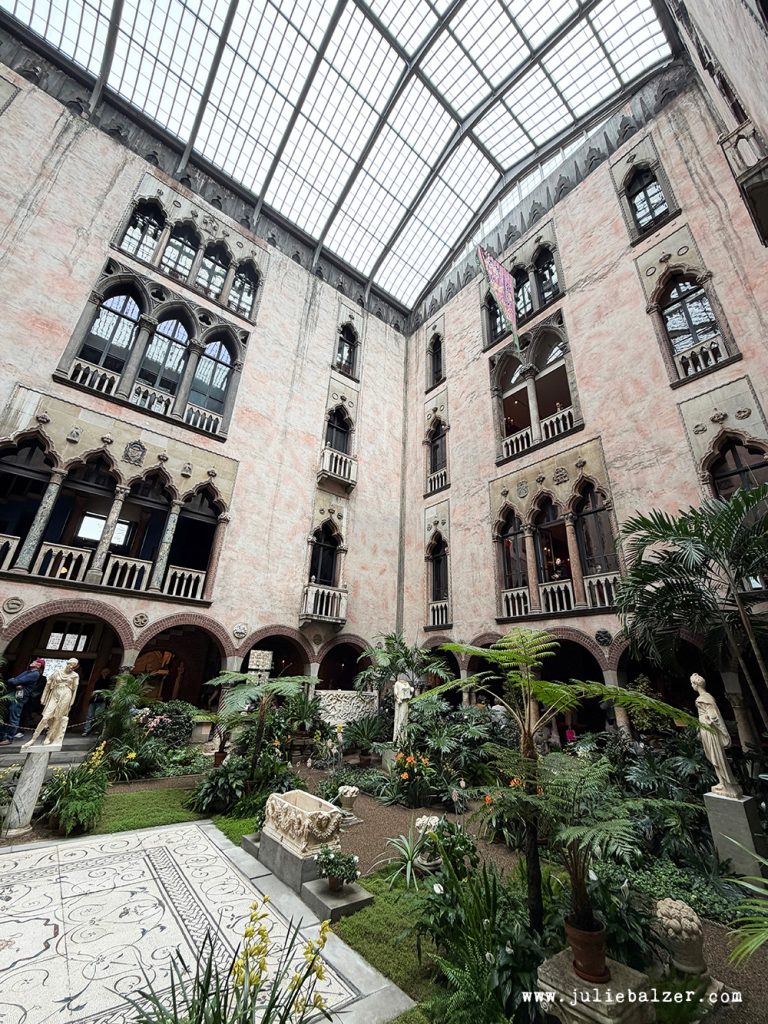
And it’s not curated like a typical museum. It’s not arranged by time period or theme or anything else. There are no little cards on the artwork to give you any kind of information. It’s just you looking at beautiful things and thinking about them.
Looking with Intention
I believe that if you focus on something, you notice more. It sounds obvious, but it’s not how we usually move through the world. Most of the time we’re skimming. Even in museums. The average person spends just 15-30 seconds looking at a piece of art in a museum!! But when you slow down and let yourself linger on the thing that catches your eye, something starts to happen. You start asking questions: Why do I like this? What is it doing? How could I use that idea? And even if you don’t answer those questions right away, just asking them changes the way the experience lands.
This is where I think a lot of people miss a step in their art practice. They go, they look, they enjoy, and then they move on. But, I believe that reflection is the part that actually turns inspiration into growth. Not in a formal, “sit down and journal for an hour” way (although it can be that). It can be as simple as letting something sit in your brain a little longer. Turning it over. Noticing what stuck. This is the real reason that I think sketching is so cathartic for so many artists. Sketching forces you to look and pay attention in a way that you don’t normally. If you’re not a sketcher, try writing! Simply writing out your thoughts and impressions creates a similar kind of focus.
Attention is one of the most powerful tools in your arsenal.
Socializing is a Part of My Art Practice
The other thing that struck me on this artist field trip was how much I enjoyed being there with other artists. The tour I went on was a member perk for members of the Cambridge Art Association, so there were lots of folks to chat with during the afternoon!
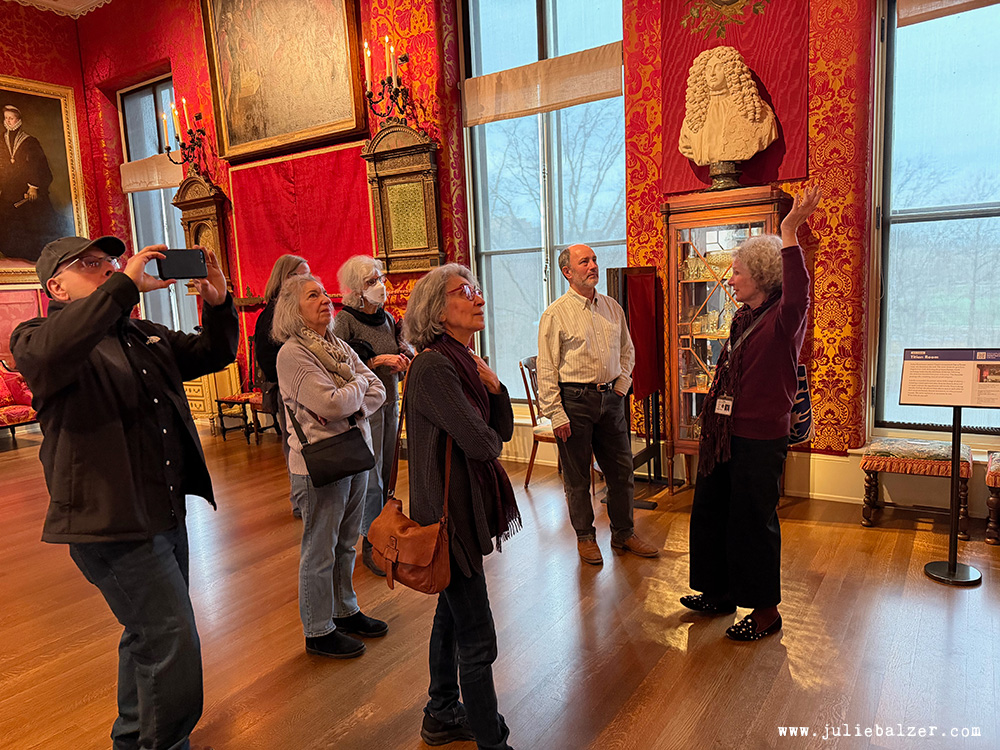
I think there’s something incredibly generative about being around other creative people. When someone else points out something you didn’t see, or asks a question you wouldn’t have thought to ask, it shifts your perspective just enough. It’s like when you go into a library looking for one book and end up finding five others you didn’t even know existed because they were sitting right next to it. That kind of sideways discovery is hard to engineer on your own. It’s a good reminder that even though making art can be solitary, being an artist and building a sustainable art practice doesn’t have to be.
In Conclusion
So I guess this is just a gentle nudge to you. If your work feels a little flat right now, or you’re not sure what to make next, maybe the answer isn’t to push harder in the studio. Maybe it’s to take yourself on an artist field trip! Not to be productive. Not to check a box. Just to look, and notice, and let something catch. And then give yourself a minute or two to reflect on the experience.
Finally, as I mention in my video, going to a museum is one way to fill up your cup. You can go for a walk, visit with friends, dig in your garden, read a book, go swimming — whatever makes you feel satisfied and filled up with energy and ideas.
Thanks for stopping by!