Artists often assume that once a piece is finished, it should stay that way. We put it aside, archive it, or stack it on a shelf. Finished is finished.
But the truth is that artwork doesn’t exist outside of time. You change. Your skills change. Your interests evolve. When you revisit an older piece of work, you’re seeing it with completely different eyes than when you made it.
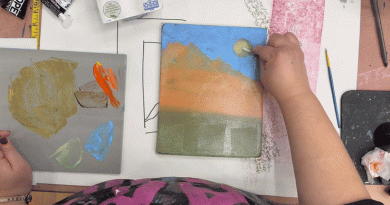
And that’s exactly why reworking old artwork can be so valuable. Watch the video for more:
Your Old Work Is a Record of a Moment
Every piece of art captures who you were when you made it: your interests, your abilities, the questions you were exploring. When you return to it months or years later, you can see things you couldn’t see before.
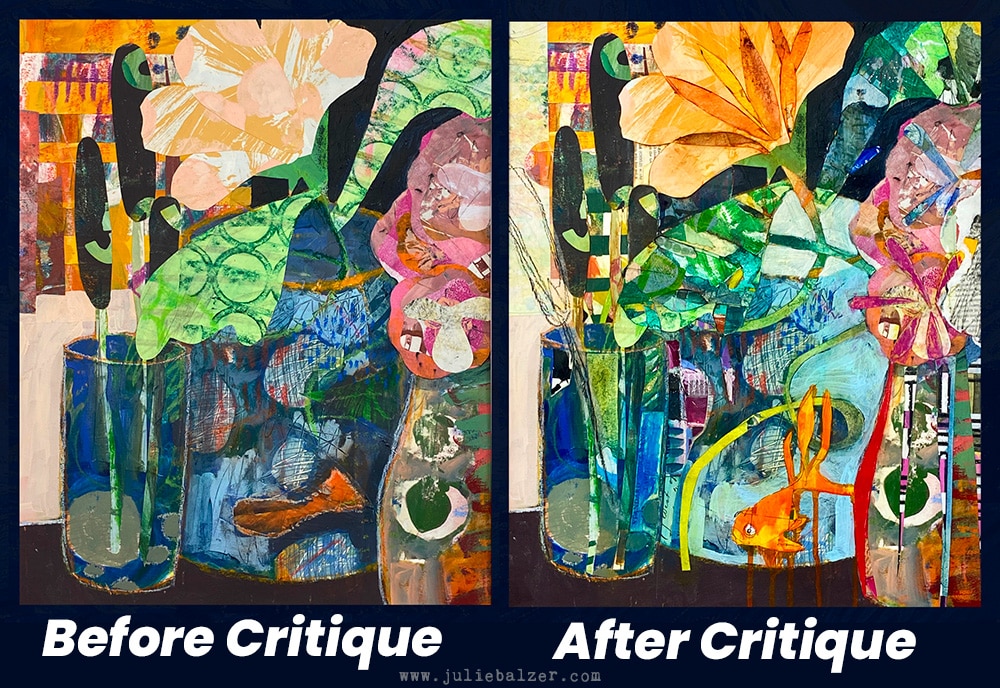
Sometimes you notice technical things—composition, color balance, awkward spacing. Other times you notice conceptual things: a place where you stopped because you were unsure what to do next.
Revisiting old work reveals the distance you’ve traveled as an artist.
It Gives You a Low-Pressure Starting Point
Beginning a new piece can feel intimidating. The blank page carries a lot of expectation.
An older piece of artwork already has a surface, marks, and structure. Instead of starting from nothing, you’re responding to something that already exists. That can make the process feel more like a conversation than a performance.
Often the question becomes simple: What happens if I keep going?
It Helps You See Your Work Differently
When a piece is fresh, we’re often too close to it. We remember the effort, the decisions, and the frustration of making it. Time creates distance.
That distance allows you to see the work more objectively. You can notice patterns, habits, and opportunities that weren’t visible before.
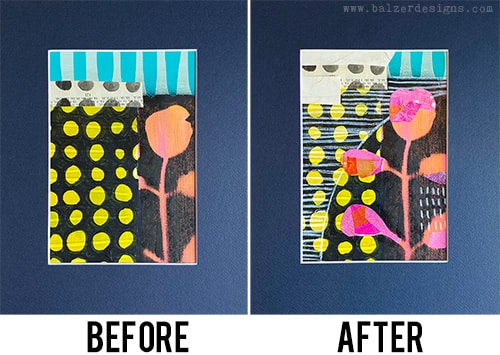
Sometimes the most interesting discoveries come from asking questions like:
- What if I cut this apart?
- What if I paint over part of it?
- What if this becomes the background for something new?
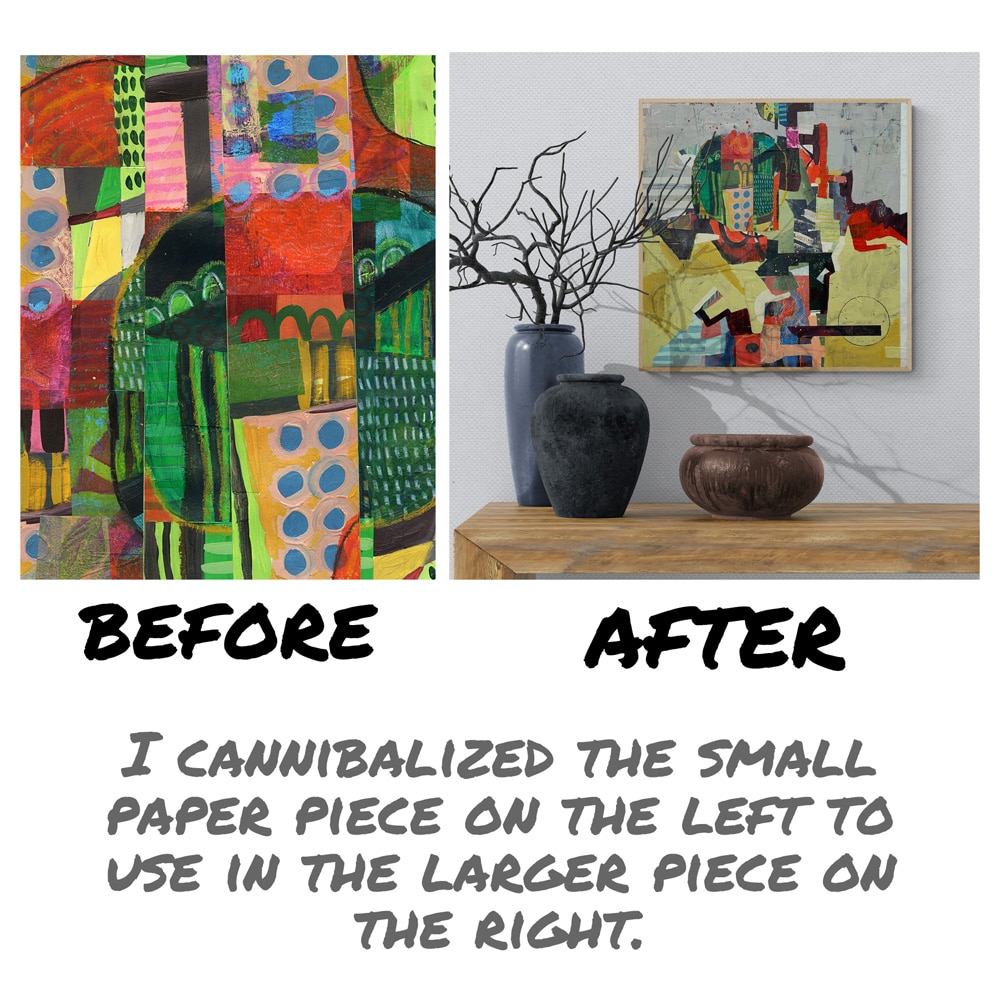
Reworking old artwork turns the piece into a starting point rather than a finished object.
It Helps You Let Go of Preciousness
Artists can become protective of finished work. We worry about ruining it.
But treating older work as material rather than a precious object can be freeing. When you allow yourself to alter, crop, collage, or layer on top of an existing piece, you begin to see your art practice as fluid rather than fixed.
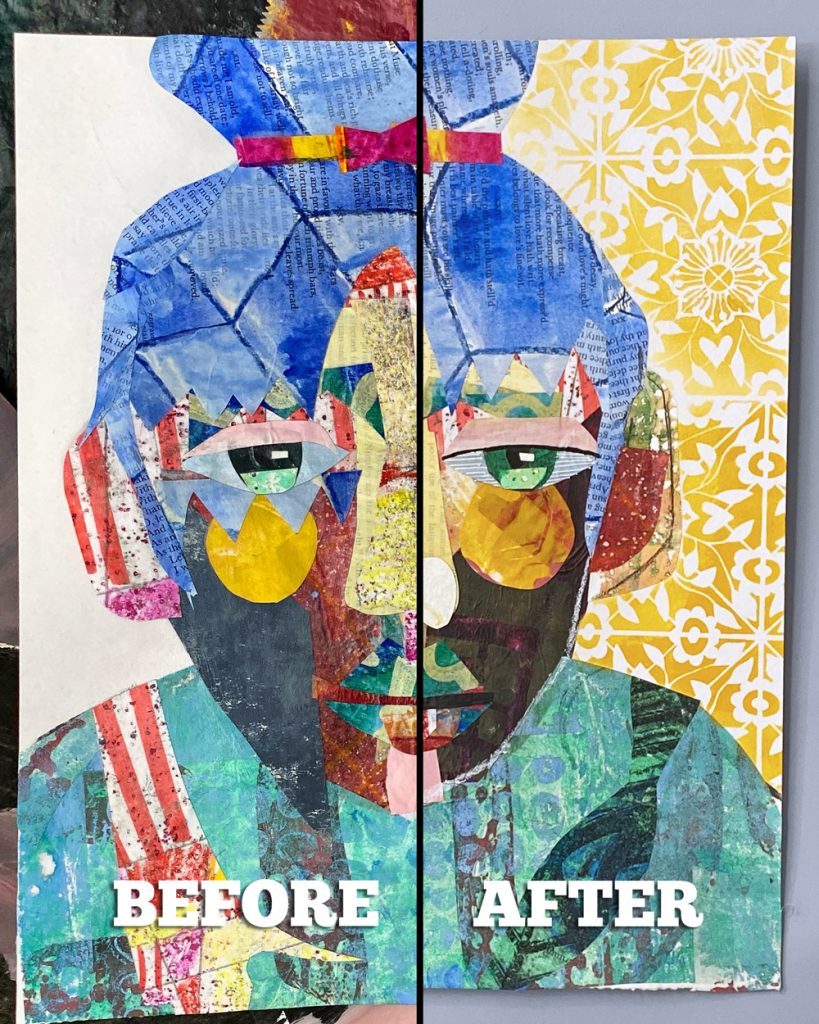
Nothing in the studio has to be permanent.
It Reinforces the Idea That Art Is a Process
One of the most useful mindsets for an artist is understanding that art isn’t a series of perfect finished objects. It’s an ongoing process of exploration.
Reworking older pieces makes that process visible. It shows that artwork can evolve, transform, and continue to grow over time—just like the artist who made it.
Sometimes the most interesting work doesn’t come from starting something new. It comes from returning to something old and asking a simple question:
What might this become now?
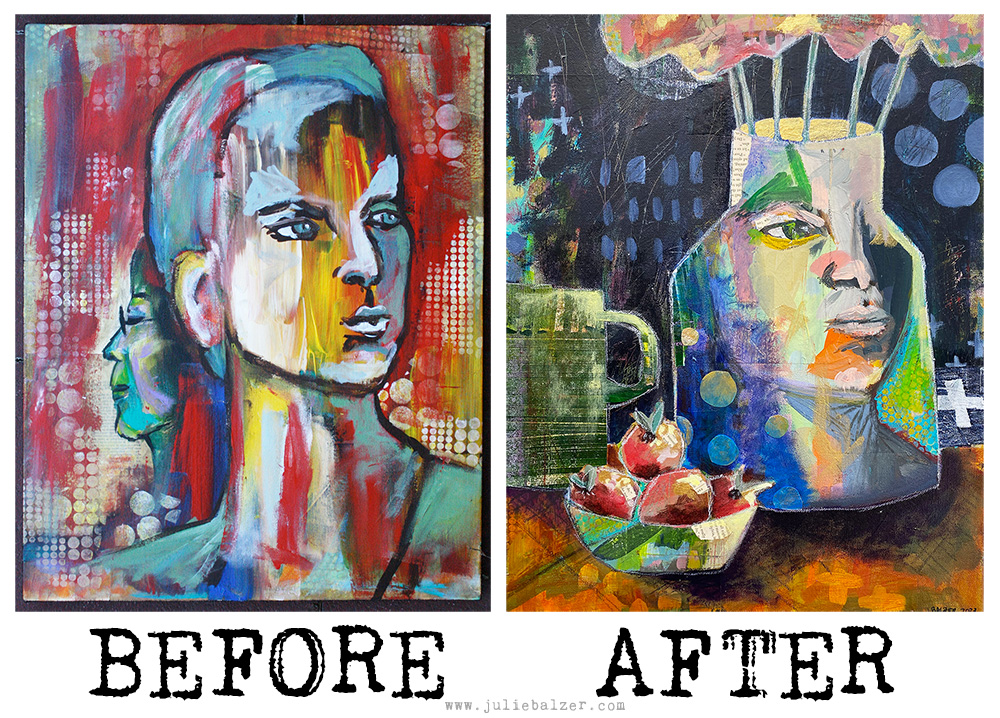
Ways to Rework Old Artwork
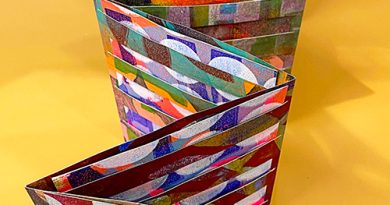
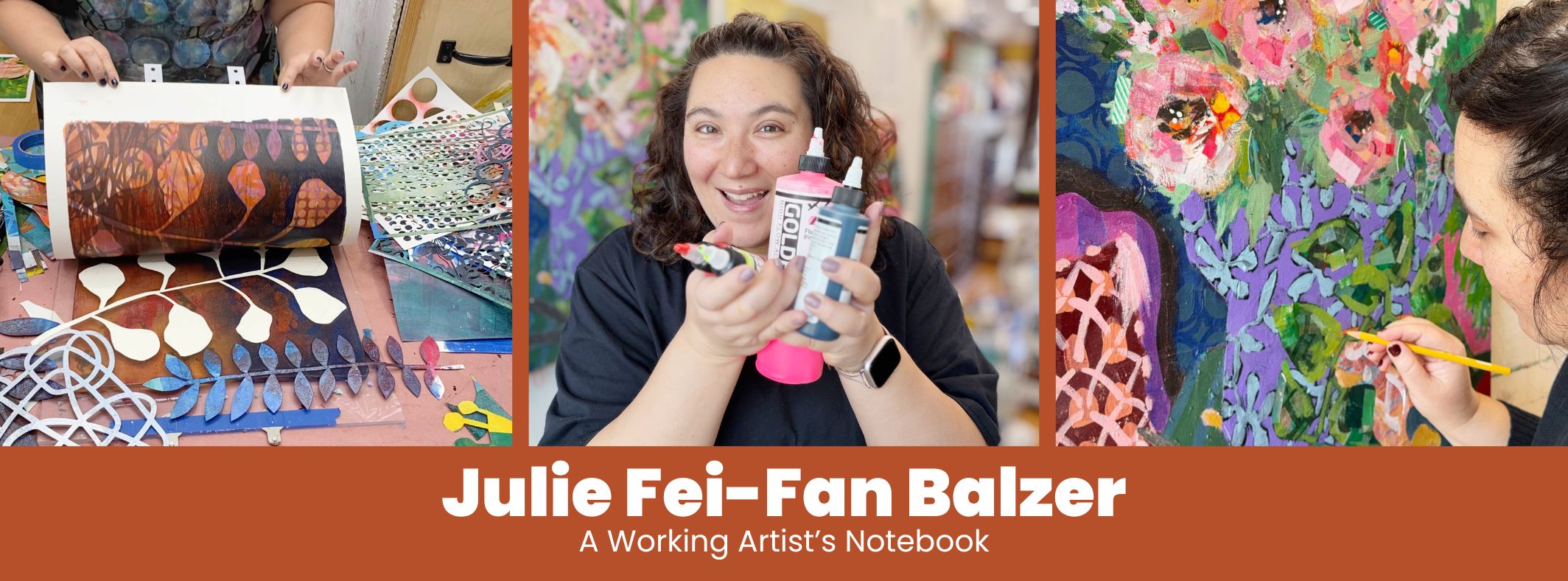
If you’re not sure how to begin reworking an older piece, start with small changes. You might crop the artwork to find a stronger composition, add new collage elements, or paint over sections that feel unresolved. I love to cut old work into pieces and use it as material for new projects.
Do you like to rework your old artwork? Let me know in the comments of this post!