There’s a myth that being an artist is about inspiration. That it’s about the big idea, the finished piece, the dramatic breakthrough moment.

But in my experience, the real work of being an artist lives in much quieter places. It lives in how you maintain your space, in who you are and what you’ve experienced, in reflection, and most importantly, it lives in how you see the world.
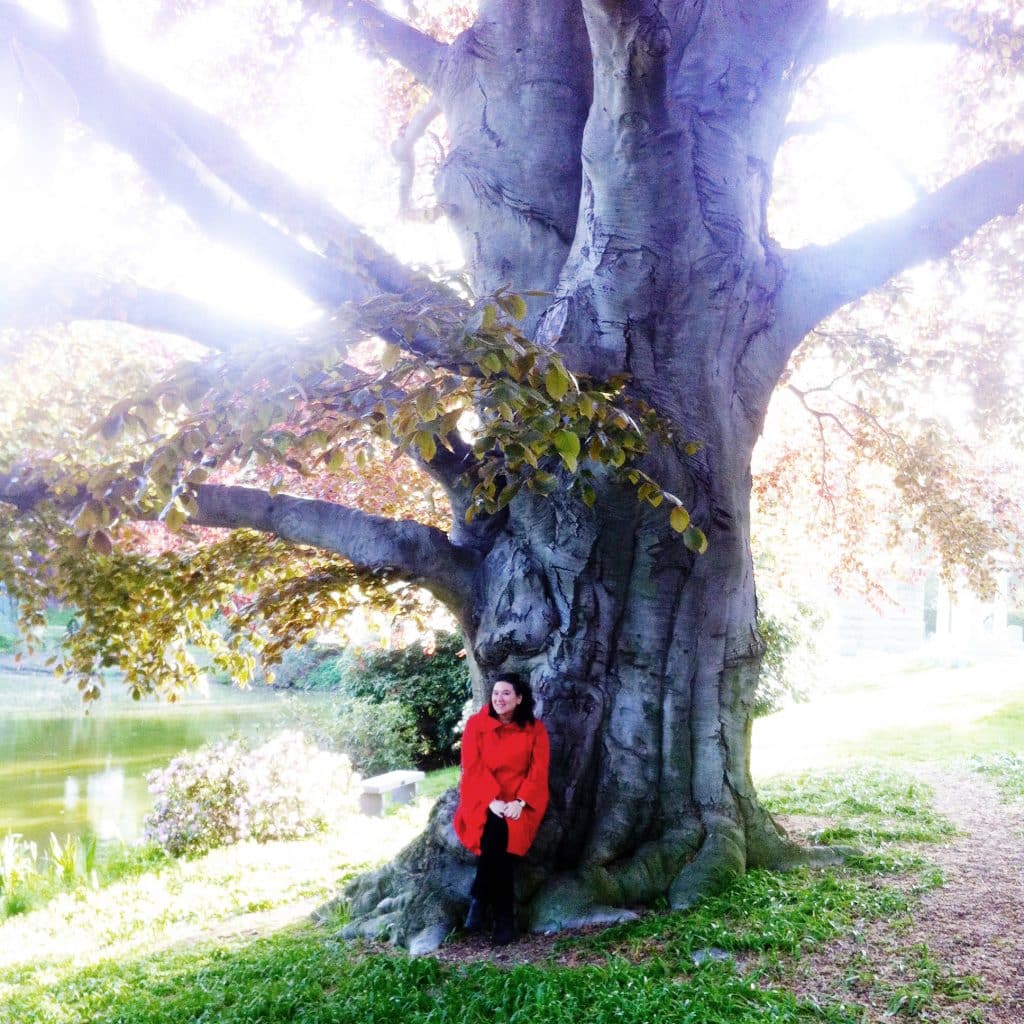
This week’s vlog may feel like it meanders through my week, but truth be told, that’s very much what my art practice is like. It carries me like a lazy river, not a bullet train. Take a peek:
Organization Isn’t About Tidiness
We readily accept that certain household tasks are ongoing. Dishes are never “done.” Laundry is never permanently completed. Cleaning is cyclical.
My studio is the same way.
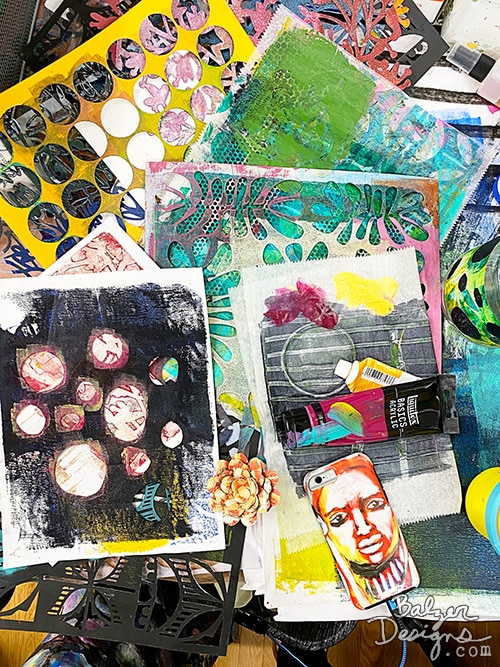
Some days I really wish Mary Poppins would come and snap her fingers to clean up my mess. But she hasn’t popped in yet and I feel that it’s an unlikely dream. Instead I create piles and let things sit for far too long. Here’s a moment that happens to me more often than I like to admit: I finally have an open pocket of time. Dinner is finished. My child is in bed. The house is quiet. I walk into my studio ready to begin and realize that I can’t. Not because I have ideas or projects I want to work on. Rather it’s the mess. There’s simply no physical space to start. I recently had one of those evenings. What I had hoped would be a productive stretch of art-making turned into a studio reset. I cleaned surfaces, sorted piles, cleared my painting wall…
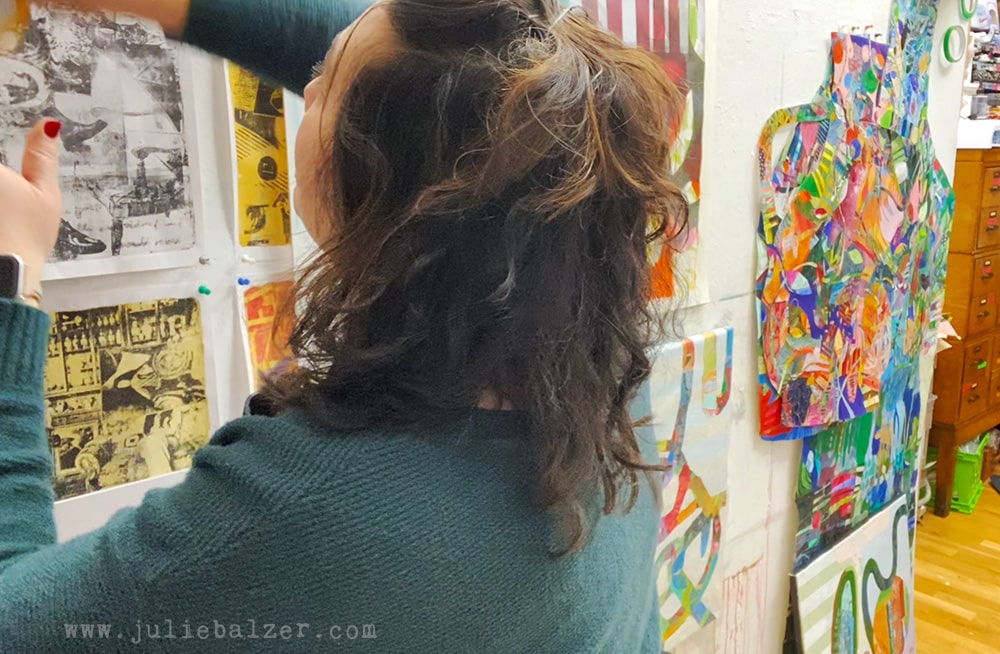
…and reorganized materials that had gradually drifted into small, chaotic stacks. By the end, the space felt better. I felt better. But I was also annoyed. I hadn’t intended to spend my creative time cleaning.
The longer I maintain a studio practice, the more I understand that this is part of building an authentic art practice. Studio maintenance is not separate from art-making; it is what allows art-making to happen with any kind of consistency.
Why I Have a Collage “Bucket” (or two)
I don’t believe in perfectly pristine studios, but I do believe in usable ones. If every creative session begins with a 45-minute excavation, you’re spending your energy on friction instead of flow.
Over time, I’ve realized that effective studio organization for me is not about creating a beautiful, magazine-worthy space. It is about creating access. If materials are too neatly stored, too far out of sight, or too difficult to retrieve, I stop using them. That’s why I keep what I think of as an “active” collage bucket on my table.
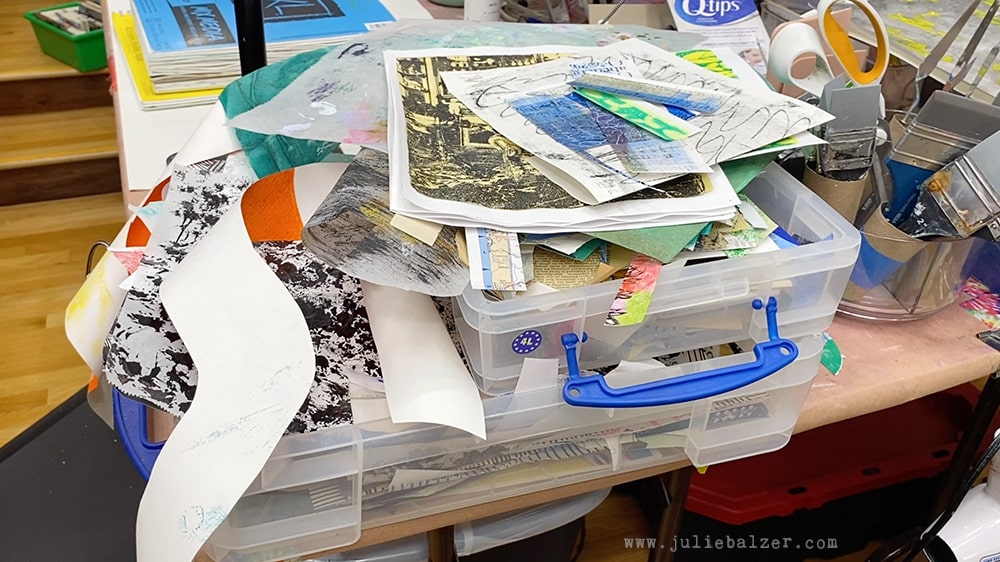
Having it right there quite literally at my right hand allows me to work intuitively and quickly. When it starts to overflow, I cycle materials back into longer-term storage and refresh what’s immediately available. It’s a simple system, but it supports my actual working habits. Which leads me to: I believe that every artist needs to organize in a way that reflects how their brain works. A system that is perfect for one person may create friction for another. Part of maintaining a creative practice is building structures that support your thinking rather than fighting against it.
And this leads me to the big thought: Whether it’s organization or making art, you need to be self-aware and true to yourself!
Creative Voice and Perspective – aka Be Weird Be You
I’m going to slip into teacher mode for a moment — as I did in the video: Developing your creative voice as an artist is less about inventing something unique and more about recognizing what you are already drawn to, even when it feels idiosyncratic. Especially when it feels idiosyncratic. In other words: Let your freak flag fly!
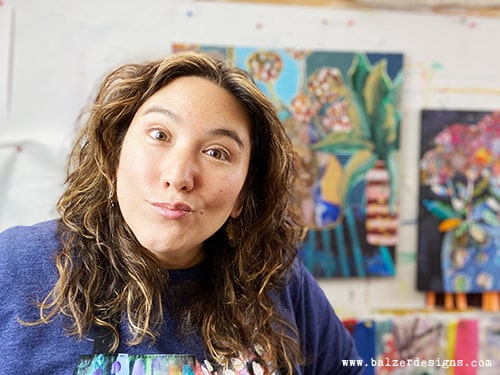
As an artist, what you’re trying to do is share how you see the world. And if everybody had the same perspective, why would you need to share it? Because we’d all be in the same mind link thinking the same thing, right? But because I think differently than you or you think differently than me, we get to share with each other our art, which is representative of how we see the world.
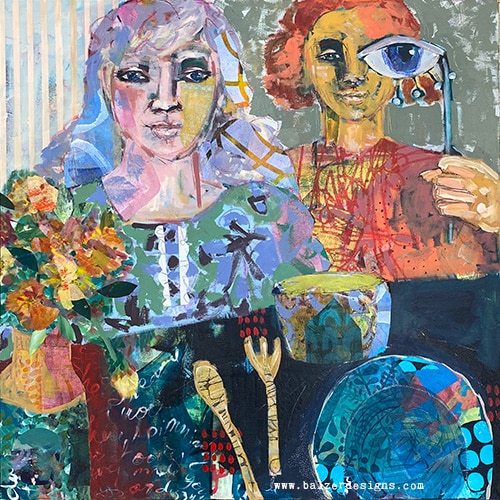
There’s a time in life in which you’re desperate to fit in, and the idea of standing out is terrifying. But I think the older and older I get, the more I realize that the whole point is to stand out. The whole point is to not be ashamed of your weirdness. Pay attention to:
- The materials you return to.
- The themes you circle back to.
- The visual decisions that feel instinctive rather than strategic.
- The way you hold your brush.
- The marks you keep doodling.
- The color combo you can’t get enough of.
- The artwork of others that you hate and the artwork of others that you love.
These are not accidents. They are indicators of perspective. It’s allowing yourself to be fully, unapologetically yourself and then building habits that support that unique and wonderful person. Technical skills can (and should) be learned. But no one can teach you what you like. You have intrinsic tastes and the key is to lean into them rather than try to fit in with what other people like. I do think that it’s a big part of what makes your art authentic — when you learn to lean into those things that make you quirky and weird and odd. Because that weirdness, that’s the key to your uniqueness. I want to see your weird view of the world.
Final Thoughts
An art practice isn’t built in dramatic leaps forward. It’s built in the small, unremarkable decisions that accumulate over time — clearing a surface so you can begin, keeping a bucket of scraps within reach, noticing the colors you’re always drawn to, allowing yourself to prefer what you prefer without apology. Inspiration may light the spark, but it’s these quieter habits that keep the fire going. Create an art practice that helps you become more willing to trust your own way of seeing and to build a sustainable practice that supports that vision.
Finally, it’s not too late to join us for March of Artist Books!
Thanks for stopping by!



Thank you for this. I struggle a lot to accept my own weirdness as an artist, so I can never get enough of the kind of advice you gave on this post, because I really need it. Maybe one day I’ll finally be able to truly internalise it. Your words do help. Thank you!
Yasss! Be weird and be you! You are awesome and your weirdness is a superpower!