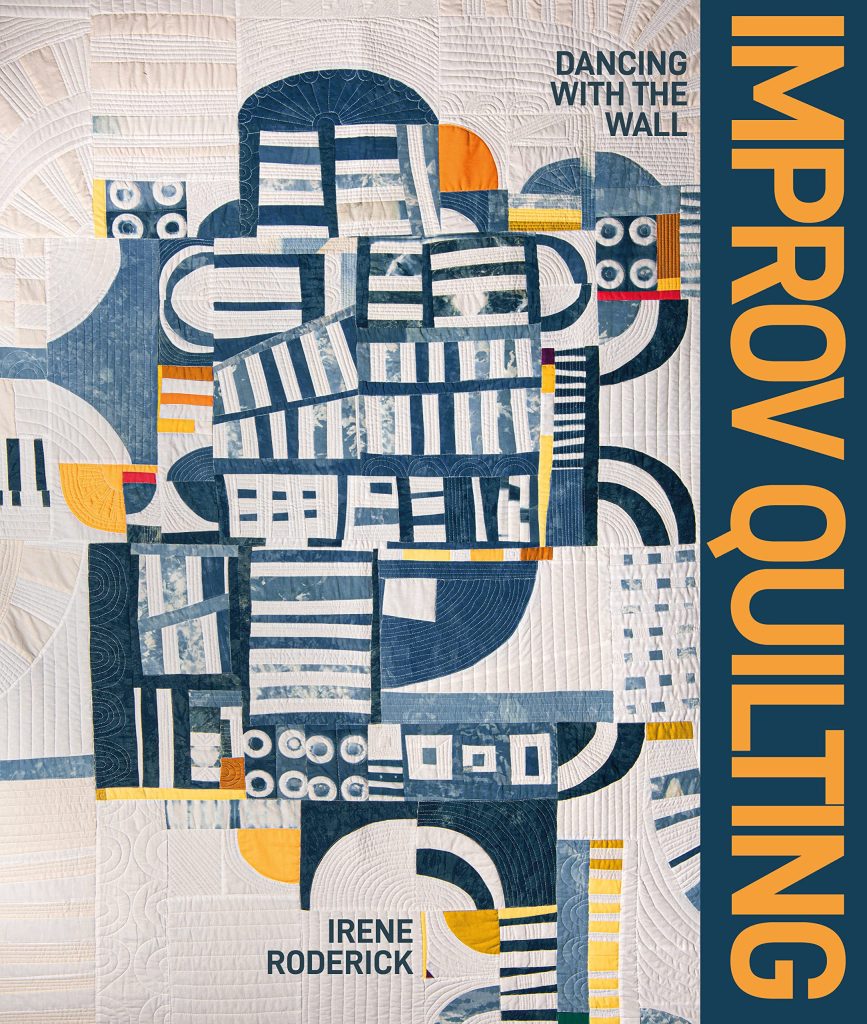
Yesterday we had another fantastic Book Club meeting! We discussed Irene Roderick’s book, “Improv Quilting: Dancing with the Wall.”
If you didn’t catch the livestream, you can watch the replay below:
The Paintings of Friedensreich Hundertwasser
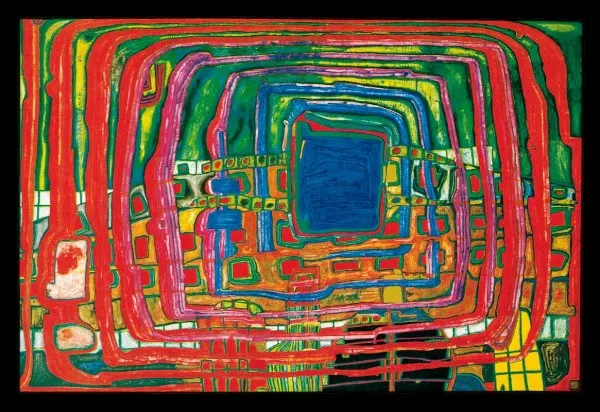
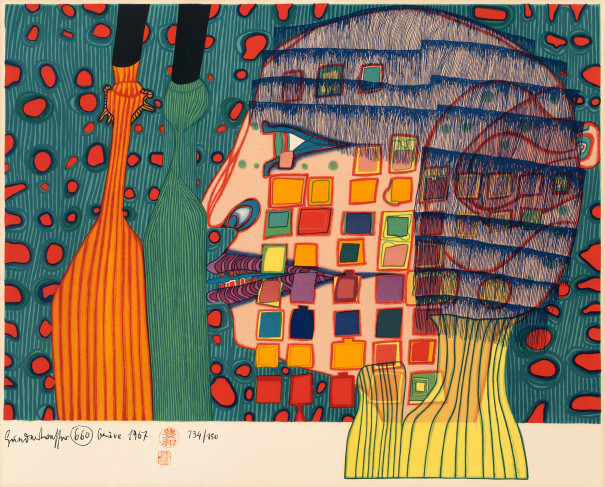
If you watched the video above, you’ll note that I put together a slide presentation for this Book Club meeting. My favorite slides are the ones looking at many of the artists who were inspirational to Irene. Several of them were new-to-me. In particular, I was struck by the paintings of Friedensreich Hundertwasser. Here are a few of my faves from his large catalogue of work:
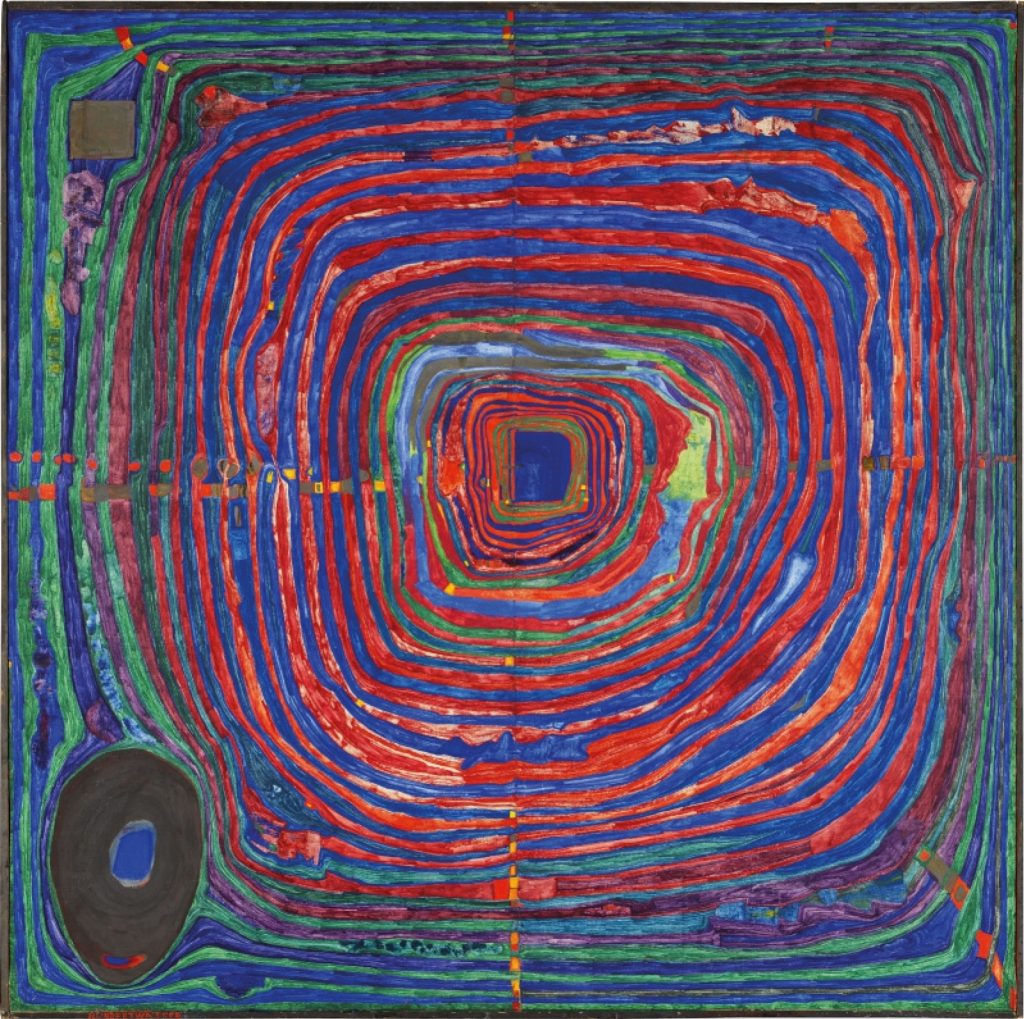
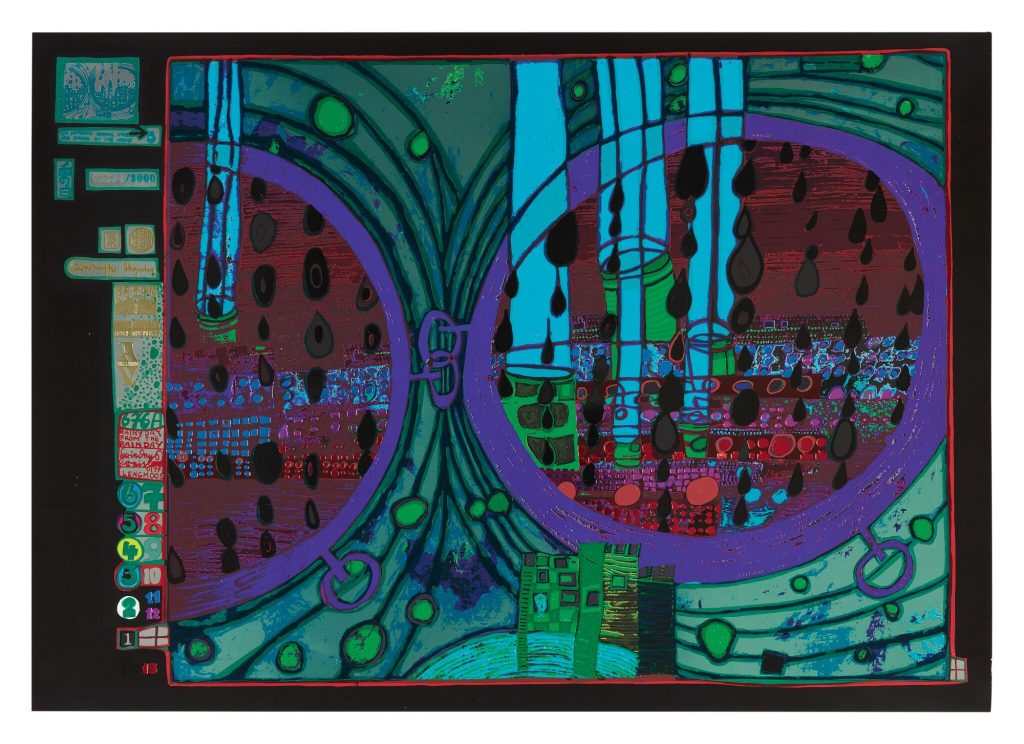
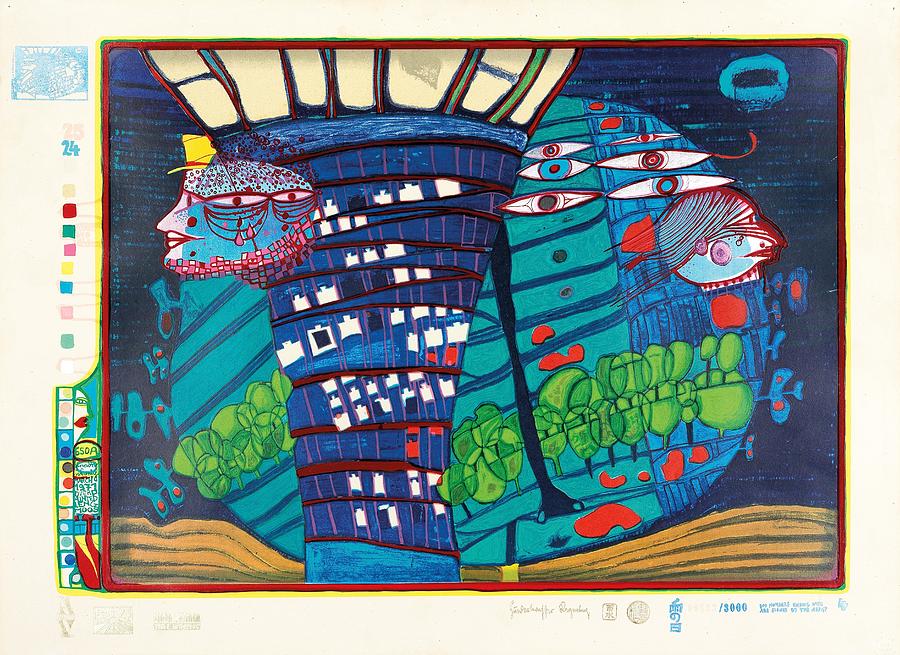
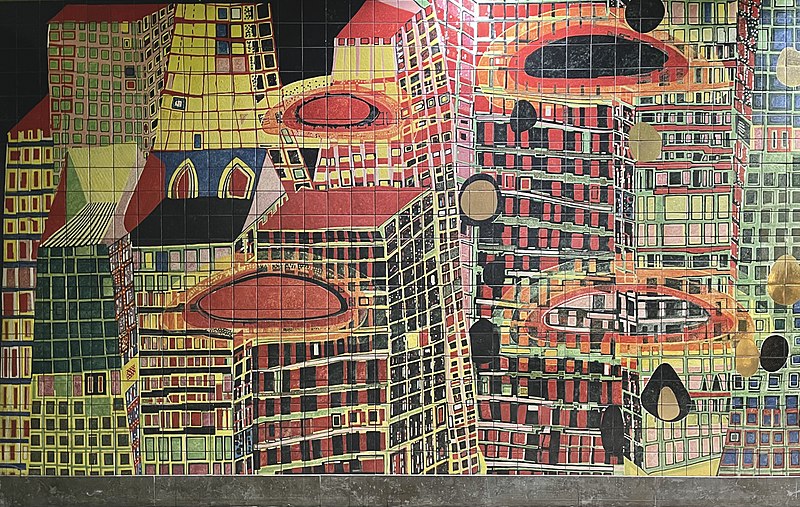
You can also watch this short video about Hundertwasser and his work:
Take Aways from the Video (for ALL Art Making, Not Just Improv Quilting)
In case you don’t have time to watch the whole video, here are some useful tidbits for all kinds of artists:
On Creativity & Improvisation
- Improv isn’t sloppy. It’s thoughtful spontaneity. The goal isn’t randomness—it’s staying relaxed, alert, and responsive while making decisions.
- Stop trying to control everything. Good improvisation requires paying attention and reacting, not following a rigid plan.
- Anyone can throw scraps together. Only you can make your art. Your experiences, preferences, and way of seeing the world are what make the work uniquely yours.
- Trust yourself. Trust the process. Those two things are harder—and more important—than any technique.
On Finding Your Artistic Voice
- Your taste is more unique than you think. The images you’re drawn to, the colors you love, and the things you save for inspiration are clues to your artistic voice.
- Collecting inspiration isn’t wasting time. It’s filling the well.
- Voice isn’t just what comes out of your hands. It’s also how you filter the world through your own experiences and interests.
- The organization of your inspiration matters. How you collect and categorize ideas shapes how you’ll use them later.
On Components & Personal Style
- Your style is built from recurring components. Stripes, circles, botanicals, grids, handwriting—whatever keeps showing up in your work is worth paying attention to.
- You don’t invent your components. You discover them. They reveal themselves when you look back at a body of work.
- Consistency doesn’t mean repetition. Different artworks can feel related because they share underlying components, not because they look identical.
- Knowing your components makes it easier to make work you love.
On Design
- The better you know your preferences, the stronger your work becomes. Questions about scale, symmetry, figure-ground relationships, and pattern aren’t academic—they’re practical.
- Design is about understanding what repeatedly works for you.
- What you choose matters as much as what you create.
On Meaning & Interpretation
- Color carries baggage. People bring cultural, personal, and emotional associations to every color combination.
- You don’t control what viewers see. You only control what you bring to the work.
- What you intend and what people perceive are often different—and that’s okay.
On The Creative Process
- Every artist goes through the same cycle: This is amazing → This is difficult → This is terrible → I am terrible → Maybe this works → This is amazing.
- If you don’t like it, it’s not finished yet!
- The urge to quit often arrives before the breakthrough.
- Keep going until you like it.
On Working Through Creative Doubt
- Don’t throw it away when you hate it. Walk away instead.
- Time is one of the most powerful tools in an artist’s toolbox.
- Distance helps you see both the strengths and the problems in your work more clearly.
- Sometimes the piece changes. Sometimes your perspective changes. Both are valuable.
On Learning from Other Disciplines
- If you only look at work that’s like yours, your work will start to look like theirs.
- Borrow ideas from other mediums. Quilters can teach painters. Printmakers can teach collagists. Sculptors can teach drawers.
- The more diverse your influences, the more unique your work becomes.
On Making Art
- Big projects are built from small components.
- What feels overwhelming becomes manageable when you start with one small piece.
- The first layer doesn’t have to be beautiful. In fact, it probably shouldn’t be.
- Ugly beginnings create room for transformation.
These are all ideas that feel bigger than improv quilting—they connect directly to my broader teaching about artistic voice and developing a sustainable creative practice!
If You Want More
Some things I mention during Book Club that you might enjoy taking a closer look at:
- My Crow Barn Experience
- Quick Step Class with Irene Roderick
- If you enjoyed Book Club, it’s something that I still do every cycle in my online membership, My Art Practice.
Thanks for stopping by!


Love Hundertwasser! Very thoughtfully creative!